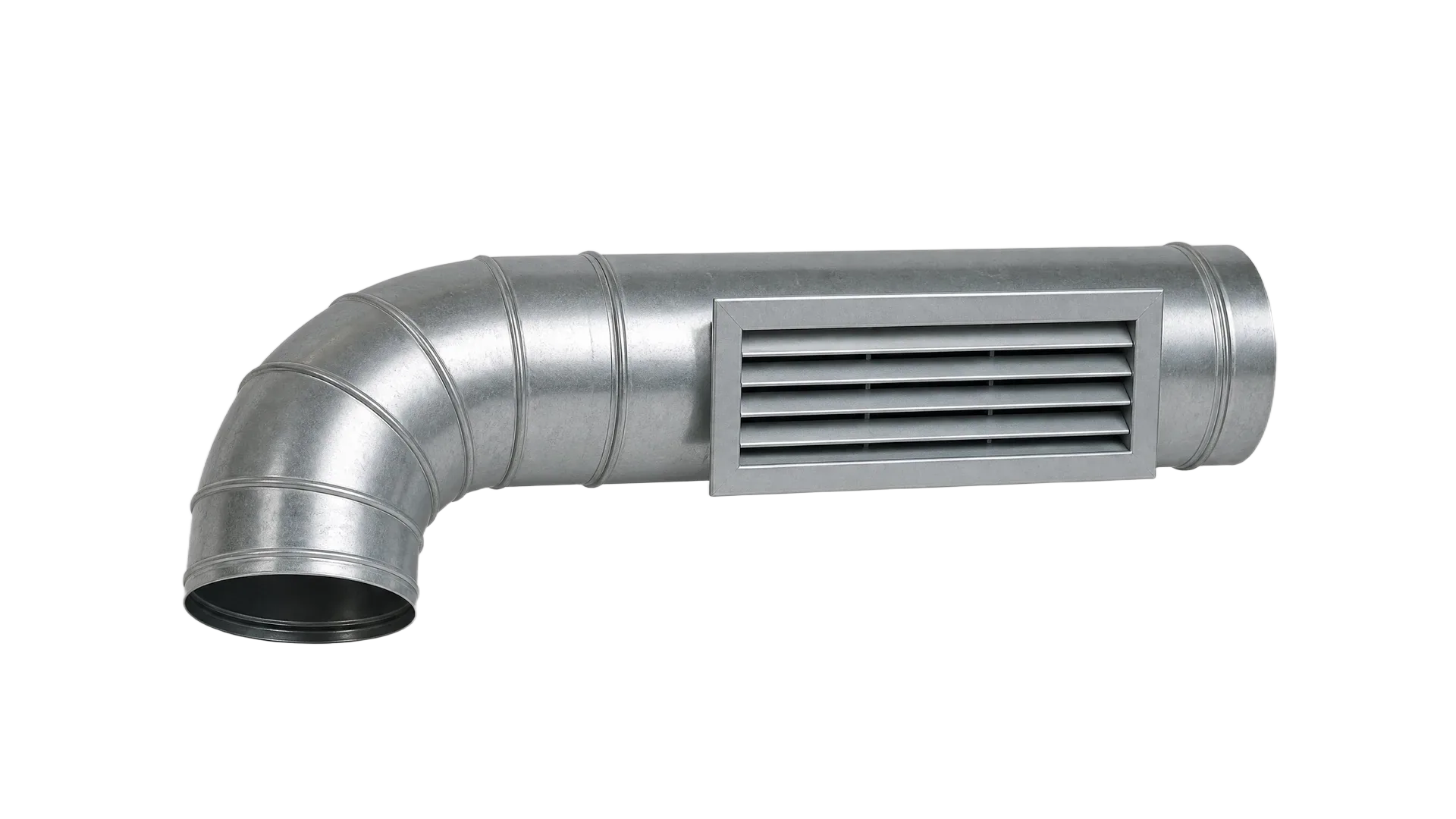
A musty smell from your vents usually means moisture sitting somewhere in the duct system, often on the evaporator coil or in the ducts themselves. Denver's dry air helps most of the year, but a coil that isn't draining right stays wet long enough for mold to grow on it, and every time the blower runs, it pushes that smell through the house. Dust and debris sitting in ductwork can hold moisture too, especially where runs pass through a crawlspace or basement. Sometimes it's the drain line itself, clogged and backing up near the air handler. The smell is worth taking seriously. Mold in the system doesn't go away by running the fan or swapping the filter, and it tends to get worse, not better, until someone opens up the ducts and the coil and cleans out what's actually growing there. Until then, it will keep coming back every time the system kicks on.




Denver's air runs dry most months, so standing moisture in a duct system usually traces back to one spot: the evaporator coil and its drain pan, right where your air conditioner pulls humidity out of the air.
If that drain line clogs or the pan doesn't slope right, water sits on the coil between cooling cycles instead of leaving the system, and that's long enough for mold to take hold and ride the airflow into every room.
Why would a dry climate like Denver still get a musty duct smell?
Half the homes here were built by 1975
Your AC only runs June through August here, so the coil sits wet, dries out, then sits wet again each summer.
Heat runs October through May
Heat runs October through May in Denver County, pulling dry air through the same ducts the coil just dampened.
Cooling runs June through August
Half the homes in Denver County were built in 1975 or earlier, long enough for duct seams and drain pans to wear.
ACS 2020-2024 · NOAA nClimDiv 1991-2020
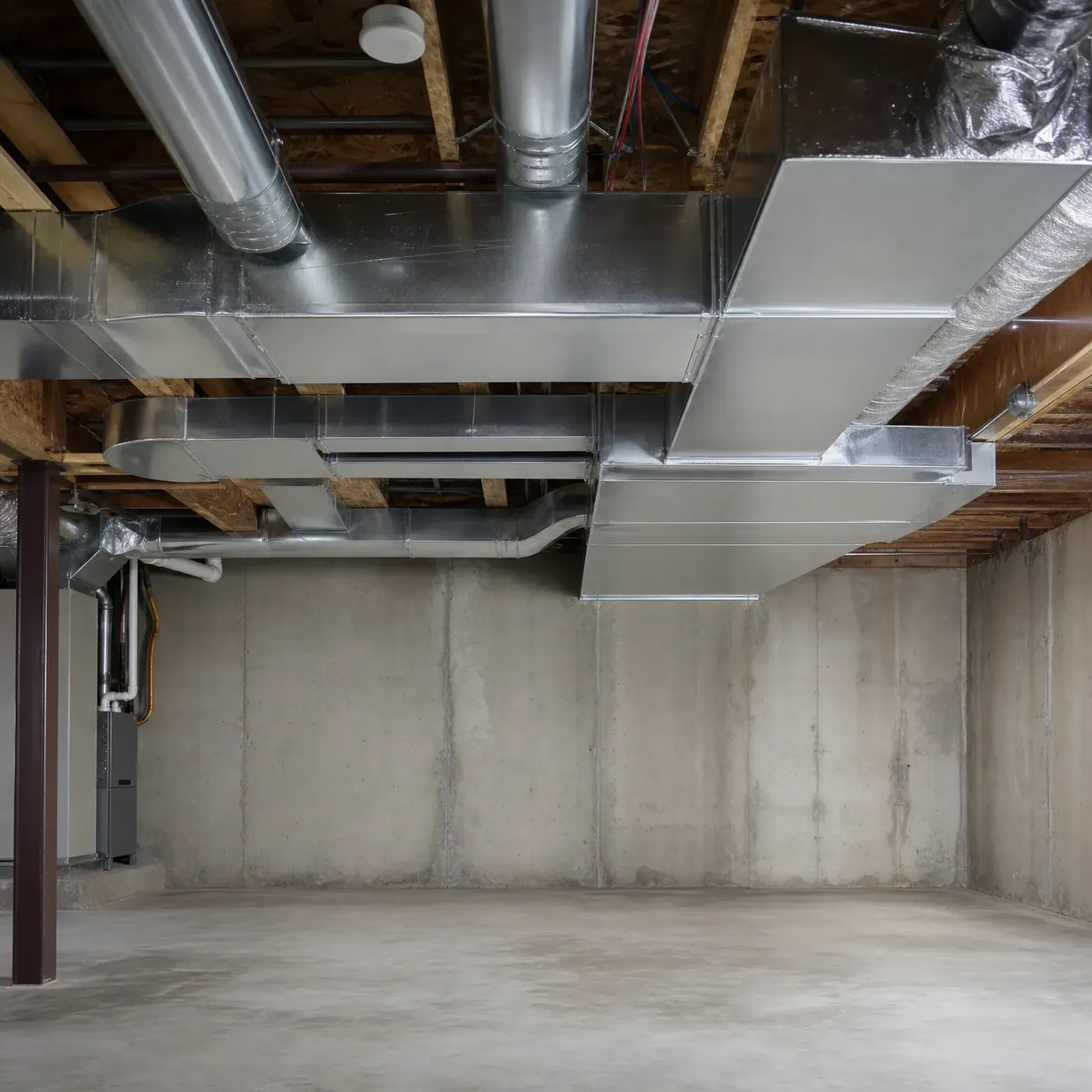
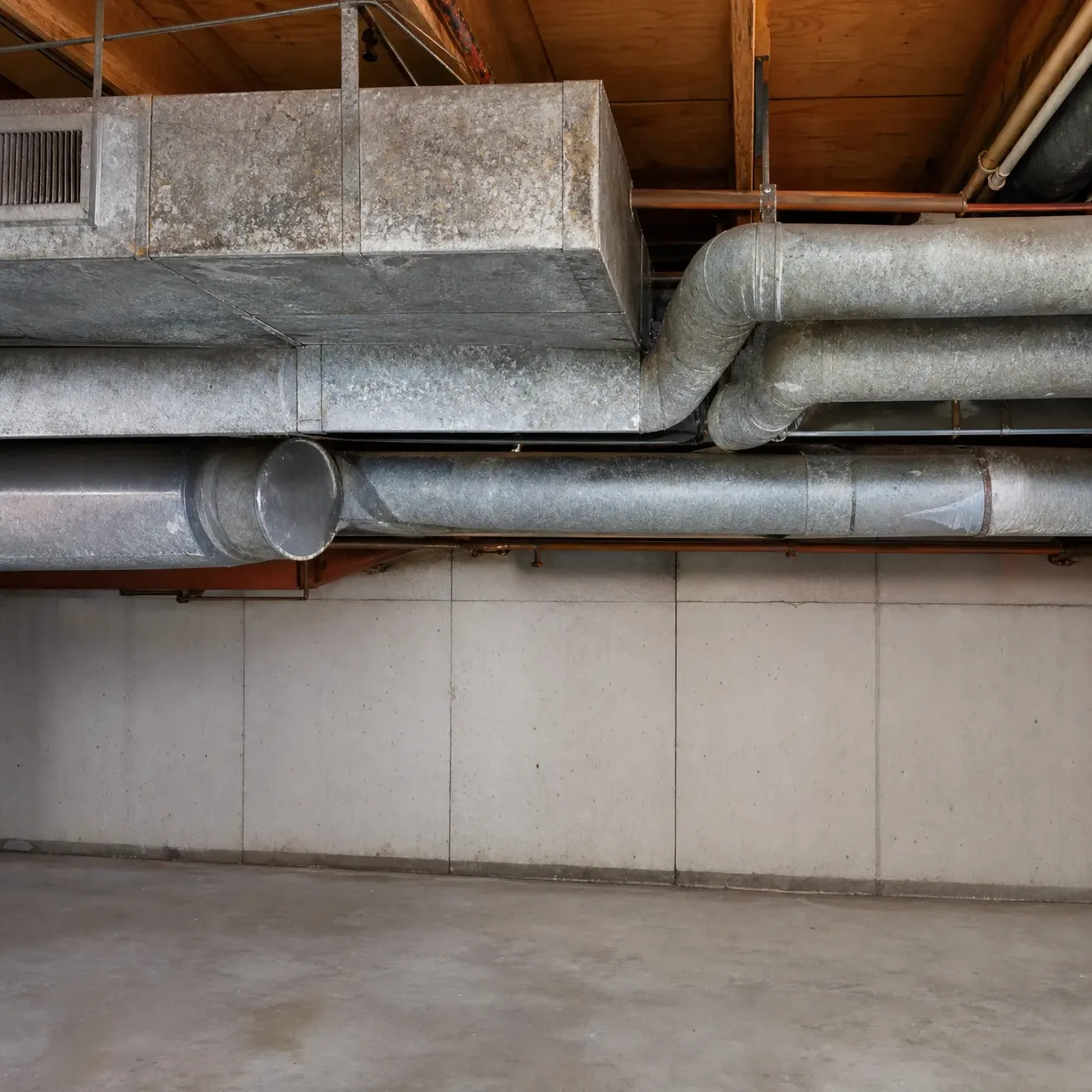

A technician inspects the evaporator coil, drain pan and line first.
Duct runs get opened and checked for standing moisture or growth.
Mold and debris get brushed and vacuumed loose from every duct.
The coil and drain line get cleaned so condensation flows out again.
Is that smell worse when the AC first kicks on?
You'll likely notice it most in the first few minutes after the system starts, then it fades as air keeps moving. It might show up stronger in a bedroom at the end of a run or in a room you keep shut most of the day. Some households catch it in the basement near the furnace before they ever smell it upstairs. A damp sock or wet cardboard smell is coil or duct moisture, not the dust burning off a furnace in fall. Left alone through another Denver summer, that moisture keeps growing mold where your air passes through, and it gets inside the air everyone in the house is breathing all day.
It's off your list after this
Your request stays with one local pro.
After you send the request, you're done searching.
You only hire the pro if you want to.
Clean It Now or Wait It Out
Clean the ducts now
- A technician reaches the coil, drain pan and duct runs directly and clears out what's already growing there.
- Deals with the actual moisture source instead of waiting to see if the smell comes back on its own.
- Denver's dry air outside the system means once the inside is dry and clean, there's less for mold to hold onto.
- Works whether the smell traces to the coil, the drain line or growth further down a duct run.
- Addresses it before next summer's humidity swings give any remaining moisture another chance to take hold.
Wait it out
- The smell may fade some as Denver's dry air pulls moisture out of the ducts between AC runs.
- Whatever is growing on the coil or in the ducts stays there and keeps shedding spores into the air you breathe.
- A clogged drain line or slow-draining pan won't clear itself, so the moisture behind the smell keeps coming back.
- Each time the AC or furnace runs, air moves across the same damp spot and picks the smell up again.
- By next summer, growth that's had a year to sit usually smells stronger, not weaker.

Running the AC with a clogged drain
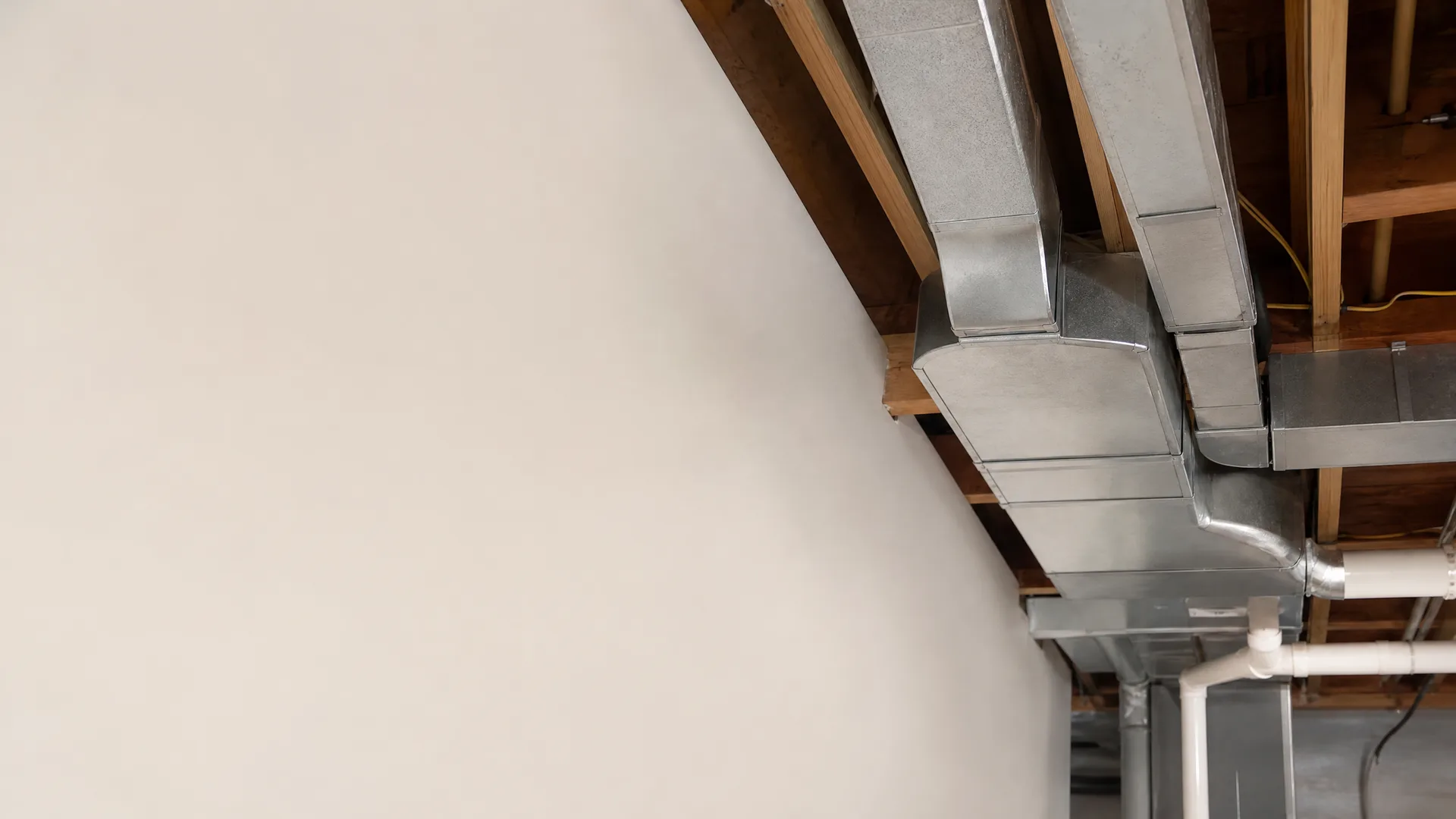
If the drain line stays clogged, water keeps backing up into the pan instead of leaving through the condensate line. The coil sits wet between cycles all summer. Air moving over that wet coil picks up the smell and carries it through every duct run to every register in the house. The smell doesn't go away by itself, because the water causing it hasn't gone anywhere either.
Running the AC with a clear drain
When the drain line is clear, the pan empties as fast as the coil sheds water, and nothing sits long enough to grow. Denver's dry air outside does the rest once the moisture has somewhere to go. Air moving through the ducts stays dry, and a register in a closed-off bedroom puts out the same clean air as one in a room you use every day.
Power here costs 15.91 cents per kilowatt-hour
At 15.91 cents per kilowatt-hour, running the blower longer than it needs to run adds up fast. A duct system clogged with growth makes your air conditioner push harder to move the same air, and that extra runtime shows up on the bill before the smell ever goes away on its own.
EIA-861 2025


What a Clean System Looks Like
- A musty smell almost always traces back to moisture on the coil, the drain pan, or standing in the ducts themselves.
- Denver's dry air limits how often this happens, but it doesn't fix a clogged drain line or a coil that stays wet.
- A technician who works this equipment every Denver summer knows the drain line and coil are where to check first.
- Clearing the growth and fixing the drainage stops the smell at its source instead of masking it.
- You're matched with one licensed local contractor, so you're not fielding calls from several companies at once.
- Once the moisture is gone, the smell has nothing left to come back from.
The smell has one cause: water sitting somewhere it shouldn't, on the coil, in the drain pan, or along the duct runs themselves. Denver's dry air keeps that from turning into a year-round problem, but it does nothing for a drain line that's already clogged or a coil that stays wet between cycles. That part needs a technician in there, looking at the actual spot the moisture collects.
Someone who services this equipment through a Denver summer has seen this exact pattern before, the coil that doesn't drain right, the pan that backs up, the duct run that's held onto it longer than it should have. That's the kind of thing that stands out fast to a technician who's checked a hundred systems just like yours this season. You'll be matched with one licensed local contractor for the job, not a handful of companies competing for your callback, so the person who shows up is the one who handles it.
Once the coil is clean and the drain line runs free, the moisture that fed the smell is gone. There's no mold spore drifting through your ducts looking for a damp spot to land on if there isn't one. The musty smell doesn't fade on its own or get masked by a new filter. It stops because the water that caused it is gone, and Denver's dry air does the rest of the work keeping it that way.
Stop chasing a duct system pro
Your duct cleaning request goes to one local pro.