Mold in air ducts in Colorado Springs, CO

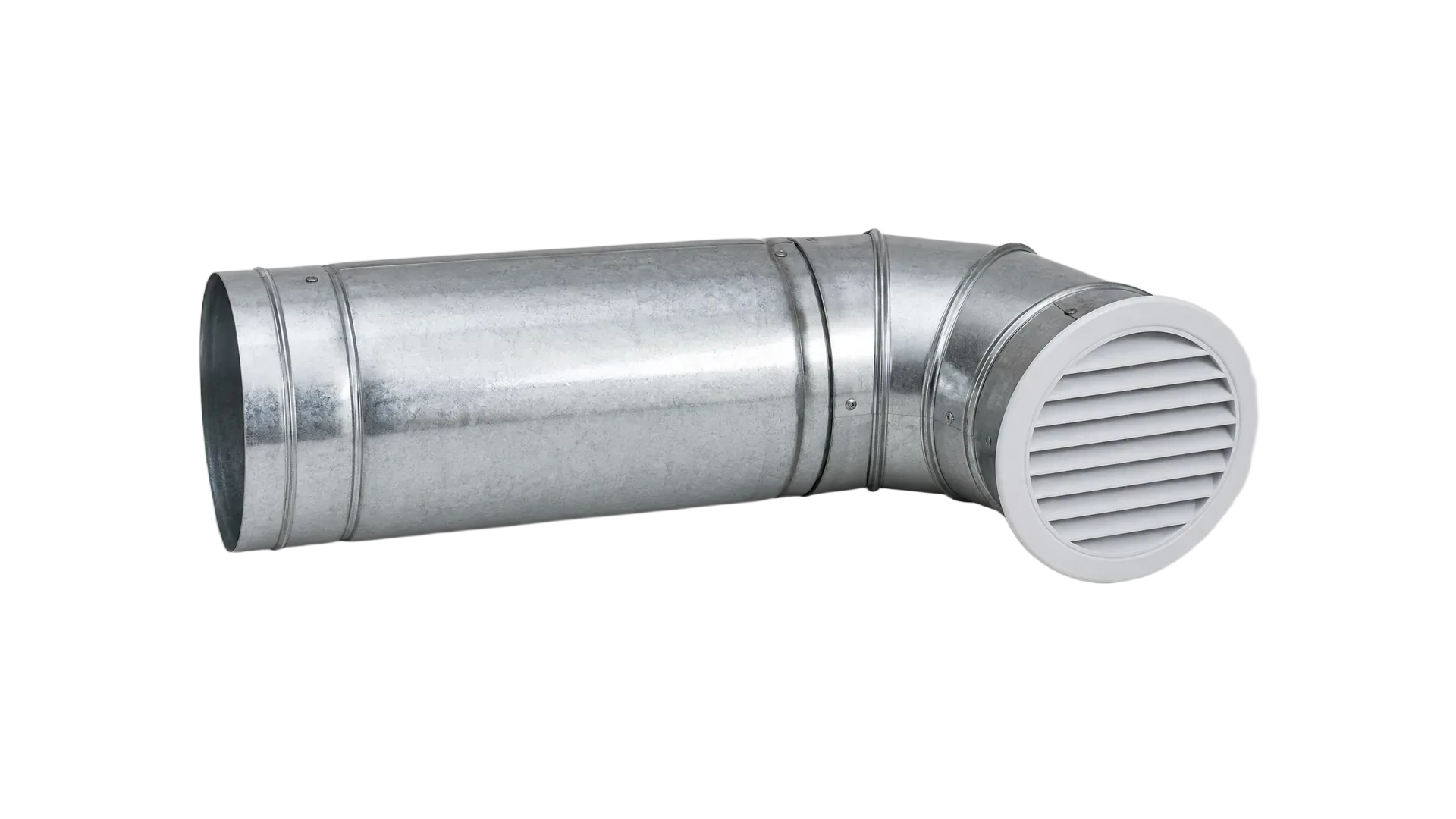
A galvanized steel round duct with a 90-degree elbow and a white louvered vent cover on one end, shown against a plain gray background.
Answer a few questions

Can mold actually grow in my air ducts here in Colorado Springs?

You keep the humidity down most of the year and still wonder if mold could be building up somewhere in the ductwork you can't see. Maybe there was a leak once, or the basement feels damp after a storm, or you just noticed a musty smell when the furnace kicks on. It's a fair thing to want checked, especially before you run heat or air through it all winter.

Yes, but it needs moisture first

Mold needs standing water or constant damp to take hold, and dry duct metal alone won't grow it. In Colorado Springs the air itself is dry most of the year, which works in your favor. What causes trouble is a specific source of moisture inside the system: a condensate line that backs up, a leak in the ductwork near a bathroom or kitchen, or a humidifier attached to the furnace that's set too high or leaking at a joint. Find one of those and mold can grow right where the moisture sits, then spread spores through the house every time the blower runs. No moisture source, no mold, no matter how long the ducts have been in place.

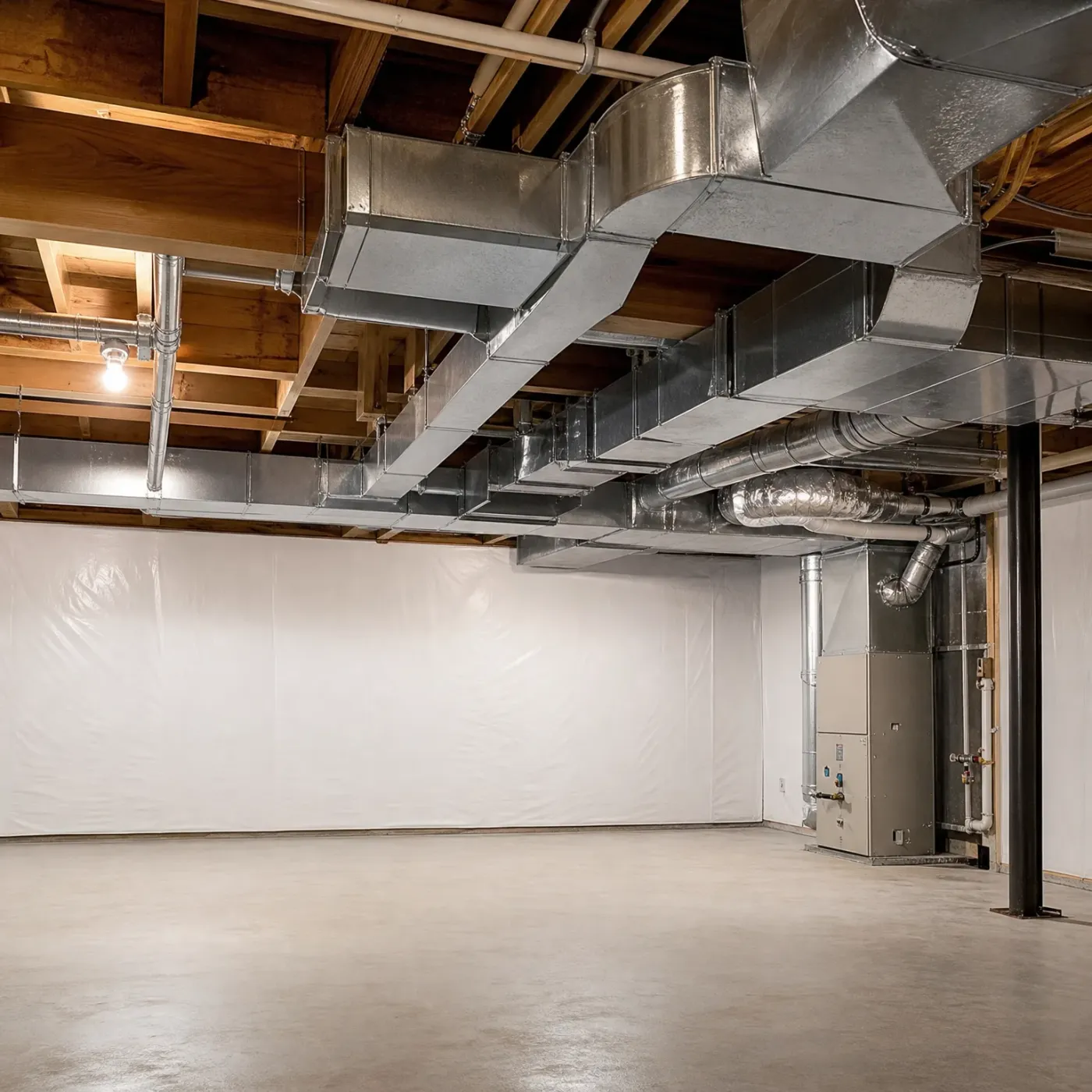
Empty basement with bare concrete floor, white plastic sheeting over one wall, exposed wood joists, galvanized sheet-metal ductwork and pipes overhead, and a furnace unit with a steel support column at right.

Dry ductwork, no sign of trouble

This basement shows what you want to see. The metal ducts run clean along the joists, the vapor barrier keeps the concrete and walls from sweating into the room, and there's no staining on the metal or the floor below it. Dry metal doesn't grow mold.
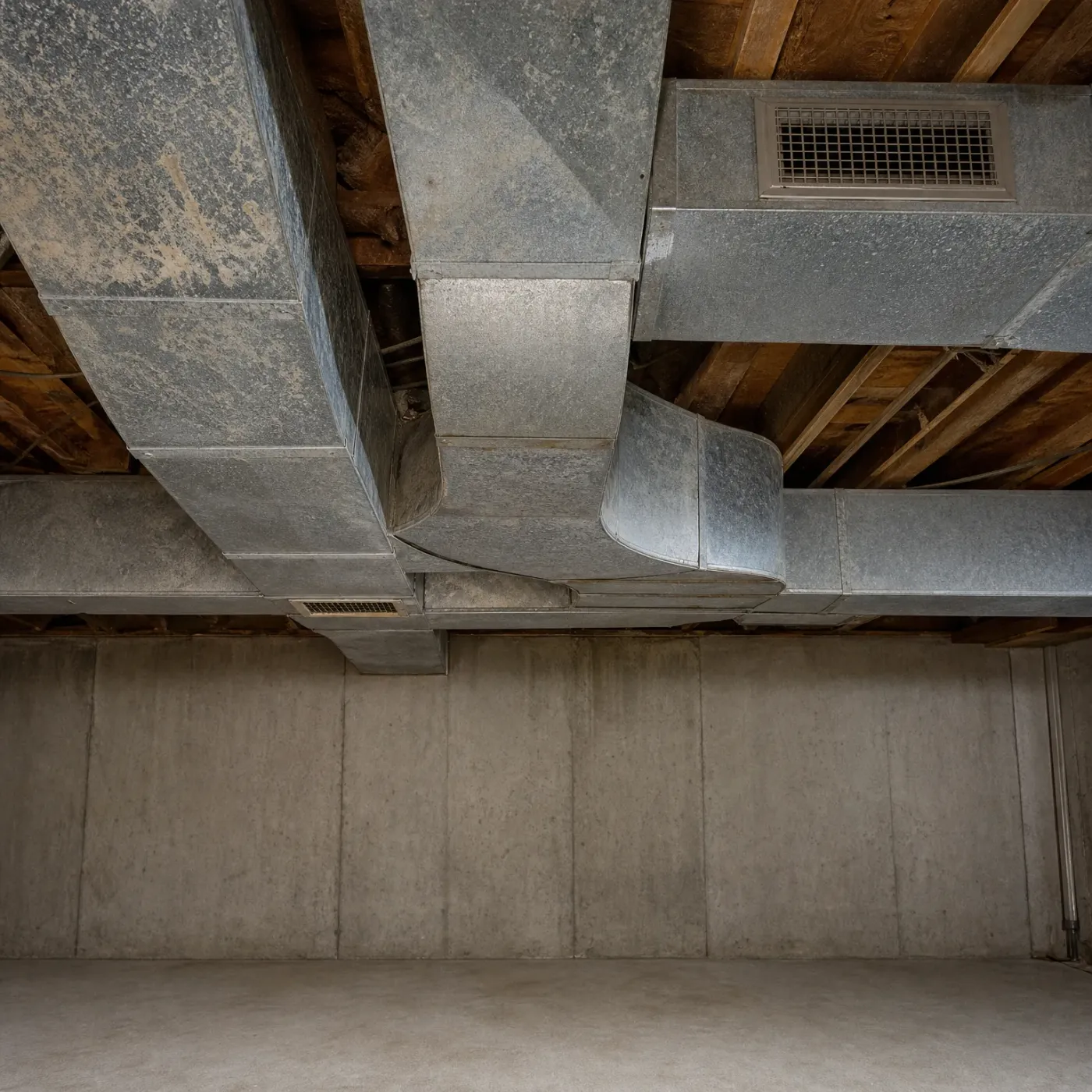
Galvanized sheet metal HVAC ducts with vent grilles run along a wooden floor joist ceiling above bare concrete walls and floor in an unfinished basement.

Ductwork worth a closer look

Same kind of basement, same galvanized metal, but nothing is lining these concrete walls. Bare concrete holds moisture longer than a sealed wall does, and that moisture sits near the ducts and the register boots. If the metal near a joint or seam feels damp or shows dark spots, that's worth having checked.

Why would mold even be a risk in my ducts here?

  • Half the homes here were built by 1989

    Half the homes in El Paso County were built in 1989 or earlier, which means the ductwork has had decades to develop a seam, a bad joint, or a spot where moisture could ever get in.

  • Heat runs September through May

    Heat runs through your ducts September through May here, nine months of the year, so any damp pocket sitting in that system has plenty of warm air moving past it most of the time.

  • Cooling runs July through August

    Cooling only runs July and August, and that's when ducts sweat the most from condensation, so those two months are when a hidden damp spot is most likely to turn into something growing.

ACS 2020-2024 · NOAA nClimDiv 1991-2020

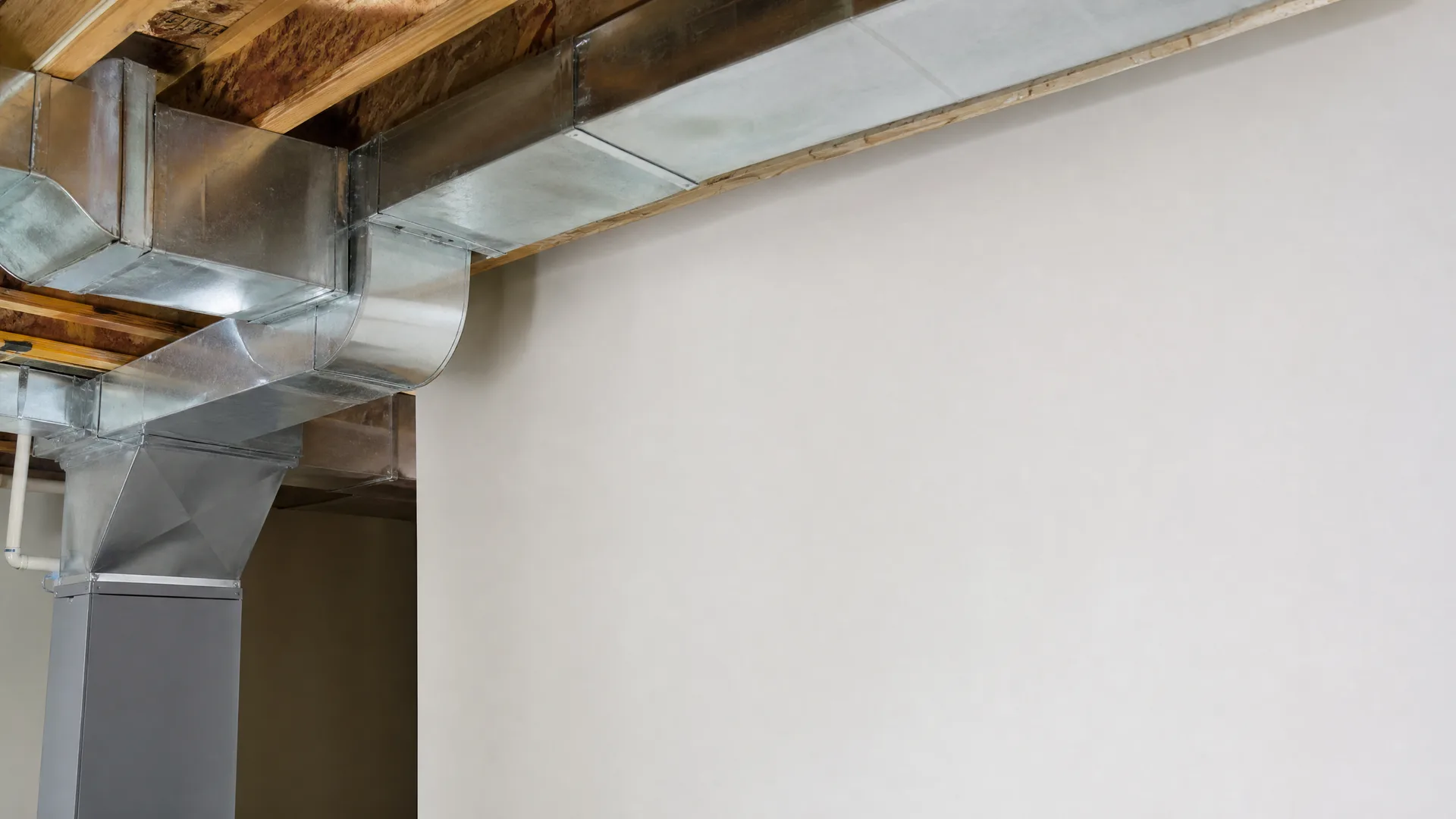
Galvanized sheet-metal HVAC ducts running along wooden joists at a basement ceiling, next to a plain off-white wall.

Why dry air doesn't rule it out

Mold needs moisture, not humidity in the house at large. A duct run that passes near a hose bib line, a condensate drain, or a spot where the vapor barrier failed can stay damp long after the room around it feels bone dry. That's why a basement can read low on a humidity gauge and still have a wet patch of ductwork a few feet away. The dryness you notice walking through the house tells you about the air, not about what's sitting inside the metal.

Unfinished basement interior with galvanized sheet-metal HVAC ductwork and round pipes running along a wooden joist ceiling, a furnace and water heater at the far end, and a blank white wall filling the left half of the frame.

What a cleaning actually checks

A contractor who opens up your duct system isn't just vacuuming dust out. They're looking at every seam and joint along the run, checking for staining, soft spots in any insulation wrap, and water marks that show where moisture has been sitting. That's how a problem gets found before it spreads to another section of ductwork. Someone who services these systems every winter in El Paso County knows which joints tend to fail first and checks there without being told.

Wipe What You Can See, or Check the Whole Run

Clean it yourself

  • You can wipe the registers and the first foot or two of visible duct, but the rest of the run stays out of reach.
  • A shop vac and a brush won't move air through the branch lines, so anything growing further back stays put.
  • You won't know if the musty smell is coming from the ducts themselves or from a damp spot nearby until someone opens the system up.
  • Without a camera or real access to the trunk line, you're guessing at whether the problem is an inch inside the duct or ten feet.
  • If the cause is a condensate line or a gap in the vapor barrier, wiping the metal does nothing about why it keeps coming back.

Have it inspected and cleaned

  • A contractor who works on duct systems around Colorado Springs every year knows where moisture tends to collect in a basement run or a crawlspace branch.
  • Proper equipment brushes and vacuums the full length of the ductwork, not just what you can see from the register.
  • One licensed, local contractor takes the call, so you're not fielding estimates from five different companies for the same job.
  • Finding mold in the ducts usually means finding why it's there, whether that's a condensate drain, a seam, or a spot where the vapor barrier failed.
  • You skip the work of searching for someone qualified, calling around, and explaining the same problem over and over to get a straight answer.
  • A contractor can tell you whether what's growing is actually in the airflow path or just nearby, which changes what needs to happen next.
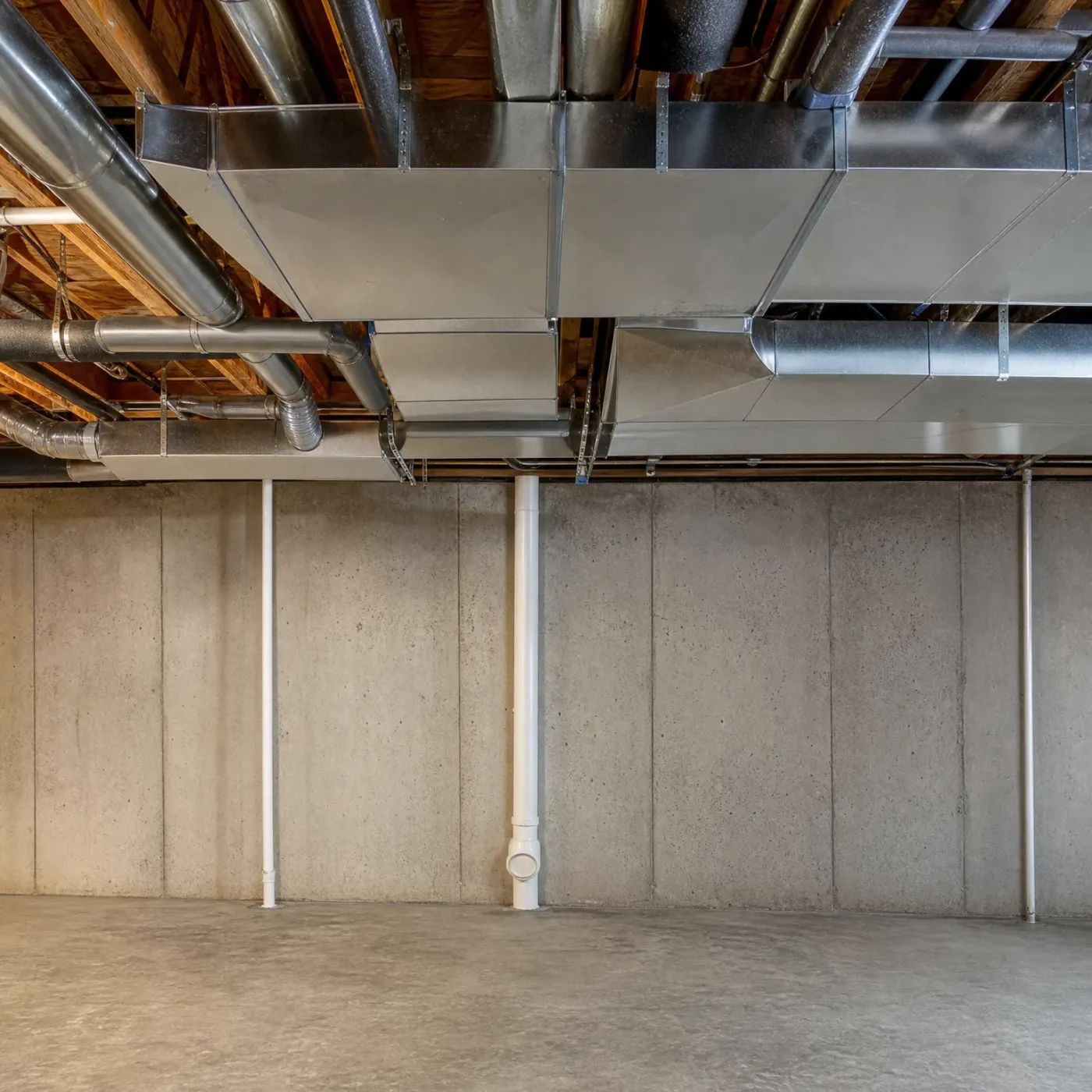
Unfinished basement with poured concrete walls, a bare concrete floor, white PVC pipes running down the wall, and exposed sheet-metal HVAC ductwork beneath wood floor joists.

Dry, sealed, no problem

This is what a clean basement run looks like. The metal ducts and the round pipe sit open to the air along the joists, the concrete floor is sealed, and nothing is staining the metal or dripping onto the slab below it.

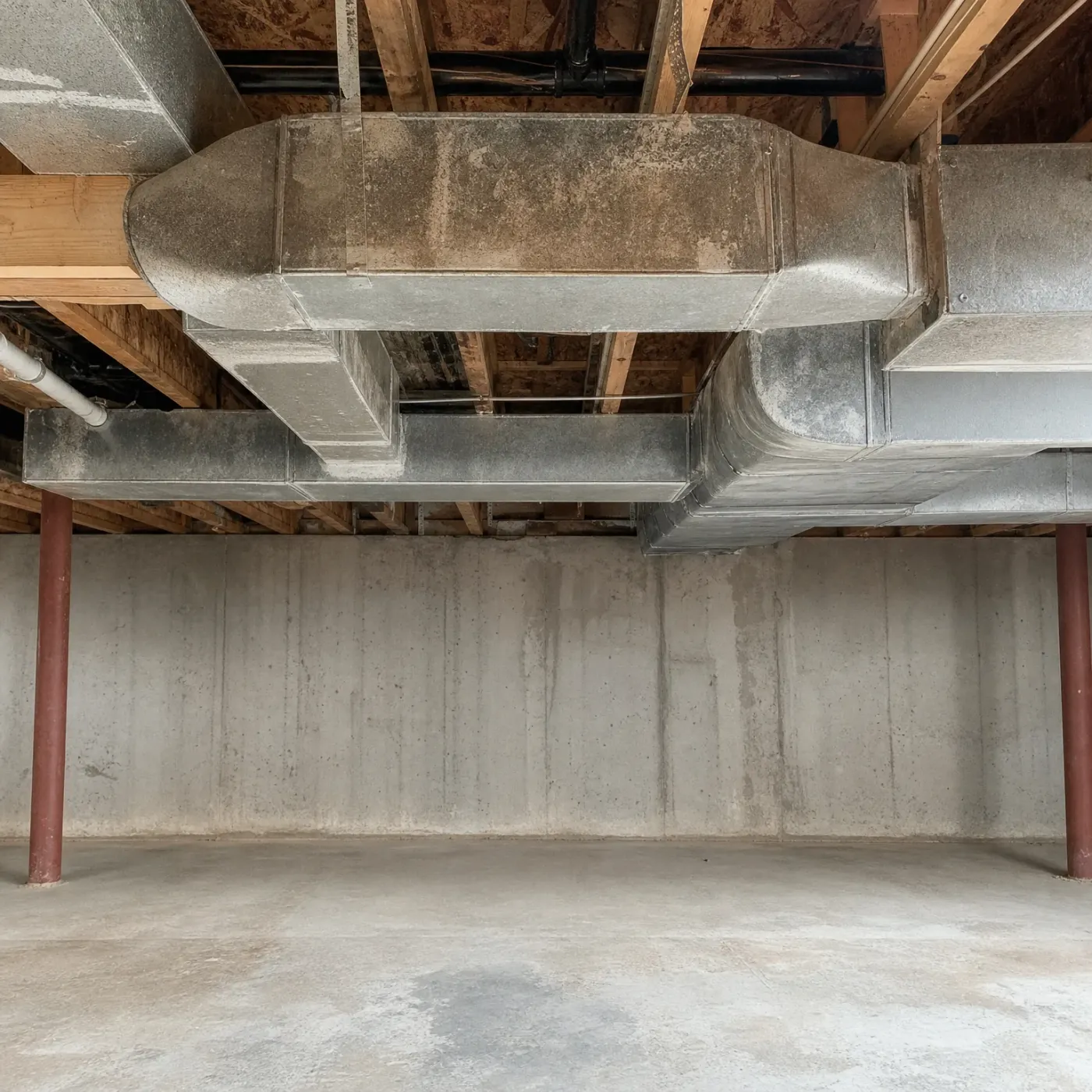
Unfinished basement with bare concrete walls and floor, galvanized sheet-metal HVAC ducts running beneath wooden floor joists, and two red steel support columns.

Joists, no barrier, moisture risk

Here the ductwork sits tucked up against the wood joists with no gap to breathe. Where metal runs tight against framing near a drain line or a damp foundation wall, moisture has somewhere to sit instead of drying out.

A smiling woman with long brown hair in a cream sweater sits at a stone counter with a glass of red wine, with a dimly lit living room, beamed ceiling and glass doors behind her.
A woman with shoulder-length dark wavy hair in a beige sweater laughs while looking off to the side, seated at a white marble counter with a glass of red wine, in a dimly lit home interior with a kitchen and sofa in the background.
A smiling woman with long dark hair in a black sweater sits at a white marble counter with a glass of red wine, in a dimly lit kitchen and living area with pendant lights, a potted plant, and flowers.
A smiling woman with long brown hair in a light knit sweater sits at a stone-topped counter with a glass of white wine, with a dimly lit living room, sofa, fireplace and round mirror behind her.

No calling every shop in El Paso County

You've read enough now to know what you're actually dealing with: ductwork you can't see into, decades old in half the homes around El Paso County, with maybe a damp spot you can't rule out and no good way to check it yourself. Finding someone to look at it the right way usually means calling a few companies, explaining the same thing three times, waiting on quotes you then have to compare line by line. That's the part that goes away here. One request goes to a local contractor who deals with ducts in Colorado Springs homes all season, who's seen what a failed vapor barrier or a bad joint does over the years and knows where to check first. No sorting through calls from five different companies, no repeating yourself. You still don't know for certain if there's mold back there. But you don't have to keep wondering alone, and you don't have to do the legwork of finding someone qualified to tell you.

What stays hidden from you

A spot of mold in a branch line under the floor doesn't announce itself. You might catch a musty smell when the furnace kicks on, usually strongest in the first minute or two before it fades. Someone in the house might get a stuffy nose or a cough that clears up when they leave for the day and comes back by evening. None of that tells you where it is or how far it's spread. You'd be guessing at a location behind drywall or under a slab, which is exactly why people put off looking into it for years.

What it costs you to wait

Every time the furnace or the AC runs, air moves across whatever is growing back there and carries spores into the rooms you live in. It doesn't stay contained to the duct. A damp spot that's small today has had since 1989 or earlier in plenty of homes around here to spread if conditions let it, and heat and moisture moving through metal for decades is enough time for a minor issue to become a bigger one. Waiting doesn't fix it. It just means more of the system is affected by the time someone looks.

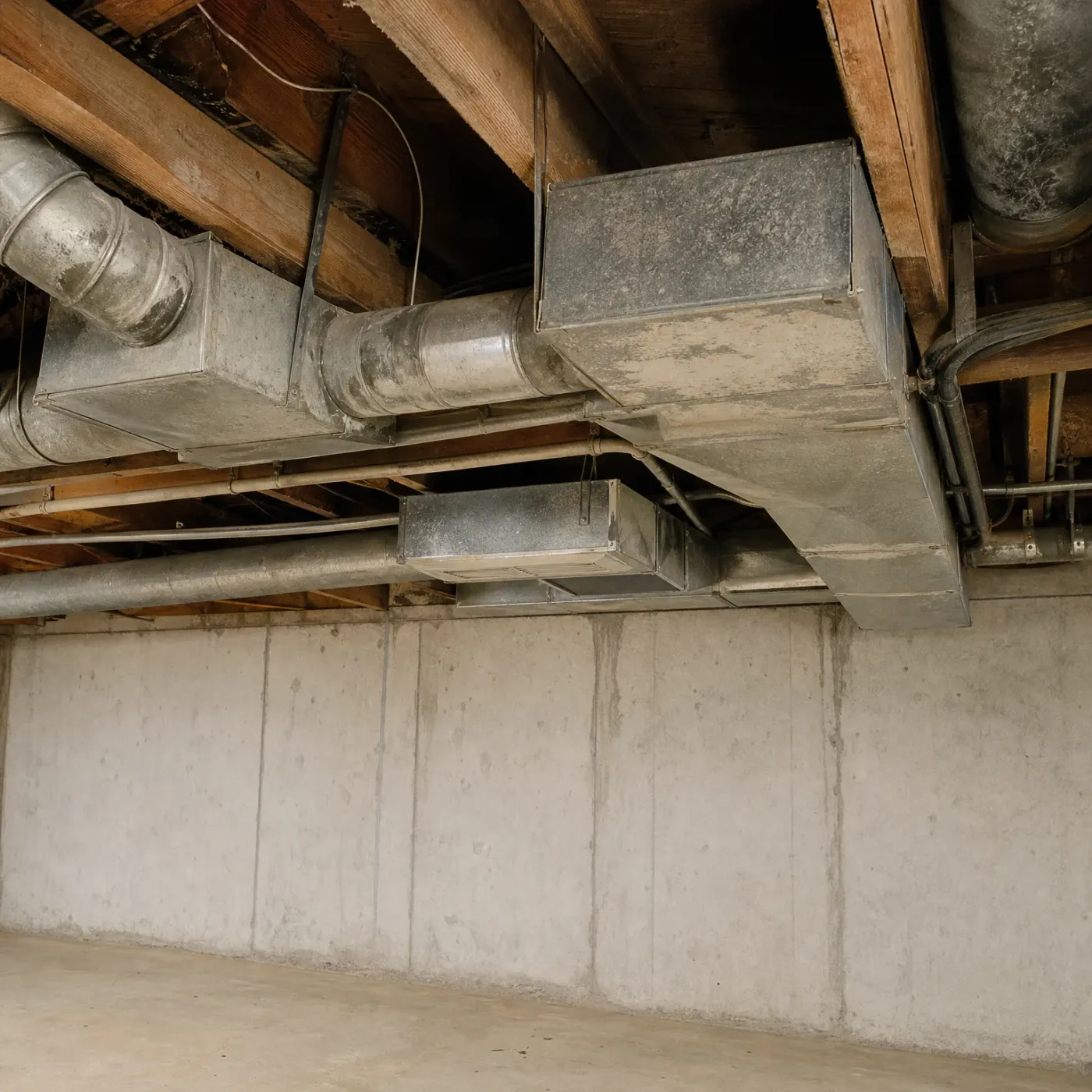
Basement ceiling with galvanized sheet metal ductwork, round pipes and rectangular plenums running between wooden joists above a bare concrete foundation wall and floor.
Before you get your ductwork cleaning
Empty basement room with bare concrete walls and floor, and an exposed wood-joist ceiling carrying sheet-metal ductwork, insulated pipes, and recessed lights.
After you get your ductwork cleaning

If you call around on your own

You'd be the one vetting contractors, since not every heating and cooling company actually runs duct cleaning crews or owns the equipment to do it right. You'd call two or three, explain the musty smell or the damp spot in the basement you can't quite see, and wait for each one to send someone out to look before you even get a number. Then you're comparing quotes that may not cover the same scope, trying to tell apart the one who'll vacuum the first few feet from the one who'll actually clear the branch lines. That's hours of your evening gone to legwork before anyone has touched a duct.

What happens when you ask here instead

You answer a few questions about your house and what you've noticed, and the request goes to one licensed contractor working in Colorado Springs, not a handful competing for your callback. Someone who works on ductwork across El Paso County all year has seen what a seam failure or an old condensate leak looks like in a basement like yours, and knows where moisture tends to sit in a system your age. You get one call, from one company that already knows roughly what you're dealing with, instead of a string of estimates to sort through on your own time.

A smiling man with curly graying hair and a dark knit sweater sits at a candlelit dinner table with a glass of red wine, a water glass and a bowl of salad in the foreground, in a dimly lit room with a lamp, framed picture and window behind him.
A woman in a cream knit sweater reclines on a gray sofa with her eyes closed and a slight smile, covered by a fleece blanket with a closed book on her lap, a lit table lamp and potted plants behind her.

You find it before it spreads

A contractor who works on ductwork around El Paso County all year catches a damp spot or a bad seam while it's still small, before it's had months to work through a branch line you never see.

Power here costs 15.63 cents per kilowatt-hour

At 15.63 cents per kilowatt-hour, running a negative-air machine and an air scrubber through a full duct cleaning doesn't add much to your power bill. That's worth knowing if a damp spot or bad seam means a contractor needs to run equipment longer to dry out a branch line before sealing it back up.

EIA-861 2025

What you know now is this: your ductwork is old enough to have a bad seam somewhere, dry air in the house doesn't tell you what's happening in a branch line near a condensate drain or a leak you forgot about, and you have no way to look back there yourself. That's the whole问题. A contractor who works on duct systems around El Paso County all year has seen what a damp spot or a failed vapor barrier does to a run like yours, because half the houses here give him the same decades-old ductwork to check. You call one licensed, local contractor instead of fielding calls back from three, and he already knows what tends to fail in homes built when yours was. You don't need to diagnose it yourself or guess which company actually runs duct cleaning crews. You need someone who's looked into a hundred basements like this one and knows what a clean run looks like versus one with a problem starting in it.

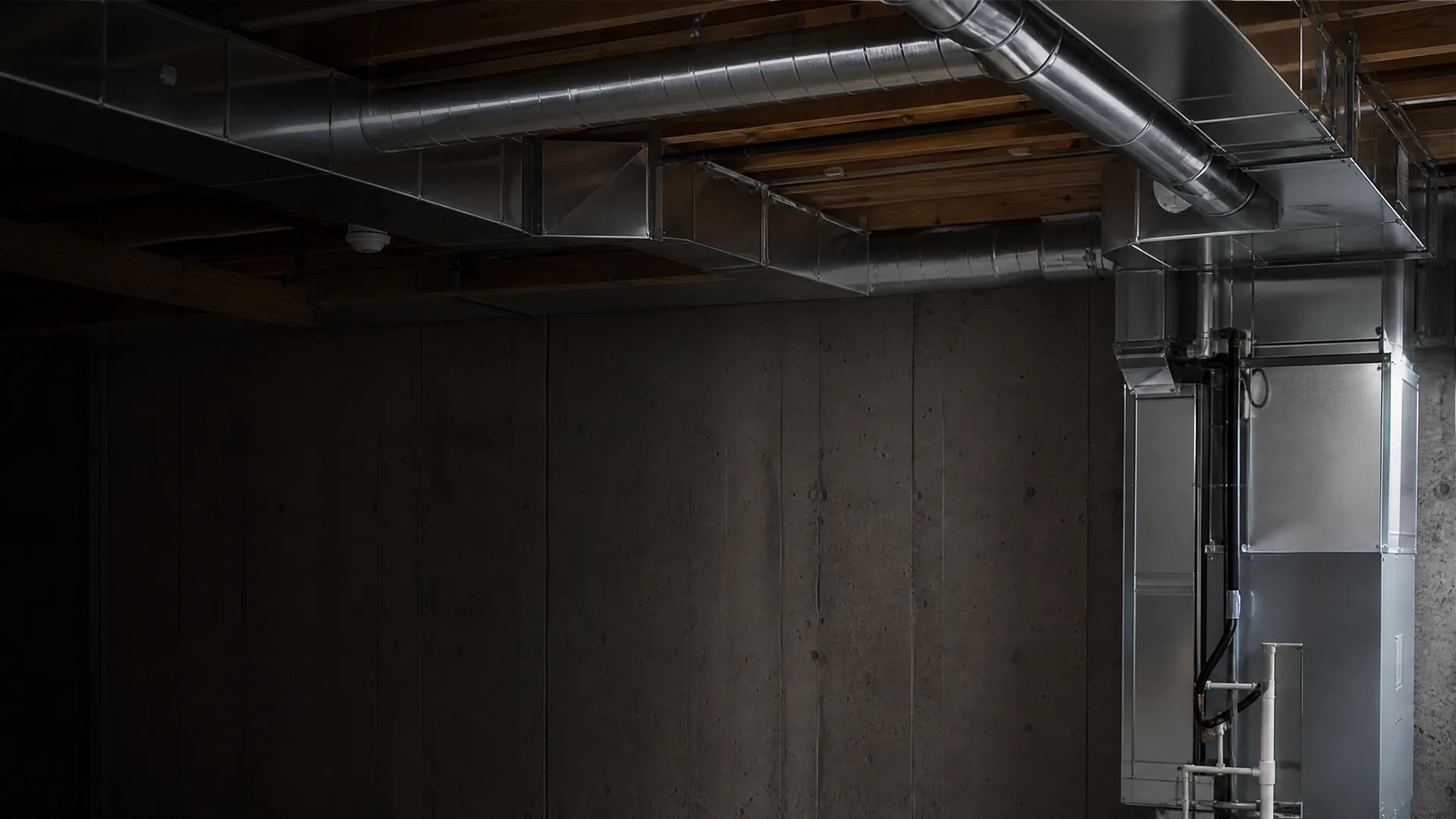
Unfinished basement with poured concrete walls, exposed wooden joists, and galvanized sheet-metal supply ducts and round pipes running along the ceiling to a furnace unit at right.

One form, no calling around

A licensed pro who works in El Paso County gets your request.

Duct and vent cleaningDucts or ventsEl Paso County, CO
Step 1 of 2

What ZIP code is the job in?