
Why your vents smell musty in Colorado

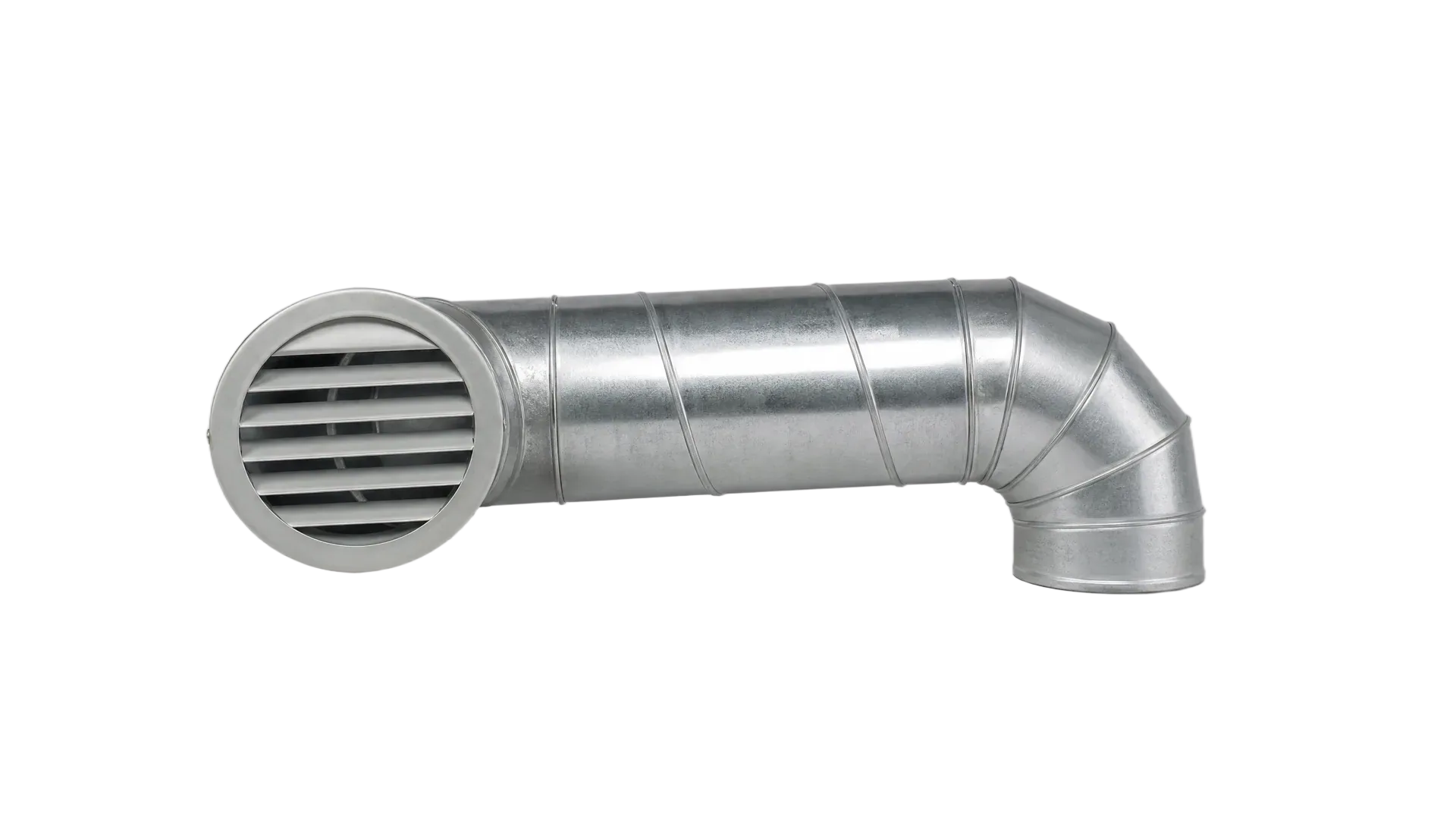
A galvanized steel round duct section with a 90-degree elbow at one end and a louvered vent grille at the other, photographed against a plain gray background.
Find a duct system pro

Why do my vents smell musty in Colorado?

You turn on the AC or the heat and that musty smell hits you right away, like a damp basement. It's not constant, and that makes it harder to figure out. You've checked for a dead mouse or a leak and found nothing. The smell seems to come straight from the vents themselves, which makes you wonder what's sitting in there that you can't see.

Dust and moisture built up inside the ductwork, usually around the evaporator coil

The musty smell comes from moisture sitting on dust inside the ducts, usually near the evaporator coil where humid air passes over cold metal. Colorado summers are hot and dry, so the air outside isn't the problem. The moisture is condensation forming inside the system itself every time the AC runs. That water meets years of settled dust and whatever gets pulled in through the return, and it doesn't dry out fast in a closed duct. Once that layer builds up, every time air moves through the system it carries the smell with it, through every vent in the house, not just one room.

A basement with a gray furnace on a concrete pad connected to large sheet-metal ducts running along an exposed wood joist ceiling, with PVC pipes and plastic sheeting on the walls.

Ducts running clean

Air moves through the plenum and the runs overhead without picking up anything on the way. No film on the metal, no standing moisture where the condensate line drains. Dry Colorado air outside helps, since whatever moisture gets into the system has a chance to leave before it settles into the ductwork.


Galvanized sheet metal HVAC ductwork with a vent grille running along a wooden joist ceiling above a bare concrete wall.

Ducts holding onto something

That same run of sheet metal can collect dust and moisture where a duct seam isn't sealed tight or where condensation sits against the metal. Once that builds up along the inside of the duct, every time the furnace or AC kicks on, it pushes that smell out through the register and into the room.

Does the Smell Clear or Stay

Smell fades on its own

  • A musty smell that shows up only in the first minute after the AC or furnace kicks on and then clears usually means a small amount of moisture sitting near the coil or in the drain pan.
  • Colorado's dry outside air helps here, since once that trapped moisture airs out through the vents, there's little humidity left in the house to feed it again.
  • If it only happens after the system has sat off for a while, condensation on the coil is more likely the cause than growth spread through the ducts themselves.
  • Running the fan for a few minutes after the AC cycles off can help dry the coil and may be enough to stop the smell from coming back.

Smell lingers or spreads

  • A musty smell that's there no matter how long the system runs, or that you notice in rooms far from the vents, points to growth established somewhere in the ductwork.
  • Once it's inside the duct lining or insulation, dry air blowing past it doesn't clear it out the way it would a small amount of coil condensation.
  • A smell that's gotten stronger over weeks rather than staying the same suggests whatever is causing it has kept growing, not just sitting there.
  • If people in the house have started noticing more coughing or stuffiness when the system runs, that's a sign worth taking seriously alongside the smell.
  • Checking the filter and finding it damp or discolored, rather than just dusty, usually means moisture has been sitting in the system longer than a single cycle.
Unfinished basement with galvanized sheet-metal rectangular and round ductwork running along a wood-joist ceiling, two steel support columns, a small window, and a furnace unit against the far right wall.

Ductwork doing its job

This is what dry duct work looks like, metal runs and flex duct crossing the joists with nothing clinging to them. Air passes through the plenum and out to each room without picking up moisture on the way. The furnace and the copper lines nearby stay dry too, no film, no drips, nothing sitting where it shouldn't.

An unfinished basement with bare concrete walls and floor, showing exposed wooden floor joists, pipes, wiring, and metal HVAC ducts with a vent grille overhead.

Moisture working into the system

Here the ducts sit tighter against the joists and the concrete walls hold damp longer than the rest of the basement. Moisture gets into the seams of the plenum boxes and the branch runs instead of drying out between cycles. That's what builds the smell, and it keeps building until something clears it out.

Is this smell a sign something's wrong in my house

You notice it most when you first walk in the door after being out, or right when the AC kicks on after the house sat quiet for a few hours. Family might not catch it since they're used to it, but a guest will ask about it the first time they're over. Check the vent covers themselves, you may see a faint dark ring around the louvers where moisture's been sitting. Left alone, that moisture is feeding mold growth inside the ductwork where you can't see it, and every time air moves through, it carries spores into the rooms you breathe in all day.

An older man with gray hair, a dark coat and scarf dusted with snow stands in a warmly lit entryway with an open wooden door, a table lamp, framed pictures, and a plant in a vase.
An older man with gray hair and a beard wearing a dark snow-dusted coat stands in a home entryway, with a lamp-lit living room and a wooden staircase behind him.
An older man with gray hair and a beard, wearing a dark snow-dusted coat, stands in a warmly lit home entryway with a hallway, console table with lamp, patterned rug, and living room visible behind him.
A gray-haired bearded man in a dark snow-dusted coat and scarf stands inside a dimly lit home entryway, with a hallway, framed picture, lit table lamp and staircase behind him.

Get the right pro for your ductwork

One form replaces the calls you'd make to find a duct system pro.

No charge to send it. You decide if you hire them.

What the AC coil holds onto

Every time the AC runs, the evaporator coil gets wet. That's normal, it's how the system pulls humidity out of the air. The water is supposed to drain off and dry up between cycles. Colorado's dry outside air usually helps with that, pulling moisture out fast once the system shuts off. But dust and dander settle on the wet coil and the drain pan too, and over time that builds a film that stays damp longer than bare metal would. That film is what you're smelling, not the water itself. A coil can look clean from where you're standing and still hold enough buildup to cause it.

Why gas furnaces don't fix it

Running the furnace instead of the AC doesn't clear the smell on its own. Gas heat dries out the house, but the air for it passes through the same return ducts and across the same coil the AC uses, so whatever is sitting in that duct work or on that coil gets stirred up and pushed through the vents either way. The dry winters here don't reach what's inside the ducts. You can run the furnace all season and the smell can still show up the next summer the moment the AC switches back on, because the source never left.

A woman wrapped in a thick cream knit blanket sits in an armchair beside a lit table lamp, with an open book in the foreground and a frost-covered window behind her.
A bearded man in a plaid flannel shirt stands indoors looking out a frost-covered window, with a steaming dark blue mug on the wooden sill and snow-covered trees outside.

Smell shows up with the dust

If the musty smell gets stronger when the furnace blows or you notice more dust settling on sills and shelves, the ducts themselves are likely holding onto what's causing it.

Match me with a pro

Smell fades, then comes back weeks later

A smell that clears up but keeps returning points to something ongoing, not a one time cleaning job. Worth having a contractor look at what's feeding it before it gets worse.

Match me with a pro
Basement ceiling with galvanized sheet metal rectangular ducts and round pipes running between wooden joists above a bare concrete wall and floor.
Before you get your ductwork cleaning
Unfinished basement with bare concrete walls and floor, showing exposed wood floor joists overhead with sheet-metal rectangular ductwork, insulated flexible ducts, and pipes.
After you get your ductwork cleaning

Power costs 15.69 cents per kilowatt-hour statewide

At 15.69 cents a kilowatt-hour, running the blower longer than it needs to runs up your bill fast. A duct system holding onto moisture makes the furnace or AC work harder and cycle longer to clear that musty smell, and you pay for every extra minute.

EIA-861 2025 statewide residential average

A dimly lit living room corner with a dark wood side table holding a pale ceramic vase of leafy branches, a beige sofa with a dark gray cushion, and a sheer-curtained window showing trees and a roofline outside.

It's a spring afternoon and the sun's coming through the living room window, lighting up the dust on the carpet and the couch arm. You look up and notice the ceiling vent grille is coated in it, a gray felt over every slat. You run a finger along the edge of the coffee table and it comes back dusty again, same as yesterday after you wiped it down. The furnace kicked on twenty minutes ago and that same musty smell drifted through, faint but there. You still haven't opened the windows this week, the dry Colorado air outside hasn't needed it, so whatever's settling on that grille has nowhere else to come from but the ducts themselves.

A woman stands in the open front doorway of a single-story house with stone and wood siding while a man in a dark polo shirt and cap walks toward it along a concrete path.

The musty smell has a source, and it can be found

A musty smell in your vents isn't something you have to live with or explain away to guests. It means moisture is sitting somewhere in the system, whether that's near the coil, in the drain pan, or in the ducts themselves, and Colorado's dry air outside hasn't been enough to dry it out on its own. Once you know that, the smell stops being a mystery and becomes something a contractor can actually find and clear out.

You could spend a weekend calling around, explaining the smell to three different companies, and comparing quotes that don't even cover the same work. Or you can skip that and get matched with a contractor who handles duct cleaning and knows what to check first. They'll reach out to you directly, so you're not the one chasing down someone to take a look.

A speckled beige ceramic vase holding thin dried branches sits on a round wooden table near a window with sheer curtains, with a dark upholstered chair and draped blanket blurred in the background.
Dim interior with a dark gray wall, exposed wood joist ceiling, sheet-metal ductwork, conduit, pipes and a sprinkler head.

Get your ductwork to the right pro

Answer a few questions about the duct cleaning and skip the search.

Duct and vent cleaningDucts or ventsColorado
Step 1 of 2

What ZIP code is the job in?