












Why your AC vents are sweating in Colorado

RepairCentral ACColorado
Step 1 of 2

What ZIP code is the job in?

Why are my AC vents sweating?

Water beading on the metal around your vents, or dripping onto the ceiling below, usually shows up on the hottest, driest afternoons. It's not something most people expect from an air conditioner in Colorado, since the air outside feels anything but humid. But the air inside your house is a different story once the AC is running hard to fight that dry heat, and that difference is what's landing on your ceiling.

Your vents are sweating because warm air is hitting cold metal and turning to water

Air conditioning ducts carry cold air, and when that metal gets cold enough, any warm air touching the outside of the duct condenses on it, the same way a cold glass of water sweats on a hot day. In Colorado, homes often run the AC hardest during the dry, sunny stretch of summer, and attics and crawl spaces above ceilings can get hot even though the outside air is dry. That heat meeting a poorly insulated duct is usually what causes the dripping. It can mean the duct has lost its insulation wrap, has a gap letting humid indoor air reach the cold metal, or is running colder than it should because of a problem with the system itself.

A woman with long blonde hair in a light blue shirt leans back on a beige sofa with her eyes closed, in a softly lit living room with cushions and a blurred plant and shelf in the background.
A woman with long dark hair in a gray knit sweater sits on a gray sofa with a cushion, looking toward a window in a living room with framed pictures and a lamp in the background.
A woman with long dark hair in a light grey knit sweater sits on a sofa indoors, looking to her right, with a framed landscape picture, a potted plant and a curtained window behind her.
A woman with long dark hair leans back against a gray sofa with her eyes closed, in a living room with a curtained window, a potted plant, and a dark screen in the background.

Condensation or an Airflow Problem

Condensation

  • The sweating shows up on the vent cover itself and the metal stays wet to the touch.
  • It tends to appear during the hottest part of the afternoon and dries up once the house cools off.
  • Warm, dry air meeting a cold duct or vent surface is enough to cause it on its own.
  • A duct running through an unconditioned attic or crawlspace is more likely to get cold enough to sweat.
  • Adding insulation around the duct or vent box in that spot usually stops it for good.

Airflow problem

  • The sweating comes with weaker airflow from that vent or others in the house.
  • A dirty filter or a blocked return can drop the temperature at the vent low enough to sweat and ice up.
  • Rooms farther from the air handler feel warmer than rooms close to it.
  • The sweating shows up even on milder days, not just the hottest afternoons.
  • A contractor can check the filter, the return, and the coil to find where the airflow is getting choked off.
  1. Air conditioned air inside the duct chills the metal vent cover

  2. Warm house air hits that cold metal and loses its grip on moisture

  3. Moisture turns to water right on the vent surface

  4. Water beads up and drips if the duct lacks enough insulation

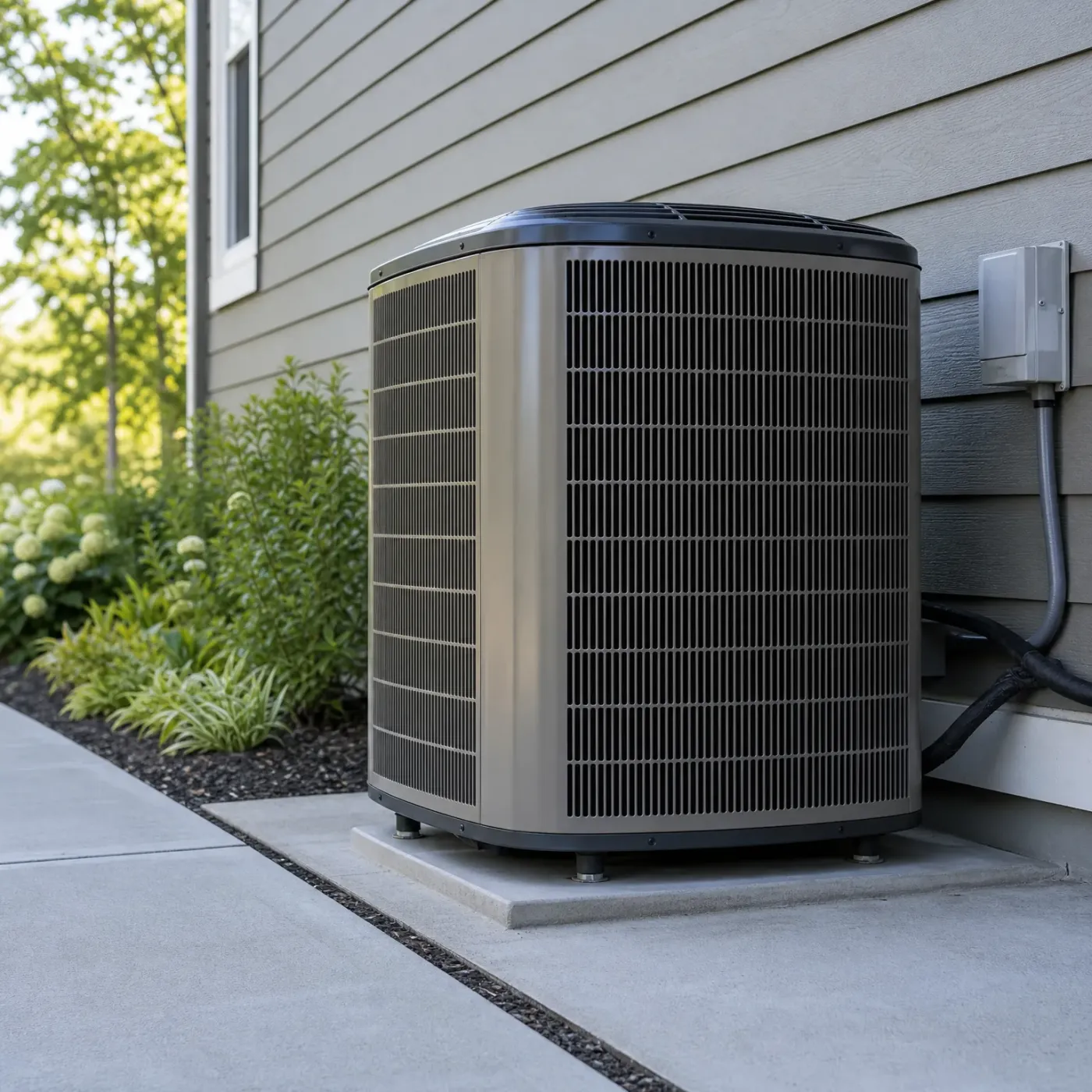
A gray outdoor air conditioning condenser unit on a concrete pad beside a house with horizontal lap siding, with a conduit and electrical disconnect box on the wall and a green shrub in mulch to the right.
A system running well cools the air without ever dropping the duct surface cold enough to sweat.
A weathered outdoor air conditioner condenser unit on a concrete pad beside a house with horizontal vinyl siding, with a conduit and disconnect box on the wall to the right.
Dirt and debris packed against the outdoor unit make it work harder, which can push ducts colder than they should run.

What are you noticing around your vents right now

Look at the vent cover itself, not just the ceiling. The metal feels cool and damp, sometimes with small drops clinging to the edges or the screws. On drywall nearby you might see a stain spreading outward, or a dark ring if it's been going on for a while. Some people notice it first as a drip landing on the floor or furniture below. It usually shows up in the rooms where the ducts run longest or sit in hot attic space. Left alone, that water doesn't just evaporate on its own. It soaks into drywall and insulation, and repeated soaking is what turns a damp spot into a stain, a sag, or mold growing where nobody can see it until the ceiling tells you.

An older woman with short gray hair in a cream cable-knit turtleneck sweater smiles while looking to the side in a wooden kitchen, with a round loaf of bread on a board in the foreground and a lit candle by a dark window.
A woman and a child wrapped together in a thick knitted blanket on a sofa, both with eyes closed, with a lit table lamp and houseplant in the dim background.
An outdoor air conditioning condenser unit on a concrete pad beside a house with horizontal lap siding, with a gray electrical disconnect box and conduit on the wall and green shrubs and trees to the left.

An air conditioner pro near you

Send the request today and stop worrying about who to call.

A local pro who knows air conditioners gets your details and gets in touch.

Send it today

You're not committing to anything by asking.

A man in a dark blue shirt stands in an open front doorway of a stucco and wood-clad house, facing a blond woman seen from behind in the foreground on a stone walkway.

What this does to your house if it keeps going

A wet vent cover is not just a nuisance. The water has to go somewhere, and if it's dripping instead of just beading, it's already landing on your ceiling drywall. Left alone through a Colorado summer, that turns into a soft spot, then a stain, then paint or drywall that needs replacing. If the vent sits near a light fixture or a closet, the water can travel further than you'd guess before you ever see it.

You don't have to figure out whether it's the duct insulation, the airflow, or the system running harder than it should. That's a judgment call for someone who can get up into the attic or crawlspace and look at the duct itself. Once you send in a request, a contractor who handles this in Colorado homes will reach out to look at your specific setup and tell you what's actually going on, so you're not guessing at it while the stain spreads.

Interior corner of a dining room with a round wooden table, a ceramic vase holding olive branches, a dark spindle-back chair near a curtained window, and a sideboard with a lamp against beige walls.
A gray outdoor air conditioner condenser unit on a concrete pad beside a house with horizontal lap siding, with a wall-mounted disconnect box and conduit at left and a green shrub and mulch bed at right.

The unit running clean

Mulch and trimmed shrubs sit well clear of the condenser, and the pad is clean around the base. Air moves through the coil the way it was designed to, so the system pulls heat out of your house without strain. Ducts and vents stay at a normal temperature.


An outdoor air conditioner condenser unit on a concrete pad beside a house with horizontal lap siding, with a conduit running to a gray electrical disconnect box on the wall.

The unit working too hard

This condenser sits tight against the siding with nothing trimmed back around it. When airflow across the coil is restricted, the system has to run longer to cool the same rooms, and ducts can end up colder than they should. That's when vent covers start sweating.

Power costs 15.69 cents per kilowatt-hour statewide

At 15.69 cents per kilowatt-hour, your air conditioner is already one of the costliest things you run. Make it work harder than it should, by fighting dirt at the condenser or pushing ducts colder than needed, and that sweating problem starts costing you on top of the water damage.

EIA-861 2025 statewide residential average

A sweating vent is your duct telling you it's running colder than it should, usually because the system outside is working harder than it needs to. Clean that up and the metal stops dripping because the air around it stops getting cold enough to pull moisture out of your house air. That's the whole problem, and it's fixable. You don't have to figure out whether it's the condenser, the insulation, or something else in the duct run. Send the form and the work of finding a licensed contractor who handles this in Colorado is off your plate. You can go back to checking on dinner instead of checking the ceiling for new stains.

Sunlight falls across a beige upholstered sofa with a textured woven cushion and a chunky knit throw, beside a dark wood cabinet holding a ceramic vase with green leafy branches, near a white-framed window.
A sunlit corner of a room with a wooden side table holding a ceramic vase of green foliage and a wooden bowl, beside a light upholstered sofa with a knit throw and rust-colored pillow, with window shadows cast on a beige wall.
A sunlit room corner with beige walls, a white-framed window with sheer cream curtain, wood floor with a light rug, and a woven basket holding a knit blanket.
A beige ceramic vase holding a leafy green branch sits on a wooden cabinet in a corner, with sunlight through a sheer curtain casting leaf shadows on the wall.
A grey upholstered sofa with a rust-orange velvet cushion and a textured throw sits beside a window with linen curtains, next to a wooden side table holding a pale ceramic vase of olive branches.

A local pro for your air conditioner repair

Send the request today and let an air conditioner pro reach out to you.

Hand off the search

It costs nothing to send, and you don't have to hire anyone.



