


Side profile of a bearded man wearing a faded dark blue baseball cap and a matching dark T-shirt against a plain light gray background.

Signs your ducts need cleaning in Aurora, CO

Duct and vent cleaningDucts or ventsArapahoe County, CO
Step 1 of 2

What ZIP code is the job in?

What are signs your ducts need cleaning?

Maybe you noticed more dust settling on the furniture than usual, or someone in the house has been sneezing more since the furnace kicked on. Dust and dry air are a given in Aurora once summer fades, so it is easy to brush off. But a few other things together, not just one, point to the ducts themselves rather than the season.

Dust, uneven airflow and a musty smell when the system runs

Dust that resettles within a day or two of cleaning, vents that blow weaker in some rooms than others, and a musty smell when the furnace or AC first kicks on are the clearest signs. Dust in the ducts gets stirred up and pushed back into the house every time the blower runs, which is why it keeps coming back no matter how often you dust or vacuum. Weak airflow in certain rooms often means a blockage somewhere in the duct run. A musty smell points to dust or debris sitting in the ducts long enough to hold moisture, which matters in a dry climate like this one, where that moisture usually means something is building up inside the line rather than just normal household dust.

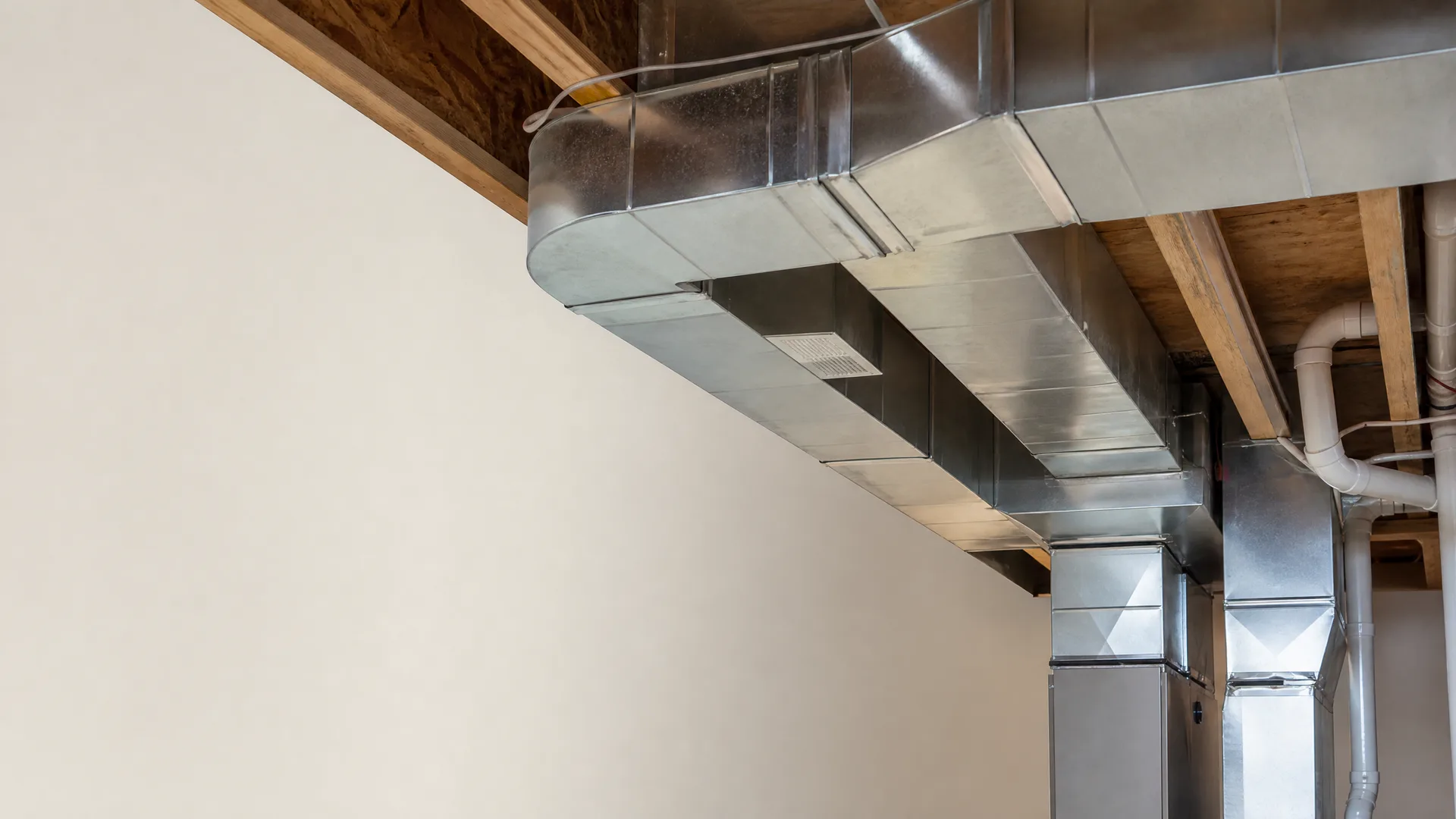
Galvanized sheet metal HVAC ductwork and insulated flexible ducts running along a wooden-joist ceiling beside a plain light-colored wall.

Why dust keeps coming back

The furnace pushes air through the same ducts all day, all winter. If the inside of that ductwork is coated with dust, every cycle stirs some of it loose and carries it into the rooms you live in. Wipe the furniture down and it looks clean for a day, then the film is back. That cycle is the clearest sign the dust is coming from inside the system, not from outside air, since Aurora winters mean windows stay shut and little outside dust gets in that way.

Galvanized sheet metal HVAC ductwork running along a wood-joist ceiling beside a plain light-colored wall, with white pipes nearby.

What the vents can tell you

Pull a vent cover off and look inside with a flashlight. Dust built up along the first few inches of duct, or a gray film across the register itself, tells you the buildup goes further back than you can see or reach. Check the return vent too, since that is where room air gets pulled back into the system and often shows the most buildup first. A register that looks clean on the outside can still sit in front of a duct that is not.

Why does Aurora push dust through ducts so much of the year?

  • Half the homes here were built by 1986

    Half the homes in Arapahoe County went up in 1986 or earlier, so a lot of the duct runs here have had decades to collect dust nobody's seen.

  • Heat runs October through May

    Heat runs October through May here, eight months of the furnace pushing air through the same ductwork and stirring up whatever has settled inside it.

  • Cooling runs June through August

    Cooling runs June through August, so for three more months that same ductwork is moving air even when the furnace is off.

ACS 2020-2024 · NOAA nClimDiv 1991-2020

In your house, this shows up in plain ways. The vents in rooms you use least, a guest room, a basement corner, blow out a puff of dust when the furnace first kicks on. Your register covers have a gray film on them even a week after you wipe them down. If anyone in the house has allergies or asthma, the stretch from October through May is when they notice it most, because that's when the furnace is running and pushing whatever is in the ducts out into the air you breathe. A musty smell when the heat first comes on points to dust or debris sitting in the line, not just dry air. None of this means something is broken. It means the ductwork has been carrying the same dust for a long time, and the furnace can't tell the difference between clean air and dirty air. It just moves what's there.

Empty basement with bare concrete walls and floor beneath an exposed wood-joist ceiling carrying galvanized sheet-metal ductwork, round ducts and pipes.
Before you get your ductwork cleaning
Unfinished basement with bare concrete floor and walls, exposed wood joists, metal ductwork, a furnace unit, steel support posts, and a small window.
After you get your ductwork cleaning

Clean the ducts now

You've seen the signs and the furnace still has months of work ahead of it. A contractor can get into the ductwork before another winter's worth of dust gets stirred through the house. Register covers stay cleaner, the dust on the furniture settles down, and anyone who's been sneezing since the furnace kicked on may notice the difference. It also means whatever has built up over the years in Arapahoe County's older duct runs isn't getting another season added to it. Once it's done, you're not guessing anymore about what's inside the ductwork.


Wait and watch it

Nothing forces you to deal with this today. The dust you're seeing built up over years, not weeks, and it will still be there next month or next season. If the signs are mild, a puff of dust at startup, a light film on a register cover, you can keep an eye on it through the winter and see whether it gets worse. The tradeoff is that the furnace keeps cycling that same air the whole time, so whatever's in the ducts now is what gets pushed through your house until you decide otherwise.

Power here costs 15.86 cents per kilowatt-hour

At 15.86 cents a kilowatt-hour, running the blower longer than it needs to costs you real money. A furnace working through caked ducts has to push harder to move the same air, and that extra runtime shows up on the bill every month heat's on.

EIA-861 2025

A smiling man in a dark green sweater sits at a wooden table with a light gray mug in a kitchen with white tile backsplash, pendant lights, and an adjoining living room visible.
A smiling man in a dark gray sweater stands indoors looking to the side, with a kitchen counter holding a ceramic mug and open wooden shelves behind him and a living area in the background.
A smiling man in a dark blue button-up shirt stands at a white kitchen island, with open shelving, a gas range, a potted plant and a window in the background.
A smiling man with dark wavy hair and a beard, wearing a dark green knit sweater, sits in an open-plan living room and kitchen with a brown sofa, large windows, and a counter holding a mug and a wooden bowl.

Done looking for a duct system pro

You already know what the dust is doing to your rooms and your furnace. The question left is whether to deal with it now or wait out the rest of the heating season watching register covers gray up again. A contractor who cleans ducts around Aurora every winter has seen this pattern enough times to know where the buildup sits worst and what a furnace like yours is dealing with. Send the request and it goes to one local contractor who handles this kind of work regularly, not a handful of companies competing for your callback. That's one call to make, one schedule to work out, and the rest of the search is off your plate. With eight months of heat still ahead, the sooner that air moving through your vents is clean, the sooner the dust on your furniture and the strain on your furnace both ease up.

  1. A contractor opens access ports in the main trunk line

  2. A vacuum unit connects to the ductwork to pull negative pressure

  3. A brush or air whip knocks dust loose from the inside walls

  4. Loosened dust and debris pull out through the vacuum line

Clean the ducts now or ride out winter

Clean now

  • A contractor can get into the ductwork before another round of cold snaps pushes the furnace into longer runtimes.
  • Register covers stay free of that gray film instead of clouding up again within a week.
  • The furnace moves air through clear ducts, so the blower isn't fighting caked dust to heat the same rooms.
  • Anyone in the house who's been sneezing more since the furnace kicked on gets relief this winter, not next one.
  • You deal with it on your schedule, before a cold week makes waiting feel like the wrong call.

Wait it out

  • The furnace keeps running eight months with dust building on the duct walls the whole time.
  • Every cycle stirs loose more of what's already caked inside, so the dust on your furniture keeps coming back.
  • A furnace pushing against clogged ducts works harder to move the same air, and that shows up on the bill each month heat's on.
  • Register covers in rooms you use least, a guest room, a basement corner, keep collecting that film between wipe-downs.
  • Nothing about the ducts changes on its own once the weather turns, so the same signs are still there when spring finally lets up.
Unfinished basement with bare concrete walls and floor, exposed wood joists, and galvanized sheet-metal HVAC ductwork and pipes running across the ceiling.
Air moves through clean metal here, no buildup lining the duct walls or sitting in the joints.
Basement ceiling with galvanized sheet-metal ductwork, wooden joists and subfloor, black and white pipes, above a concrete wall and floor.
Dust has built up thick enough at the junction to coat the metal where the ducts branch and meet.

What the signs add up to

  • Dust on furniture soon after cleaning, gray film on register covers, and more sneezing once the furnace runs are the signs to watch for.
  • Half the homes in Arapahoe County date to 1986 or earlier, so plenty of ductwork here has had decades to collect dust.
  • Eight months of heat, October through May, gives those ducts a long stretch to push dust through every room you live in.
  • A furnace working through caked ducts pushes harder to move the same air, and that shows up as extra runtime on the bill.
  • A contractor clears the buildup with vacuum pressure and a brush or air whip before another winter's worth of dust gets stirred through the house.
  • Clean ducts mean register covers stay free of film and the furnace moves air without fighting through blocked passages.

Dust back on the furniture a day after you clean, a gray film on the register covers, more sneezing once the furnace starts its cycle. Those are the signs, and in Aurora they tend to show up together once the weather turns. The reason comes down to the house and the season. A lot of ductwork in Arapahoe County has been running since 1986 or earlier, which is decades of chances to collect dust nobody ever saw go in. Then the furnace runs October through May, eight months of pushing air through that same buildup, cycle after cycle, into every room you use. The furnace itself tells you something too. Caked ducts narrow the path air has to travel, so the blower works harder to move the same volume, and that extra effort turns into extra runtime on the gas and power bill. None of this clears on its own. A contractor opens the ductwork, pulls negative pressure with a vacuum unit, and knocks the buildup loose with a brush or air whip so it comes out instead of circulating. After that, register covers stay clean longer, the furnace isn't fighting narrowed ducts to move air, and the dust that kept resettling on your furniture has somewhere to go besides your living room.

A bearded man in a dark t-shirt sits on a light sofa, smiling and looking down toward a laptop screen visible at the bottom edge of the frame, with a blurred living space behind him.
A man with graying hair and a beard in a plaid flannel shirt stands indoors looking out a frosted window at snow-covered trees, with a ceramic mug on the sill.

It's off your list after this

A local contractor who works on ductwork around Aurora all winter knows which duct runs in older homes tend to hold the most dust and what a cleaning actually needs to fix it. Send one request and a single licensed contractor gets it, not a handful of companies calling at once. The dust on your furniture, the film on the register covers, the furnace working harder than it should, all of it points the same direction. Getting it looked at now means the rest of the winter runs cleaner.

Hand it over

A licensed pro who works in Arapahoe County gets your request.

No charge to send it. You decide if you hire them.