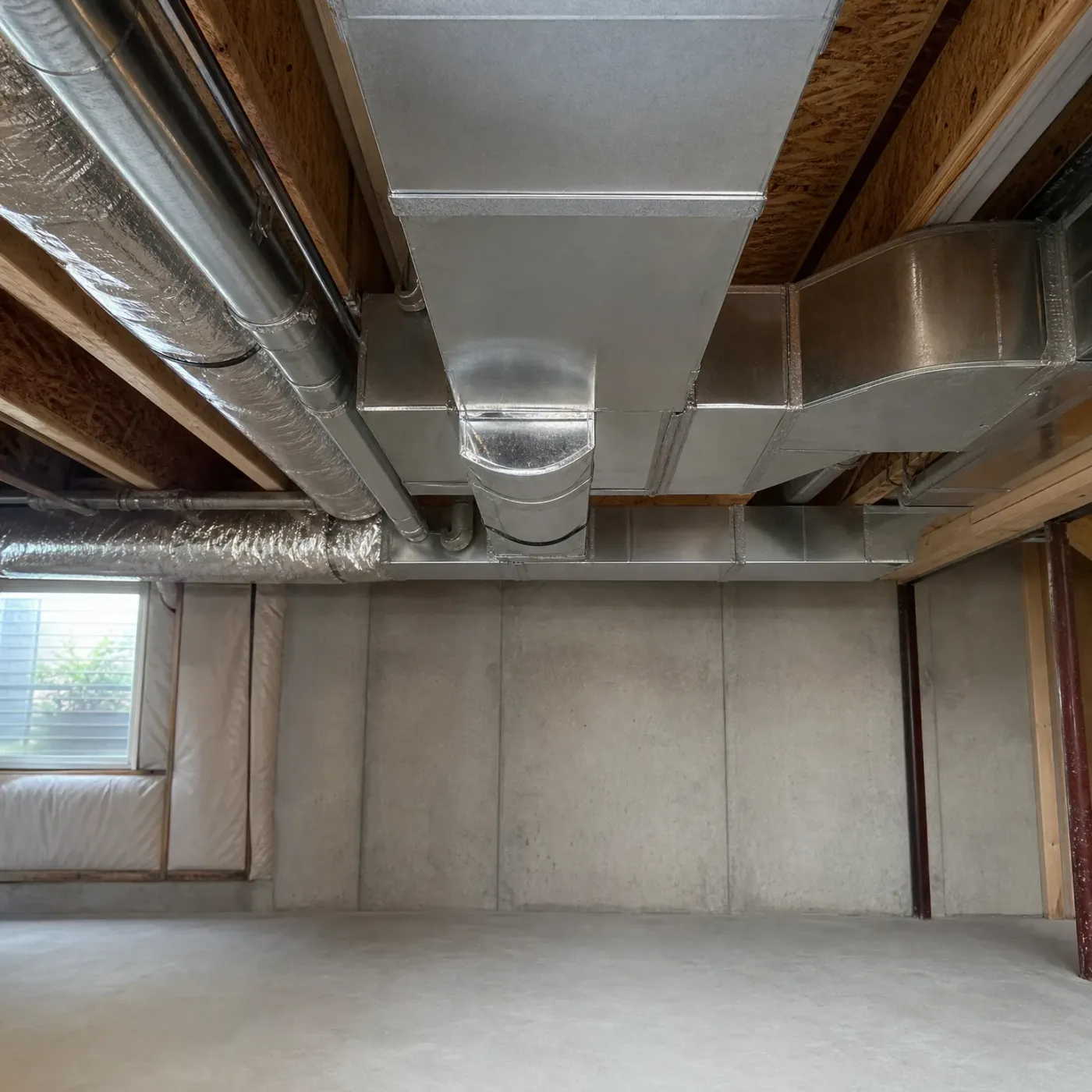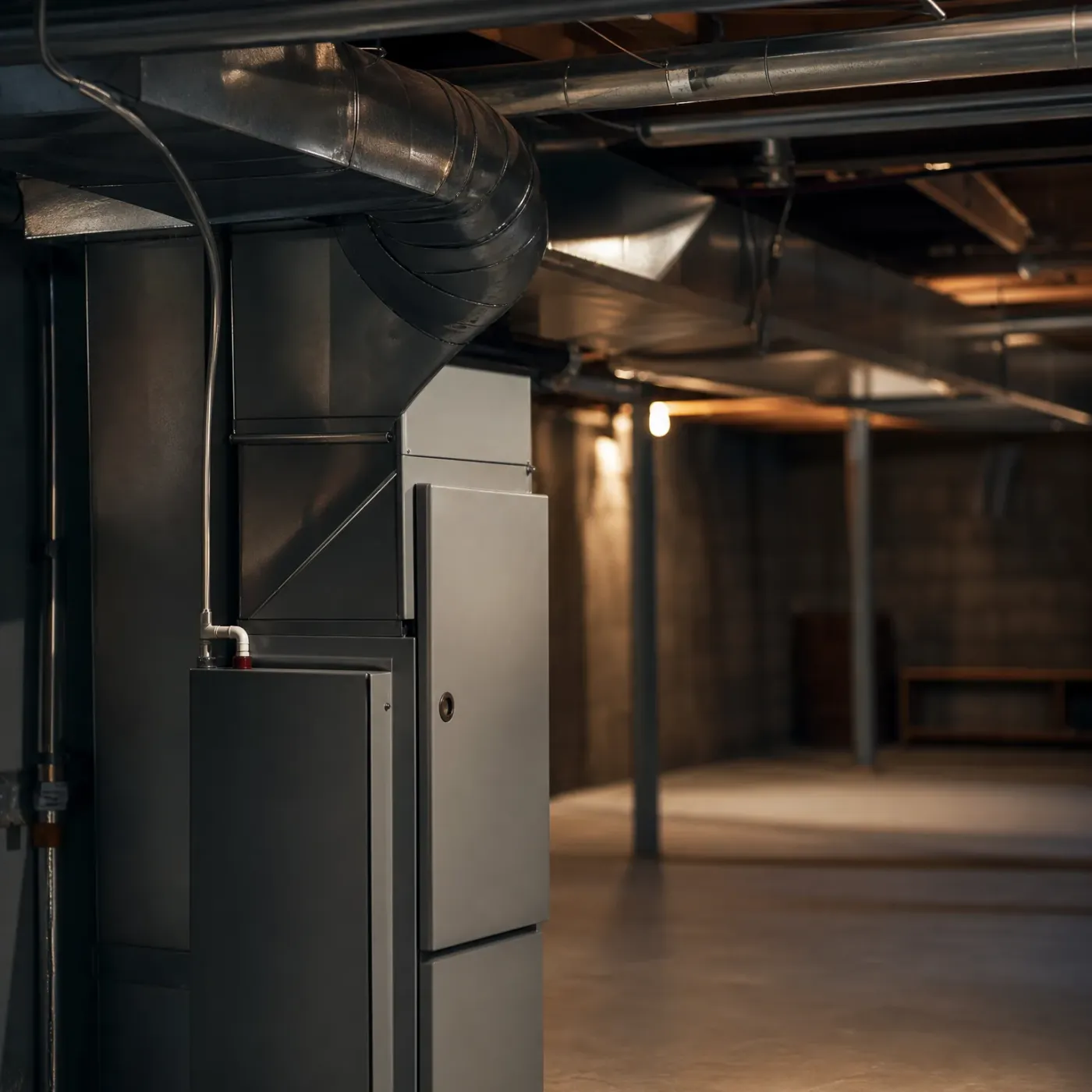

A basement interior with a gray furnace or air handler unit connected to large sheet-metal ductwork running along the exposed joist ceiling, with support posts and a concrete block wall in the dim background.

Finding a pro stops being your job

Why your house is so dusty in Colorado

Dust that comes back a few days after you clean usually means your ducts are moving it, not your housekeeping. Dry Colorado air makes it worse, since dust rides easier on dry air and settles everywhere a vent blows. This page gets into what's filling your ducts and what cleaning actually clears out. Send the form and let a local contractor take it from here.

Hand off the search

The dust is coming from your ducts, and Colorado's dry air is making it worse. Every time your furnace or AC kicks on, it pushes air through ductwork that's been collecting dust, pet hair, and fine debris along its walls for months or years. That air carries the dust straight into every room with a vent. Dry air only adds to it, since dust doesn't clump or settle the way it does in humid climates. It stays airborne longer and spreads further, so it lands on furniture, shelves, and floors across the whole house instead of staying put near the source. A filter catches some of this, but it only screens air as it's pulled back in. It does nothing for the dust already loose inside the duct runs themselves. If you're vacuuming and wiping down surfaces every few days and still seeing a layer return fast, that's the sign your ducts are the source, not a cleaning habit you're missing.

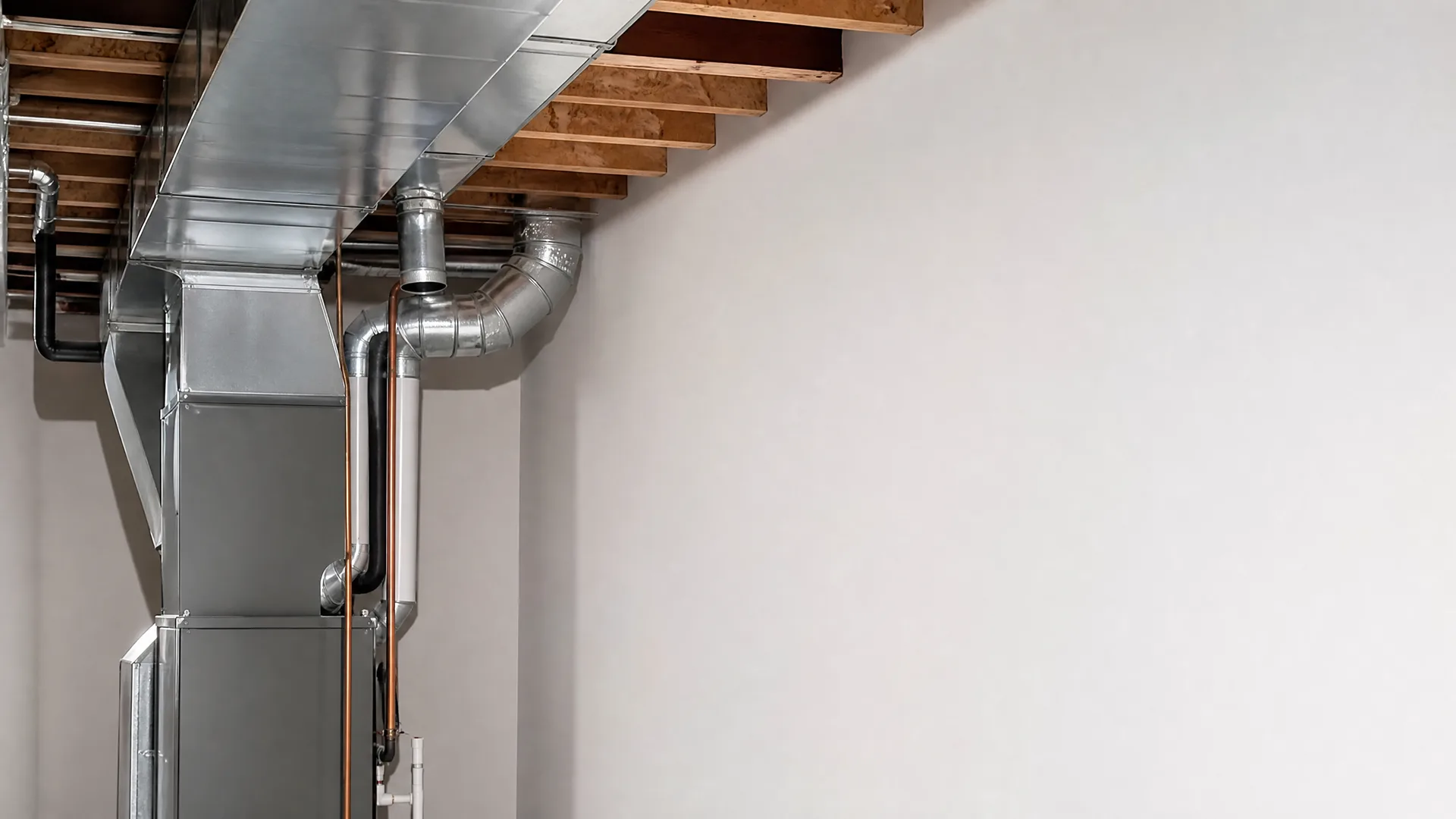
Basement interior showing a furnace with sheet-metal ductwork, a round flue pipe and copper lines running beneath exposed wooden floor joists next to a plain light-colored wall.

What gas furnaces pull through the ducts

A gas furnace draws return air across the ducts every time it fires, and in winter that can mean several cycles an hour. Each pass moves whatever has settled on the duct walls back into the air you breathe. Dry air already lets dust travel further and hang longer before it drops, so a furnace running on a cold Colorado morning pushes more of it through the house than the same system would somewhere humid.

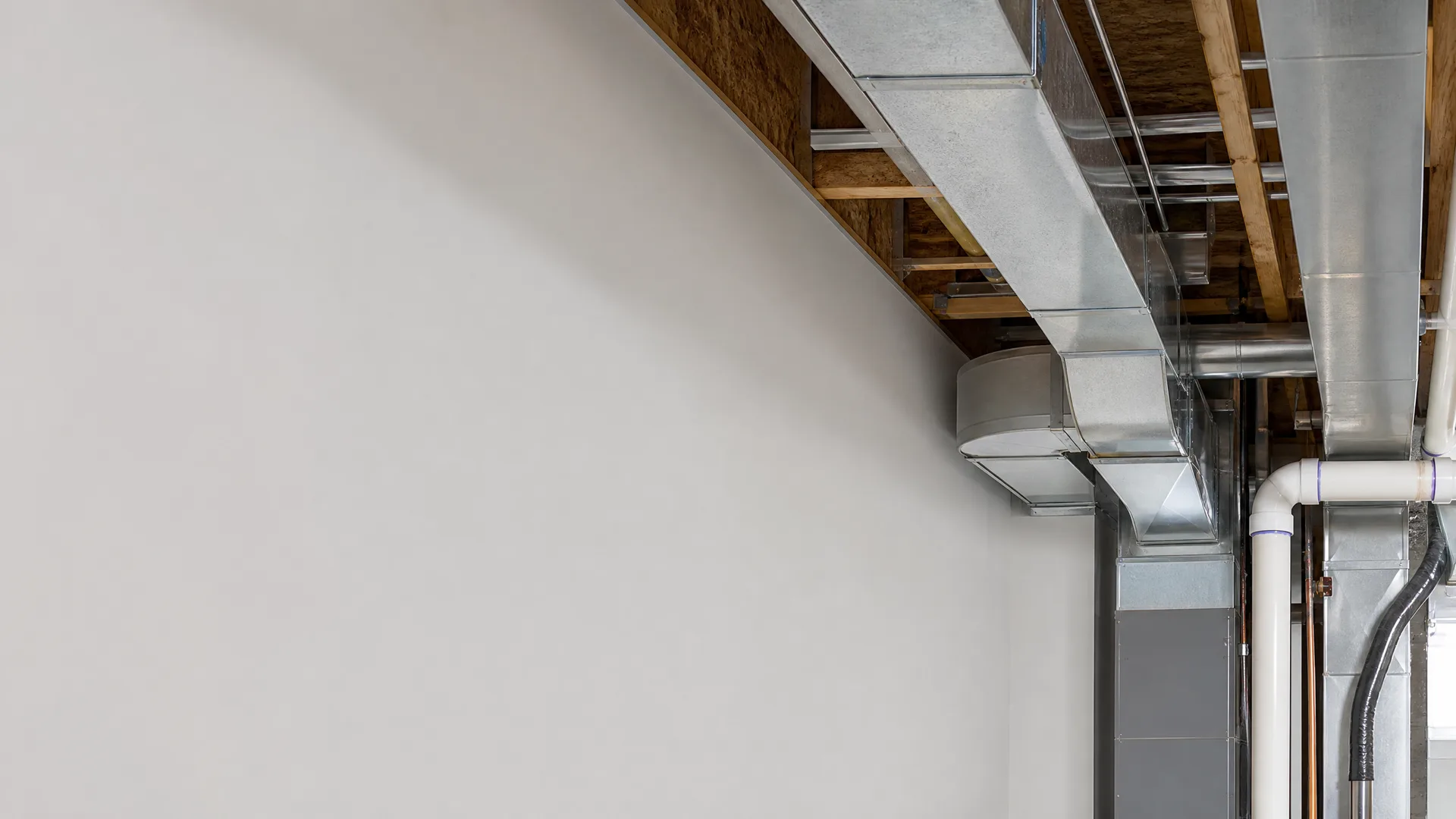
Interior corner of a building with a large blank white wall beside an unfinished ceiling showing wood joists, galvanized sheet-metal ductwork, and white and copper pipes.

Where the fine dust actually sits

Your filter catches what passes through it, but a lot of dust clings to the inside of the duct runs themselves, especially at bends and near the seams. Over time that layer builds up and breaks loose a little at a time, not all at once, which is why a house can stay dusty even right after a filter change. Cleaning the ducts removes that layer instead of waiting for it to work its way out through the vents.

Wipe It Down or Clean the Ducts

Dusty but livable

  • You wipe down surfaces every week or two and it holds you over until the next pass.
  • The dust is worse near the vents but you haven't noticed it triggering allergies or breathing trouble.
  • Your furnace and AC still heat and cool the house the way they should, with no odd smell when they kick on.
  • You can see the return vent isn't caked shut, just a thin film that builds back fast.
  • You're willing to keep resetting the clock with a wipe-down rather than deal with the ducts themselves.

Time to clean the ducts

  • Dust is back within a day or two of cleaning, not weeks, which points to the ducts resupplying it rather than normal household dust.
  • You can see buildup when you shine a light into a vent or pull a register cover off.
  • Someone in the house has started coughing, sneezing, or dealing with stuffy sinuses mainly when the furnace or AC is running.
  • The dust has a gray, fibrous look to it instead of the fine dry grit Colorado air normally carries in.
  • A local contractor who services ducts all year can run a camera through the line and show you exactly what's built up before any work starts.
  • Register covers and the area right around vents stay dusty again within days no matter how often you clean them.
Unfinished basement with galvanized sheet-metal ductwork and pipes beneath wood joists, a gray furnace unit at left, insulated plastic-covered walls over a concrete foundation, and a bare concrete floor.

Clean ducts, steady airflow

This is what moves air through your house without adding to the problem. The metal stays clear, the joists above stay free of buildup, and the furnace in the corner only circulates what comes in through the filter. Air moves through, not off the walls of the ductwork.

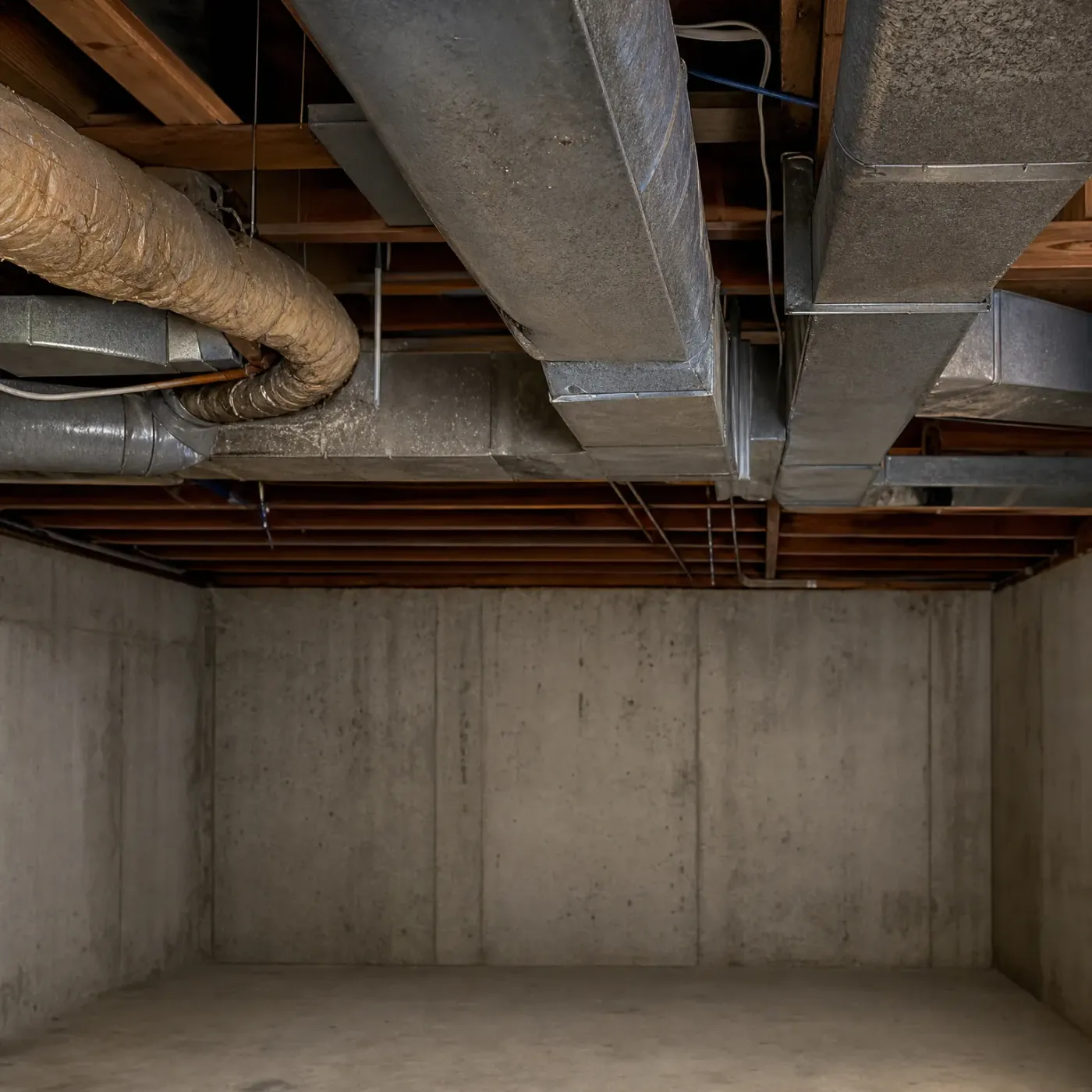
Empty concrete-walled basement room with galvanized rectangular and round HVAC ducts and pipes running along the exposed wood-joist ceiling.

Ducts doing the opposite

This run is coated along the inside, and every cycle knocks some of it loose into the house. You won't see this part from the basement floor. The metal looks fine from below. What's built up on the inside is what keeps landing on your furniture.

Empty basement room with bare concrete walls and floor, with exposed wooden joists, sheet-metal HVAC ducts, an insulated flexible duct, and pipes running across the ceiling.
Before you get your ductwork cleaning
Empty unfinished basement with bare concrete walls and floor, showing galvanized sheet metal ductwork, insulated flexible duct, and pipes running along the wood-framed ceiling, with a small window at left.
After you get your ductwork cleaning

Let someone else find the pro

Only one pro gets your request, so you hear from one company.

Asking costs nothing, and the choice to hire stays yours.

You'll notice it on the furniture and the floors first, then on the register covers themselves, a gray film that's back within days of wiping it off. That's not Colorado dirt blowing in from outside. It's what's sitting in your ducts getting pushed out every time the furnace fires.

Leave it alone and the furnace just keeps recirculating the same dust through every room it serves, all winter. A cleaning clears what's built up in there so what comes out of the vents is air, not the dust your furnace has been storing and reusing.

Power costs 15.69 cents per kilowatt-hour statewide

At 15.69 cents per kilowatt-hour, running the blower longer than it needs to shows up on your bill. A duct system clogged with dust makes the furnace work harder to push air through, so it runs longer to heat the same rooms. Clear ducts let the blower do less work to move the same air.

EIA-861 2025 statewide residential average

A new filter, still dusty fast

You put in a new filter and the house is dusty again inside a week. That's a sign the problem sits past the filter, further down the duct run where nothing you install at the vent can reach it. The filter only catches what passes through it going into the furnace. Dust that's already packed into the duct walls doesn't go through the filter at all, it gets stirred loose and blown straight into the room. If you've tried a higher rated filter and it hasn't changed anything, that's telling you something. It's not catching more because the dust isn't coming from the air passing through it anymore.

When cleaning actually fixes it

Duct cleaning clears out what's built up on the walls of the supply and return runs, the stuff a filter never touches. A contractor runs the job room by room, opening each vent and pulling debris out of the branch lines back to the trunk. For a Colorado home running gas heat all winter and AC through the dry summer months, that's a lot of air passing through the same ductwork year after year. Once it's cleared, the furnace is only moving what comes in through the filter, not adding to it. A tech who works on duct systems in this area every season knows which runs tend to pack up first and checks those closely.

A smiling man in a navy long-sleeve shirt sits at a wooden table in a kitchen and dining area, with a ceramic mug, a potted plant, and a sliding glass door behind him.
A smiling bearded man in a green henley shirt stands at a kitchen island with a gray mug, looking off to the side, with a dining area and shelves blurred behind him.
A smiling bearded man in a navy sweater sits at a white kitchen island with a ceramic mug, with open shelves, potted plants and a range hood behind him.
A smiling man in a dark olive long-sleeve shirt sits in a kitchen beside a counter with a dark mug, with a dining table, sideboard and hallway visible in the blurred background.

Where your dust is coming from

  • Dust that returns within days points to the ducts, not the dry Colorado air alone.
  • A gas furnace that cycles several times an hour in winter keeps pushing settled dust back into your rooms.
  • A new filter won't fix dust that's already past it, sitting along the duct walls.
  • Clear ducts let the blower run less to heat or cool the same rooms, which matters at 15.69 cents per kilowatt-hour.
  • Gray film back on register covers within days is duct dust, not outside dirt.
  • Checking before small dust problems grow into bigger ones starts with knowing where the dust is actually coming from.

Dust that settles again within a few days isn't about keeping up with housework. It's your duct system doing what it does every time the furnace or AC cycles, pulling air across walls that have been collecting dust for months and pushing it back out through the vents. Colorado's dry air carries that dust further and lets it settle on more surfaces, but the dry air isn't making the dust. Your ducts are. A gas furnace that fires several times an hour all winter means that movement happens over and over, all season, whether you notice it or not. A new filter helps with what's coming through the system now, but it does nothing for what's already sitting along the duct walls from before you changed it. That dust rides the next cycle same as always. The gray film that shows up on your register covers a few days after you wipe them down is the clearest sign of where it's coming from, since outside dirt doesn't blow in that fast or that evenly across every vent in the house. There's a cost to leaving it, too. A duct system loaded with dust makes the blower work harder and run longer to move the same air, and at 15.69 cents per kilowatt-hour that shows up on your bill over time. None of this is a guess. It's what happens in a duct system that hasn't been cleaned, and it's worth knowing before a small dust problem turns into something bigger.

A man in a blue T-shirt sits on a light gray sofa, laughing while looking at an open laptop in the foreground, with a framed picture, lamp and potted plant behind him.
A bearded man in a plaid flannel shirt sits indoors looking out a window at snow-covered trees, with a steaming mug on the sill and wooden kitchen shelves behind him.

Ductwork Cleaning

One request and it's handed off

Your request stays with one local pro.

A black smartphone standing upright against a plain light gray background, its screen filled with solid green.
Duct and vent cleaningDucts or ventsColorado
Step 1 of 2

What ZIP code is the job in?