

Does duct cleaning help allergies in Colorado
A local pro who cleans ducts gets in touch with you.
Get a duct system proDuct cleaning can ease allergy symptoms if dust and pet dander have built up in your ducts, but in Colorado that buildup usually isn't the main problem. Summers here are hot and dry, which keeps mold and the heavy moisture-driven dust that feeds allergies from collecting in ductwork the way it does in damp climates. Most homes here heat with gas through the winter, and that forced air can stir up dust and pollen that settled in the ducts, so a cleaning does help if your home has been dusty or you notice more sneezing when the furnace first kicks on in fall. What usually matters more for allergies is the filter, since that's what actually catches the particles passing through the system, not the duct walls themselves. If you've never had the ducts cleaned, or you can see dust kicking out of the vents, it's worth having someone look at the whole system, filter included, rather than just the ducts.

Spring sun comes in low through the living room window, and you notice the ceiling vent grille above the couch first. A gray film of dust rings the slats, thicker than you'd expect for how often the furnace has run since March. Underneath it, the side table and the top of the picture frames have the same fine coat. You run a finger along the grille and it comes away dark. The dry air that rolled in with the warm weather has kicked the dust up and spread it further than usual, and some mornings your eyes feel it before you've even looked up and seen where it's coming from.


How a duct cleaning actually works
- Dust and pet dander settle inside the duct and get thrown back into the air each time the furnace blower kicks on.
- Gas furnaces here run most of the fall and winter, so a duct loaded with dust gets stirred up on a daily cycle.
- A technician cleans by connecting a vacuum to the trunk line and running a brush or air whip through each branch to knock debris loose.
- The return side usually carries more dust than the supply side, since it pulls air straight from the rooms before it ever reaches the filter.
- Dry conditions in Colorado keep mold out of most duct systems, so the material pulled out is almost always dust, hair and dander rather than mold growth.
- A cleaning only helps allergy symptoms if that debris was the source; it won't fix allergens coming from carpet, bedding or the air in the room itself.
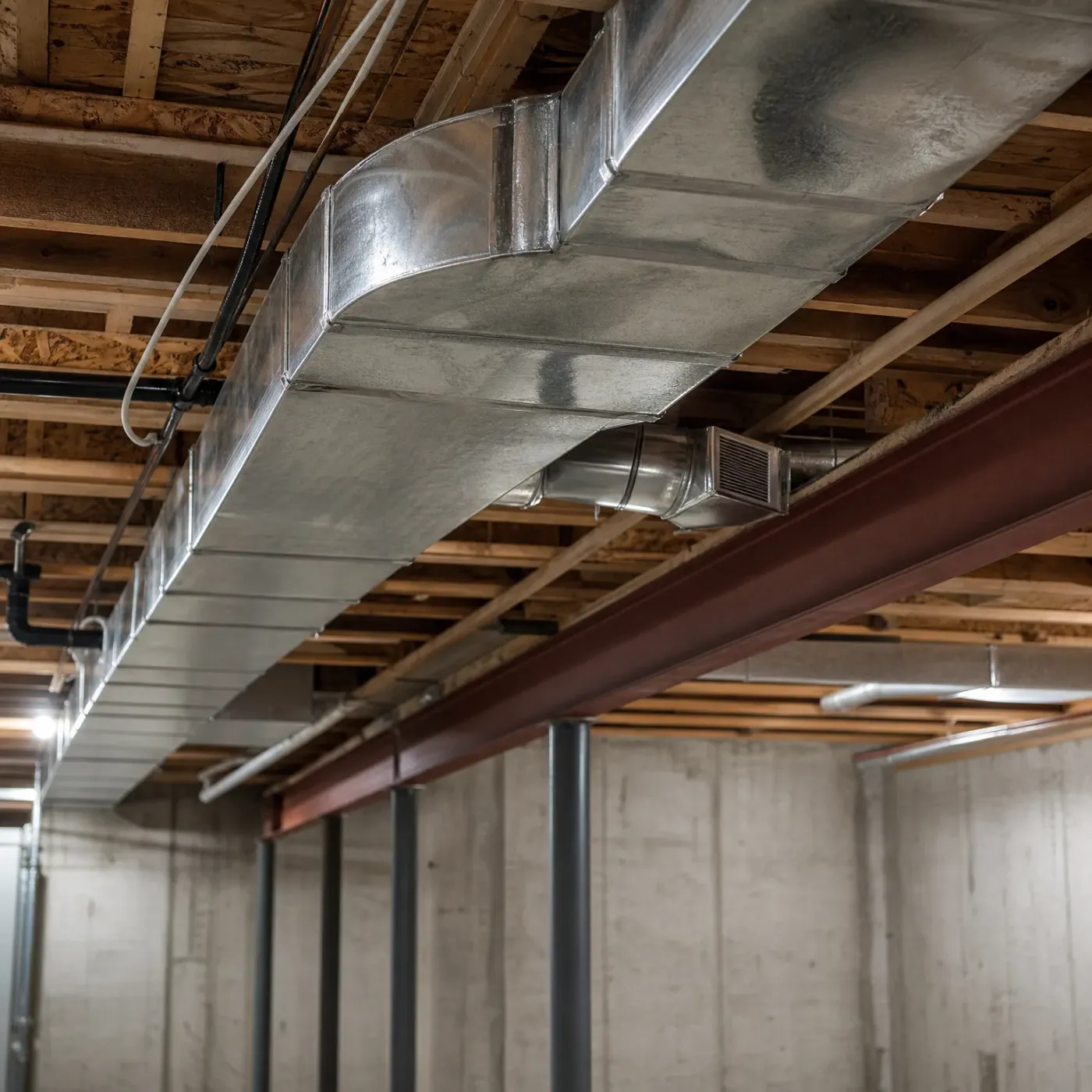
A furnace blower pushes air out through the supply ducts and pulls it back in through the return. Every pass, a little more dust and pet hair settles on the inside of the metal, mostly on the return side since that air comes straight from your rooms before it hits the filter. Over a Colorado winter, with the furnace cycling on and off for months, that layer builds up and gets stirred loose each time the blower starts. A technician working on this doesn't just vacuum the vent covers. The real job is connecting a vacuum to the trunk line, the main duct the branches feed into, and running a brush or a compressed air whip through each branch to knock the debris loose so the vacuum can pull it out before it falls back into the line. What comes out tells you something. In most Colorado homes it's dust, hair and dander, because the dry summers here don't give mold the moisture it needs to take hold in a duct system. That matters for what cleaning can actually do for you. If what's loaded in your ducts is dust and dander, clearing it out stops the blower from redistributing it through the house. If your allergy symptoms are coming from the carpet, the bedding or just the air sitting in a room, a duct cleaning won't touch that, because the ducts were never the source to begin with.




Get the right pro for your ductwork
Skip calling around for someone who cleans ducts.
Your duct cleaning request goes to a local pro who does this work.
You only hire the pro if you want to.
Why does my house feel dustier when the furnace runs
You notice it most on a cold morning, right after the furnace kicks on. A film settles on the TV stand within a day of dusting it. Your eyes itch or your throat feels tight sitting in the living room, then clears once you step outside. You might hear a faint rattle or see a puff of dust drift out of the vent when the blower starts. If anyone in the house has allergies or asthma, these are the hours they feel worst, since every cycle pushes whatever is sitting in the ducts back through the rooms. Left alone, a duct system that's loaded with dust and pet dander keeps recirculating it all winter, and the household breathing that air every day is the one who pays for it.

What a dirty filter does
A clogged filter doesn't stop dust from moving through your ducts, it just lets more of it through. Once the fibers are packed with debris, air finds the gaps around the edges instead of passing through the media, carrying dust straight past it. That's part of why a duct system can load up with allergens even when you remember to change the filter on a normal schedule.

Why dry ducts still collect dust
Mold needs moisture to grow, and Colorado's dry summers don't give it that chance, so a duct here can go years without that problem. But dry air also means dust stays light and airborne longer instead of settling on furniture, so it rides the return air back into the system. That's dust buildup without mold, and it's the pattern a technician checks for in homes here before recommending a cleaning.
Power costs 15.69 cents per kilowatt-hour statewide
At 15.69 cents a kilowatt-hour, running the blower longer than it needs to costs you something real. A furnace fan pushing air through ducts caked in dust works harder to move the same amount of air, and you pay for that extra runtime whether or not the cleaning ever touches your allergies.
EIA-861 2025 statewide residential average

So does duct cleaning help
If dust is heavy on your vent grilles and the house feels dusty within a day of cleaning it, a dirty duct is adding to what you're breathing, and clearing it out can help. If your ducts are more or less clean, the dry Colorado air is doing you a favor already, and a cleaning won't change much. The grille, the filter, and how your allergies behave at home are the things to check, not a calendar date.
You don't have to figure out on your own whether what you're looking at is worth a service call. A contractor who works on duct systems in your area can look at your specific setup, tell you what they find, and let you decide from there. Getting matched with one means you skip the part where you search around, call a few places, and explain the same thing twice. You describe your house once, and someone who handles this reaches out to you directly.


Ductwork Cleaning
A pro who works on ducts

- A local pro who knows ducts gets your details and gets in touch.
- Describe your ductwork job, and a local pro who handles it gets in touch.

- Send the form and the duct cleaning stops sitting on your list.
- Send the form and finding a duct cleaner is handled.

- Skip searching for a duct system pro and answer a few questions instead.
- One form replaces the calls you'd make to find a duct system pro.

- Your duct cleaning request goes to one local pro.
- Your request stays with one local pro.