Profile view of a bearded man wearing a dark baseball cap and a dark gray T-shirt against a plain off-white background.

Signs of leaky ductwork in Thornton, CO

Duct and vent cleaningDucts or ventsAdams County, CO
Step 1 of 2

What ZIP code is the job in?

A few rooms stay too warm or too cold no matter what the thermostat says, the furnace or AC runs longer than it should, and the power bill climbs even though you haven't changed how you use the house. Dust builds up fast along the vents, and a duct in the attic or crawl space may feel warm in winter or hot in summer right through the metal. These are the signs of a leak. Ducts crack at the seams over time, or a joint was never sealed tight to begin with, and conditioned air slips out into the attic or crawl space before it reaches the room. In Thornton's hot, dry summers and hard winters, that lost air means the furnace and AC both work harder to hold the temperature, and gas and electric costs rise together. A contractor can pressure-test the system and find exactly where it's losing air.

A smiling man with dark curly hair in a dark green henley shirt sits on a light sofa in a living room with large windows, a lamp, shelving, a stone fireplace, and a bowl of popcorn in the foreground.
A smiling man in a dark long-sleeved henley shirt sits on a beige sofa in a living room, with a bowl of popcorn and a remote on the table in the foreground and shelves, a lamp, and a doorway behind him.
A smiling man with graying hair and stubble in a blue henley shirt sits on a gray sofa with cushions in a living room, with a bowl of popcorn on a wooden table in the foreground.
A smiling man in a dark green long-sleeve shirt reclines on a sofa in a dimly lit living room, with a bowl of popcorn on a side table in the foreground and a bookshelf, lamp, and houseplant behind him.

Why do leaky ducts matter so much in your house?

  • Half the homes here were built by 1991

    Half the homes in Adams County were built in 1991 or earlier, old enough that the ducts have had decades to work loose at the joints.

  • Heat runs October through May

    Heat runs eight months a year here, October through May, so a leak in the system wastes conditioned air almost all year round.

  • Cooling runs June through August

    Cooling only runs three months here, June through August, which is a short window where a duct leak still shows up fast on the bill.

ACS 2020-2024 · NOAA nClimDiv 1991-2020

Leaks you can find yourself

Go through the house with a hand held near each supply vent while the system runs. A vent blowing weak or warm air when the rest of the house feels right points to a duct losing air before it gets there. Check the attic or crawlspace where you can reach the ductwork. Look for sections wrapped in foil tape gone brittle, gaps at the metal joints, or flex duct pulled loose from a collar. A whistle or hiss near a seam when the furnace or AC is running is air escaping. None of this tells you how bad the leak is, only that one is there.

When it's worth paying someone

A duct leak inside a wall or under a slab won't show itself no matter how long you look. If the rooms farthest from the furnace never come close to the rest of the house, or the attic insulation near the ducts looks disturbed or dusty in a line, the leak is somewhere you can't reach. A contractor can pressure test the system and find leaks by location instead of guessing from symptoms. That matters more here than in a house with simple, exposed ductwork, since Thornton's older homes often ran their duct runs through spaces nobody checks from one year to the next.

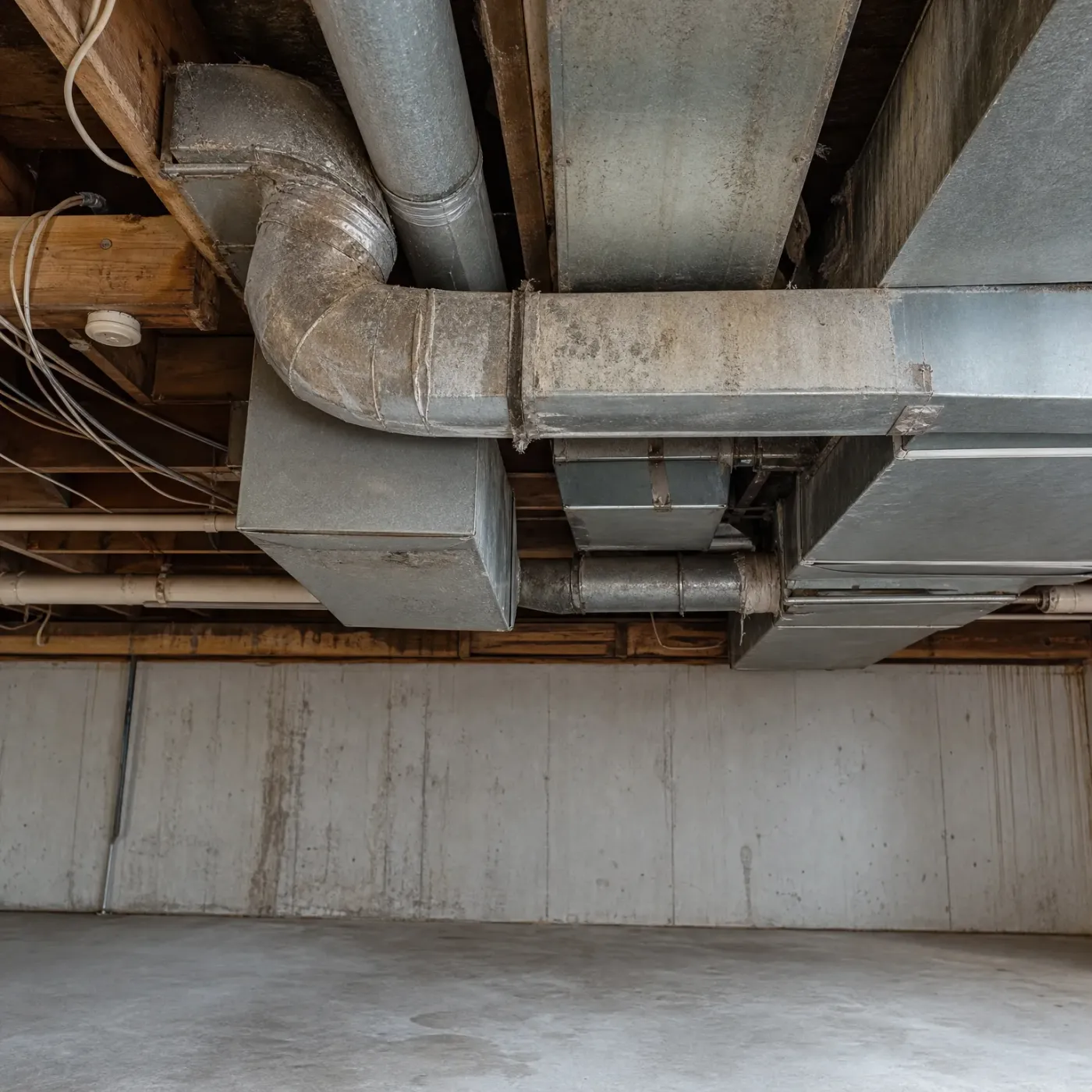
Galvanized sheet-metal ductwork and round pipes run beneath wooden floor joists in a basement with concrete walls and floor.
Before you get your ductwork cleaning
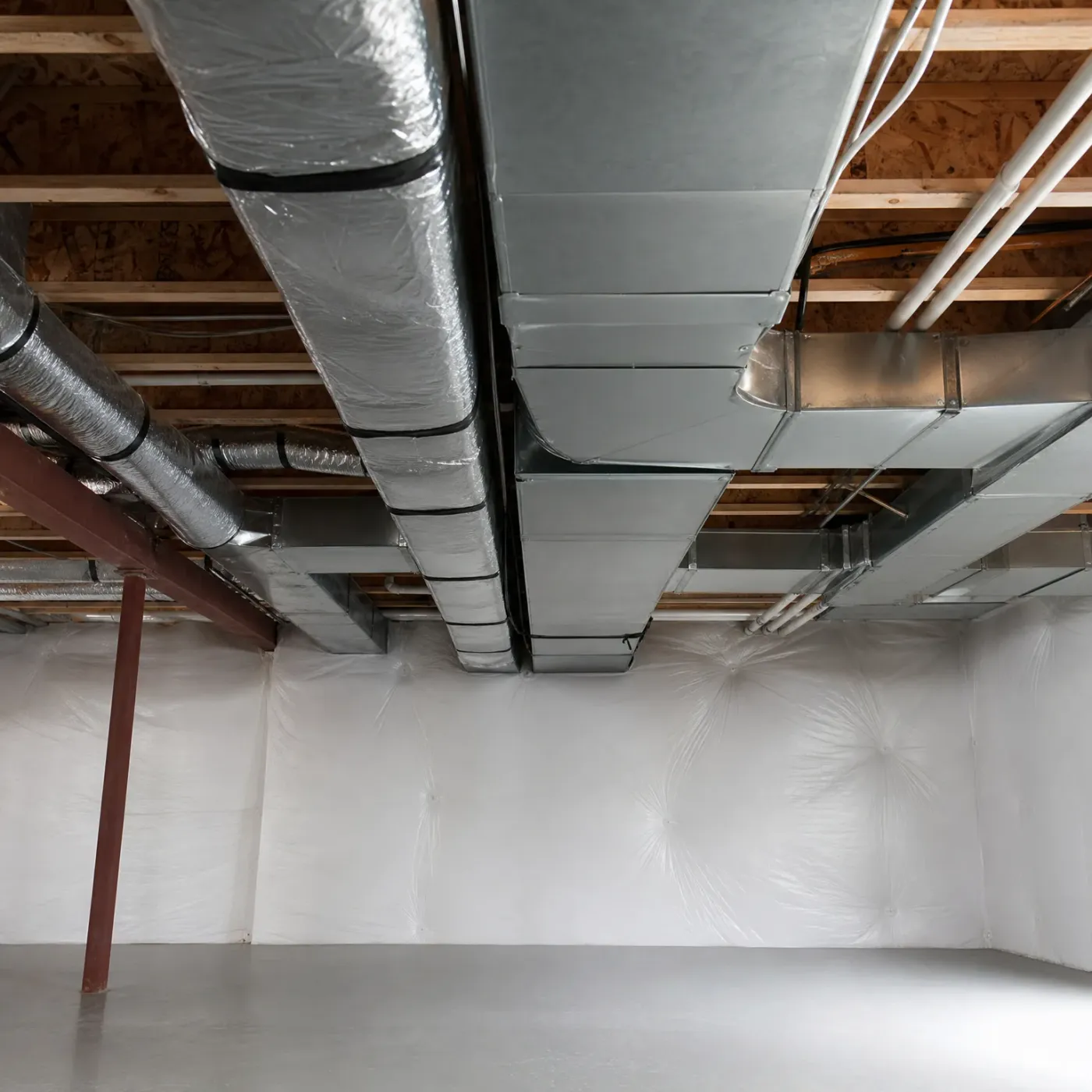
Unfinished basement with exposed wood joists, sheet metal and insulated flexible ductwork, white pipes, a steel support post, plastic-covered walls, and a bare concrete floor.
After you get your ductwork cleaning

Supply ducts and return ducts fail differently because of how pressure works inside them. Supply ducts push air out, so a gap there loses air and the vent downstream goes weak. Return ducts pull air in, so a gap there doesn't starve a vent, it just draws in attic or crawlspace air and dumps it back into the system. That's why a dusty house with no weak vents can still mean a serious leak. Flex duct tends to fail at the metal collar, the spot where it clamps onto a plenum or boot, because that joint moves every time the blower cycles on and off. The tape sold to seal these joints doesn't hold up. Mastic does, which is why a contractor reaches for it instead. A duct can also lose output just by getting crushed behind a joist or squeezed through a tight chase, with no hole anywhere in it. None of this changes what the blower does. It keeps pushing the same volume of air whether that air reaches a bedroom or empties into the attic, so the cost shows up before the air ever gets where it's going.

How a Leak Actually Behaves

  • Return air ducts run at a lower pressure than supply ducts, so they pull in attic or crawlspace air through any gap instead of losing air out.
  • A supply duct leak shows up as weak airflow at the vent, but a return duct leak just shows up as a dirtier house and a harder running system.
  • Flex duct loses air at the metal collar where it clamps to a plenum or boot, since that joint flexes every time the system cycles on.
  • Mastic sealant stays flexible for years at a duct joint, while the silver tape sold for the job dries out and peels within a few winters despite its name.
  • A duct run squeezed flat behind a joist or through a tight chase loses airflow at that spot even with no hole or open seam at all.
  • The blower keeps pushing the same amount of air whether it reaches the rooms or escapes into the attic, so the leak costs you before it ever reaches a vent.
A woman with dark hair in a bun sits on a beige sofa under a knit blanket with her eyes closed and an open book in front of her, with a lit lamp and houseplant in the background.
A smiling bearded man in a dark sweater sits at a dinner table with lit candles, a glass of red wine, and bowls of food, in a dimly lit room with a lamp and houseplant behind him.

Seal the Ducts or Leave Them Leaking

Seal the ducts

  • A contractor pressure tests the system and finds the actual leak instead of guessing from the symptoms you can see.
  • Mastic and metal tape hold up for years at a joint; duct tape dries out and fails within a couple of seasons.
  • Sealing the trunk line and the branch lines together fixes rooms that never get comfortable even with the thermostat turned up or down.
  • Once the ducts hold air, the furnace and AC stop compensating for what they lose, so both run shorter cycles.
  • A sealed return keeps the system pulling house air instead of attic or crawlspace air, which matters for what the furnace is heating in the first place.
  • Gaps hidden in the attic or crawlspace get found and closed, not just the ones near a vent you can reach.

Leave it alone

  • The rooms farthest from the furnace keep running warm in winter and warm in summer no matter where you set the thermostat.
  • Air that should reach the vents keeps leaking into the attic or crawlspace instead, so you pay to heat or cool space nobody lives in.
  • The furnace and AC keep running longer to make up for lost air, and with power costs what they are here, that shows up every month.
  • Dust keeps collecting fast near the vents because a return leak is pulling in attic or crawlspace air and carrying it through the house.
  • A joint that has worked loose keeps working looser, since nothing holds it back once it starts to separate.
  • Heat runs eight months a year here, October through May, so a leak that goes unsealed keeps costing you for most of the year.
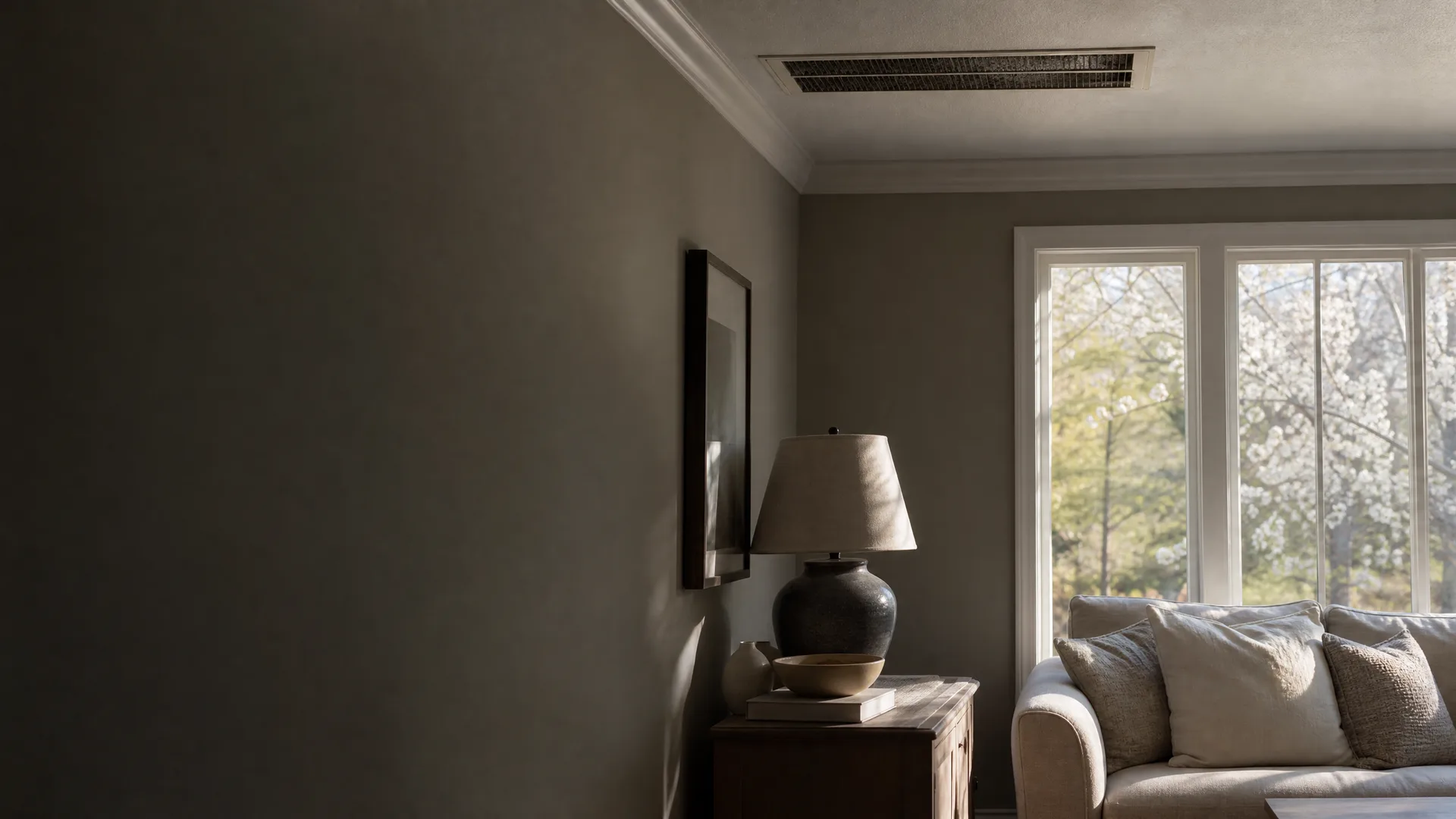
A dimly lit living room corner with a gray wall, framed picture, a table lamp on a wooden side table, a beige sofa with pillows, a ceiling vent, and windows showing flowering trees outside.

The dust on the ceiling vent catches the afternoon sun first, a thin gray line along the grille that you don't notice most days. It's a mild spring afternoon, warm enough that the furnace cycled off hours ago, and the living room is quiet. You run a finger along the top of the TV stand and it comes back coated. Same with the bookshelf, the picture frames, the windowsill. It settled there sometime over the winter, pulled through the vent and dropped the moment the air slowed down. The couch cushions look dull in the light. Nobody tracked it in. It came from inside the ducts themselves.


Let someone else find the pro

Skip searching for someone who cleans ducts in Adams County.

No fee to send it, and nothing to sign.

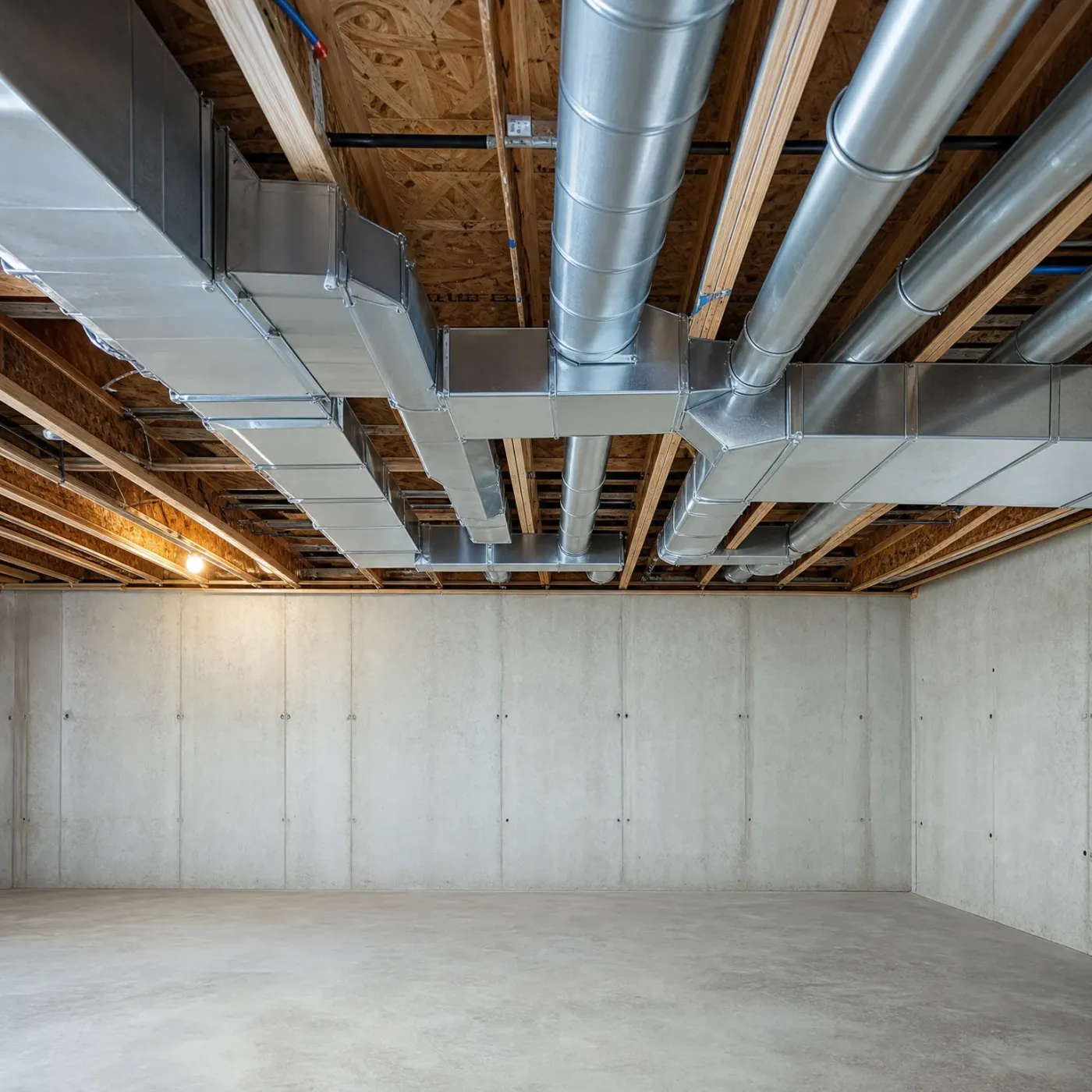
Empty concrete-walled basement room with bare floor and an exposed wood-joist ceiling carrying galvanized rectangular and round sheet-metal ducts, black pipes, and wiring.

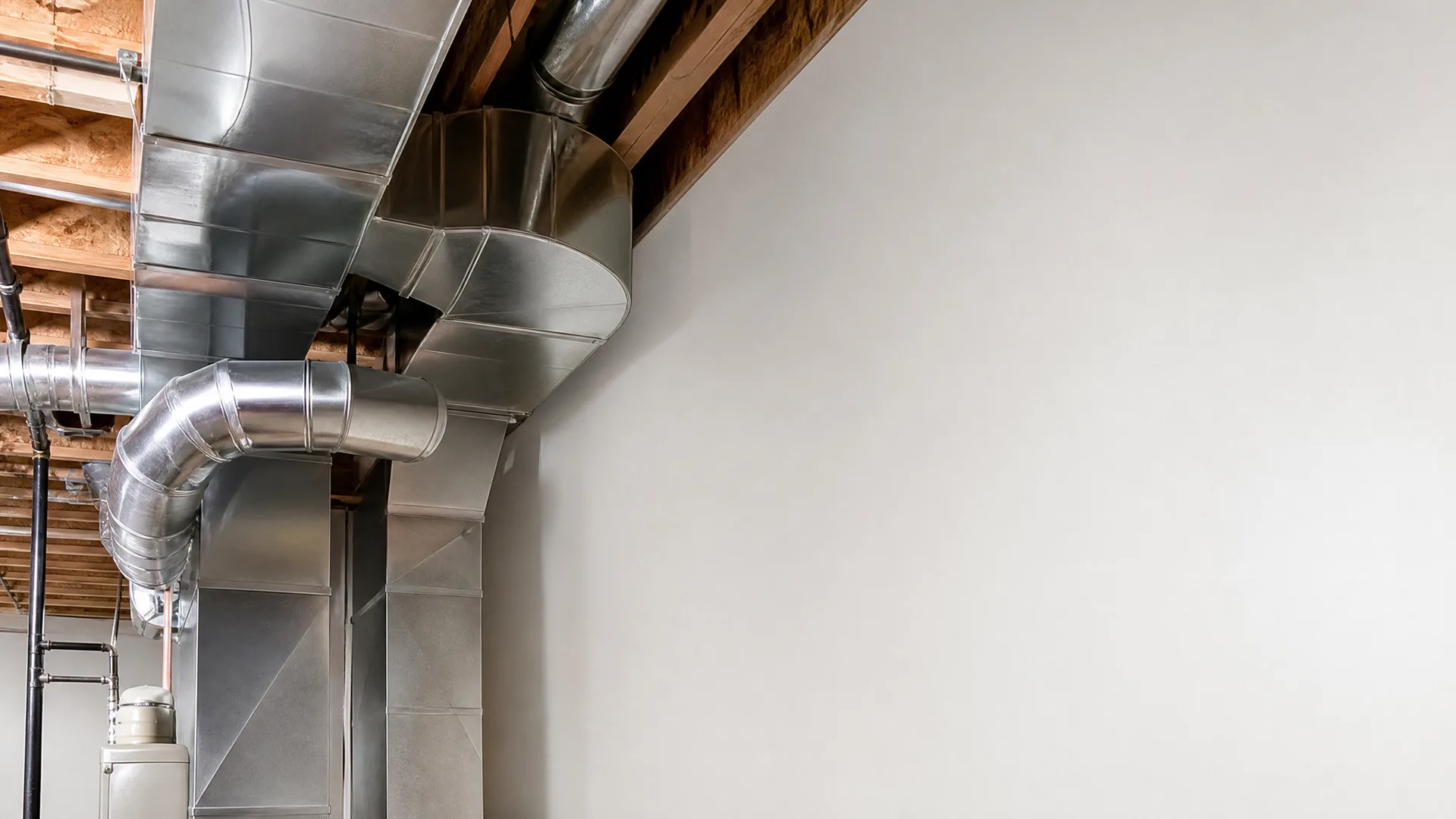
Ductwork doing its job

Galvanized trunk lines and round branch ducts run tight between the joists, metal bright and joints sealed. Air moves from the furnace to every vent at full pressure, so a room at the far end of the house gets the same airflow as the one next to the furnace.

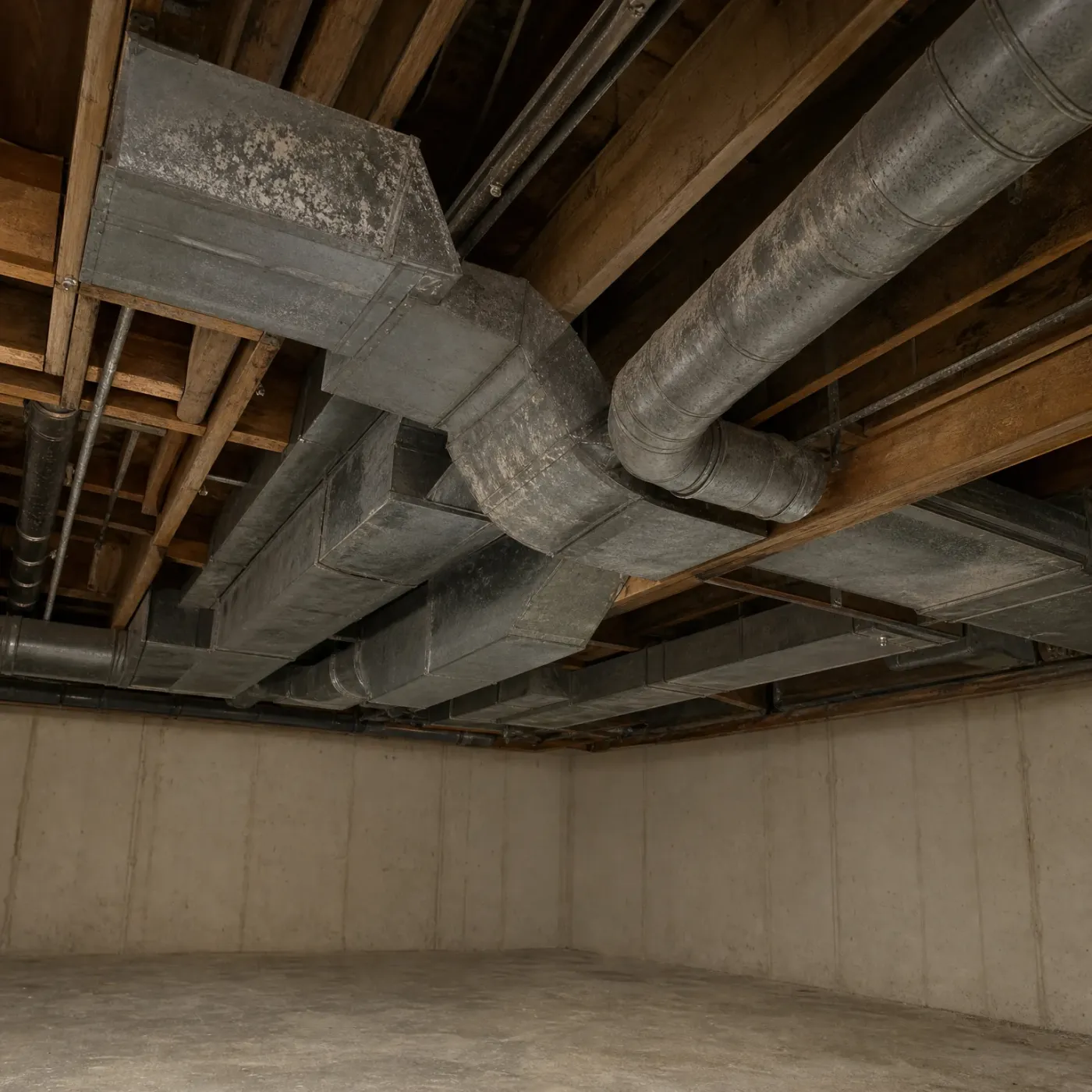
Empty concrete-walled basement room with exposed wooden joists and galvanized rectangular and round ductwork plus pipes running across the ceiling.

Ductwork losing air

The metal has dulled and the joints show rust where moisture has been getting in and out for years. Air escapes into the basement before it ever reaches a vent, so rooms run short while the furnace works longer to make up for what the ducts never deliver.

Why does one room never feel right?

Walk the house room to room with the system running and pay attention to what each vent feels like. A bedroom down the hall might feel stuffy within an hour of the thermostat reaching its number, while the room next to the furnace cools or heats right away. Look at the vent covers themselves too. A supply vent with a heavy buildup of dust around the louvers is pulling or losing air somewhere between the furnace and the grille. If you've been into the attic or crawlspace, a flex duct that's sagging, crushed, or pulled apart at a joint is leaking air into a space nobody lives in, and that's air the furnace already paid to heat.

Galvanized sheet metal HVAC ductwork and round pipes running along an exposed wood-joist basement ceiling beside a plain white wall.

Where the air actually goes

A duct losing twenty percent of its air to the attic or crawlspace is common in a house with joints that were never sealed with mastic, and that air carries heat or cooled air that the furnace or AC already paid to produce. It never reaches a vent. The system has to run longer to make up for it, cycling more than it would with a sealed system, and every extra minute shows up on the power bill.

Galvanized sheet metal HVAC ducts and round pipes installed among wooden joists on a ceiling, beside a large blank white wall.

Static pressure tells the story

A duct system is built to run at a certain static pressure, and a leak drops it. Low pressure means less air pushed out of every vent in the house, not just the ones near the leak. A technician checking static pressure at the furnace can see this on a gauge before ever opening a wall or climbing into the attic, which is why a pressure reading settles what a hand at the vent can only guess at.

Power here costs 16.02 cents per kilowatt-hour

At 16.02 cents a kilowatt-hour, every bit of air your furnace or AC pushes into the attic instead of your rooms is money spent twice: once to heat or cool it, once more when the system runs longer to make up for it. A leaky duct turns that rate into a bigger bill than the house should owe.

EIA-861 2025

What the signs add up to

  • Weak airflow at some vents, higher bills, and dust around the grilles together point to a duct leaking air before it reaches the room.
  • A hand held near a supply vent, a walk through the attic or crawlspace, and a look at the joints for loose tape tells you most of what you need to know.
  • Mastic and metal tape seal a joint for years, while ordinary duct tape dries out and fails within a couple of seasons.
  • A contractor who pressure tests the system finds the actual leak instead of guessing from the symptoms you can see from the house.
  • Once the ducts are sealed, the furnace or AC stops working overtime to make up for air lost to the attic or crawlspace.
  • Skipping the search for a contractor, the calls, and the back and forth of comparing quotes means the ducts get looked at sooner rather than later.

A house with leaky ductwork rarely shows just one sign. It's the weak vent in the back bedroom, the bill that climbed without any change in how the thermostat gets used, and the gray dust line on the grille, all pointing the same direction. None of those on their own proves a leak. Together they do.

You can check a lot of it yourself. Hold a hand near the vents while the system runs. Walk the attic or crawlspace and look at the joints where branch ducts meet the trunk line. Loose tape, gaps, or tape that's dried out and cracked tells you the air is escaping before it ever reaches the room. What you can't do from the house is find every leak or know how much air is actually getting lost. That takes a pressure test, and that's a contractor's job, not yours.

Once the leaks are sealed with mastic and metal tape rather than patched over with duct tape that won't last, the furnace and AC stop working as hard to hit the same temperature. The rooms that never felt right start feeling like the rest of the house.

Finding someone to do that test and seal the ducts properly is usually the slow part, calling around, explaining the same problem more than once, sorting through quotes that are hard to compare. Sending the form here skips that part, so the ducts get looked at sooner instead of sitting on a list of things to deal with later.

A lit ceramic table lamp with a linen shade sits on a round wooden side table with a small vase of greenery and a dark shallow bowl, beside a beige upholstered sofa with a cushion and knit throw, below a framed artwork on a pale wall.
Corner of a beige linen sofa with a large woven cushion and a fringed knit throw, beside a potted leafy tree in a woven basket against a neutral wall.
Sunlit interior corner with a wood-framed armchair with beige cushions and a striped pillow, a leafy plant in a tall ceramic pot, a window with wood sill showing green foliage outside, and dark wood flooring.
A lit black path light beside a stone walkway leading to a dark front door of a white clapboard house, with shrubs and flowering plants in the bed at dusk.
A covered porch at dusk with a wooden front door, a lit lantern wall sconce on gray horizontal siding, a black rocking chair with a cream throw, a potted white flowering plant, a coir doormat, and a window showing a lit interior lamp.

One request and it's handed off

Skip calling around for someone who cleans ducts.

Skip the calls

Sending the form costs nothing.