Mini Split Installation in Lakewood, CO
A new system here will heat from September through May and cool from July through July every year. Tell us about the house, and a licensed contractor who covers Jefferson County will get in touch.
Tell us about the job
It takes about a minute.
Nine months of heat, one month of cooling, and a Lakewood winter that gets to 18°F
Your mini-split in Lakewood spends most of the year heating, not cooling. Nights average 18°F from December through February, and the system needs to keep pulling heat from that cold air every day from September through May. July is the only month cooling carries the load, with afternoons around 80°F.
Because a ductless heat pump counts as a split system, any unit installed new has to meet 14.3 SEER2 for cooling and 7.5 HSPF2 for heating. In a house that heats nine months and cools one, that heating number matters more than the cooling one. Most homes here still heat with gas, so a mini-split installed now is often doing the harder job of standing up to a Colorado winter on its own.
- 9 months
- September through May, your system heats
- 1 months
- July through July, it cools
- 18°F
- the average winter night it heats against
- 80°F
- the average summer afternoon it cools against
NOAA nClimDiv, 1991–2020 normals
- Is a mini split worth it?
- For most homes here, yes, especially if a room runs on window units or electric baseboard now. A mini split heats and cools the same space, so it replaces both. Most homes in Lakewood need heat or cooling 10 months of the year, so a system that does both jobs gets used most of the year. Whether it fits your home's layout is worth walking through with a contractor.
- How many rooms can a mini split cover?
- That depends on the outdoor unit. Some outdoor units run a single indoor head, others run several, with each head handling one room or one open area. The right number for your house depends on the square footage and layout of each room, which a contractor measures on site.
- Can a mini split heat a whole house?
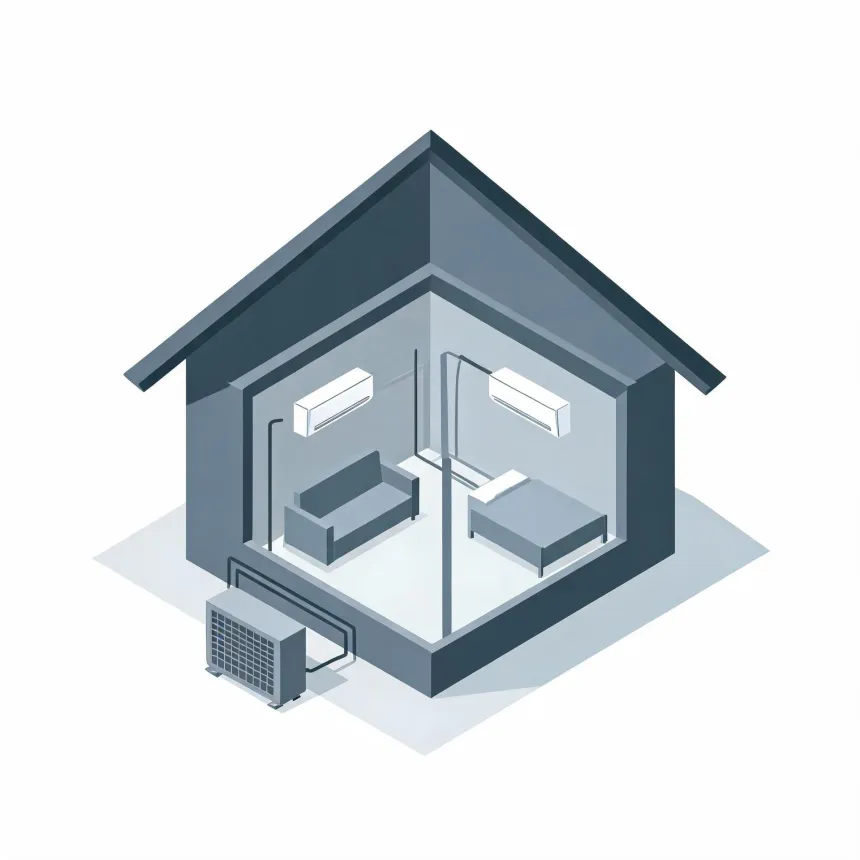
- It can, if there's a head in every room that needs heat and the system is sized for the coldest nights. Homes here need heat from September through May, so the system has to hold up through most of the year, including nights that average 18°F in December through February. Most homes here still heat with gas, and a lot of mini split installs are meant to add heat and cooling to specific rooms rather than replace a whole-house furnace. Whether to go all mini split or keep the furnace as backup is worth discussing with a contractor who can see the ductwork and the house.