Mini Split Installation in Aurora, CO
A new system here will heat from October through May and cool from June through August every year. Tell us about the house, and a licensed contractor who covers Arapahoe County will get in touch.
Tell us about the job
It takes about a minute.
What a mini-split in Aurora has to handle
Your mini-split will run nearly all year here. Homes in Aurora need heat or cooling 11 months out of the year, from October through May for heat and June through August for cooling. Winter nights average 16°F from December through February, so the heat pump side has to keep pulling warmth out of cold air for months at a stretch. Summer afternoons average 86°F, which is milder work for the cooling side by comparison.
Any mini-split installed new has to meet the federal minimum for split-system heat pumps, 14.3 SEER2 for cooling and 7.5 HSPF2 for heating. That floor covers both ends of the job, but in Aurora it is the heating side that gets the longer stretch of work.
- 8 months
- October through May, your system heats
- 3 months
- June through August, it cools
- 16°F
- the average winter night it heats against
- 86°F
- the average summer afternoon it cools against
NOAA nClimDiv, 1991–2020 normals
- Is a mini split worth it?
- For the right setup, yes. A mini split heats and cools without ducts, so it works well in additions, garages, or older homes where running ductwork is not practical. Aurora winters get down to 16°F on average, and most mini splits sold today are rated to handle real cold, but a contractor should confirm the model you're considering is rated for that low before you count on it as your only heat source. If you already have gas heat and just need cooling or a fix for one hot or cold room, a mini split can do that job without touching your existing furnace.
- How many rooms can a mini split cover?
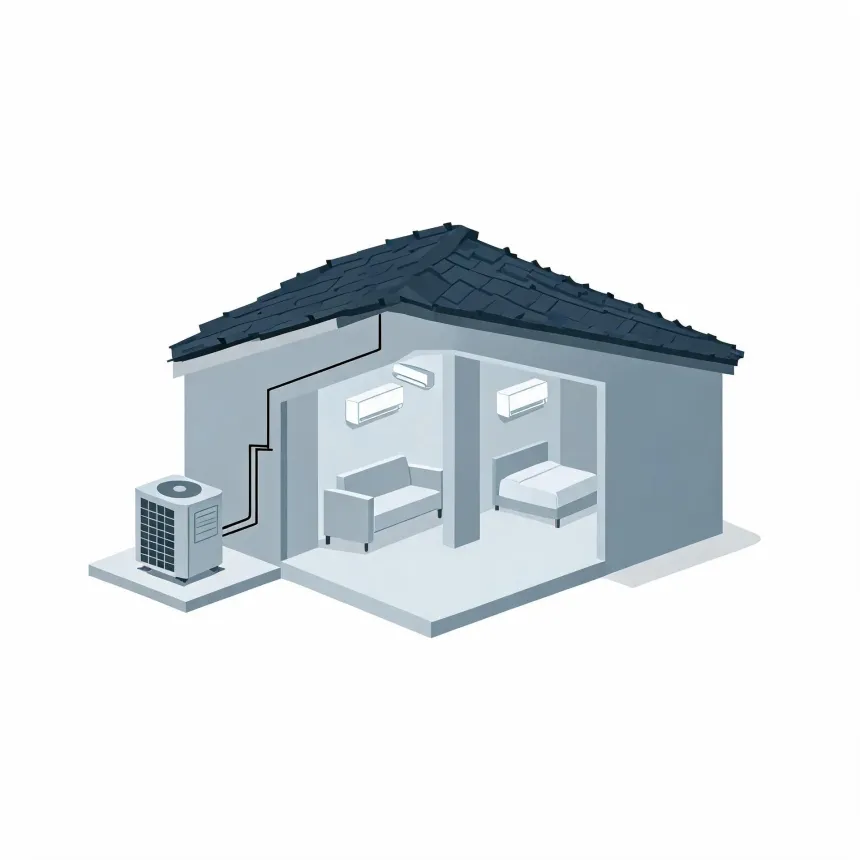
- One indoor unit heats and cools the room it's mounted in, but a single outdoor unit can run up to eight indoor units at once, one per room. Each indoor head is sized to the room it serves, so a contractor will size the whole system based on how many rooms you want covered and how big they are. Homes with open floor plans sometimes cover more than one room with a single head if the space is small enough.
- Can a mini split heat a whole house?
- It can, if it's sized and placed for every room. That means either a multi-zone system with an indoor head in each room, or a ducted mini split that distributes air the way a furnace does. Aurora homes need heat eight months a year, October through May, and winter nights average 16°F, so whichever setup you choose, a contractor needs to confirm the equipment is rated to keep up at that temperature before it replaces your main heat source.