Mini Split Installation in Colorado Springs, CO
A new system here will heat from September through May and cool from July through August every year. Tell us about the house, and a licensed contractor who covers El Paso County will get in touch.
Tell us about the job
It takes about a minute.
Nine months of heat, two of cooling, and nights near 17°F
Colorado Springs asks a mini-split to carry heat from September through May and step in for cooling in July and August. That is 11 months of the year the system is doing something. Winter nights average 17°F, cold enough that the heat pump is working hard right when you need it most.
A mini-split manufactured after January 1, 2023 has to meet a federal minimum of 14.3 SEER2 for cooling and 7.5 HSPF2 for heating. That floor applies whether the unit is heating a cold January night or cooling an 83°F August afternoon, so whatever gets installed is already built to handle both ends of the swing.
- 9 months
- September through May, your system heats
- 2 months
- July through August, it cools
- 17°F
- the average winter night it heats against
- 83°F
- the average summer afternoon it cools against
NOAA nClimDiv, 1991–2020 normals
- Is a mini split worth it?
- For most homes here, yes, especially for a room that never had ductwork or for cooling those two hot months in July and August. Winter lows around 17°F call for a heat pump rated to work in cold weather, and cold-climate mini splits are built for exactly that. A contractor can look at the specific room or house and say whether it makes sense there.
- How many rooms can a mini split cover?
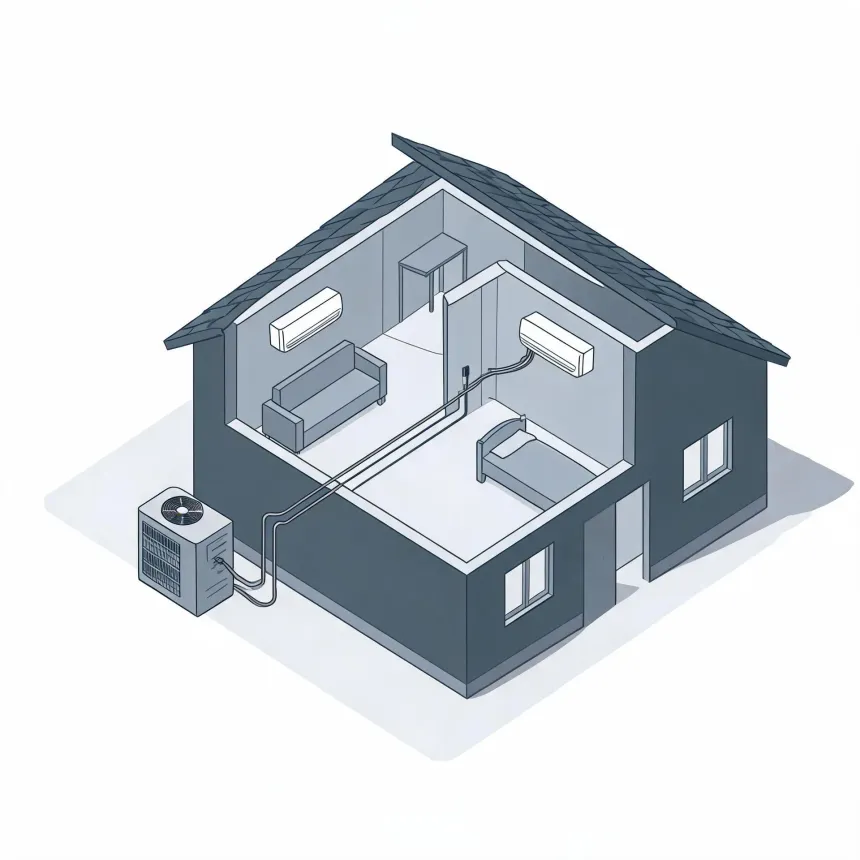
- A single outdoor unit can run one indoor head or several. Multi-zone systems connect more than one indoor unit to one outdoor condenser, and each indoor unit controls its own room. The more zones you add, the more the outdoor unit's total capacity gets split between them, so a contractor needs to size the system against the square footage and layout of the actual rooms before you settle on a number of zones.
- Can a mini split heat a whole house?
- It can, but it depends on the house. A multi-zone system with enough indoor heads can heat every room. The harder question here is cold weather performance. With winter nights averaging 17°F, the system needs to be a cold-climate model rated to keep producing heat at those temperatures, and a contractor will need to size it against the home's actual heat loss to know if it can keep up on the coldest nights.