
HVAC Installation in Durango, CO
Tell us about the house, and a licensed contractor who covers La Plata County will get in touch.
Tell us about the job
It takes about a minute.
Step 1 of 3: Equipment

A furnace built for ten months of work
In La Plata County, heat is not a winter-only job. Homes here need it running from September through June, ten months of the year, with winter nights averaging 16°F from December through February. A new furnace has to handle that stretch without strain, and it has to hold up through 128 winter storms recorded here over the past ten years.
Summer asks almost nothing of a cooling system, with afternoons averaging a mild 79°F. That changes what a new system should be built around. The real work, and the real wear, comes from the cold.
- 10 months
- September through June, your system heats
- 16°F
- the average winter night it heats against
- 79°F
- the average summer afternoon it cools against
- When should I replace my HVAC system?
- Replace it when repairs get more frequent or a major part fails, like the heat exchanger or the compressor. A system that keeps breaking down is working harder to do the same job, and that pattern only continues. Here, your furnace runs from September through June, so a failure in the middle of winter leaves you without heat when you need it most. If a contractor keeps finding the same problem, that is your answer.
- Should I replace my furnace and air conditioner at the same time?
- If both are old, yes, it usually makes sense to do it together. A furnace and coil are matched to work as a system, and pairing an old outdoor unit with a new indoor one can mean the new part never runs the way it is supposed to. Homes here need heat 10 months a year with little cooling load, so the furnace is doing most of the work and tends to wear down faster than the air conditioner. A contractor can look at both and tell you if one has real years left.
- What happens during an HVAC installation?
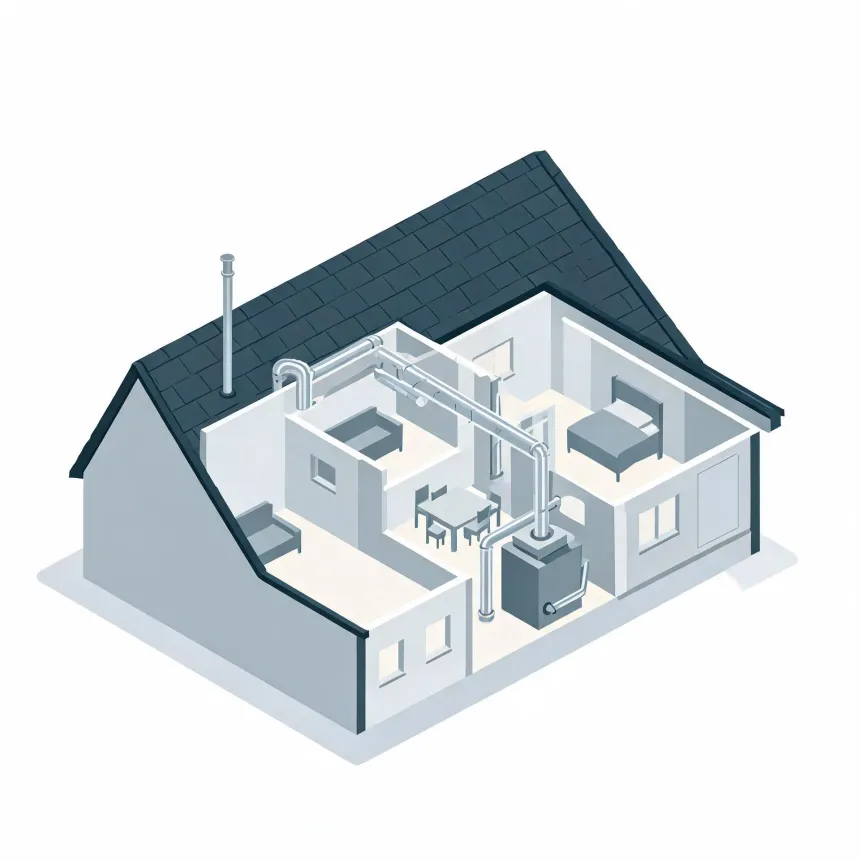
- A contractor removes the old equipment, then sets the new furnace, air handler or condenser in place and connects it to your ducts, gas line, electrical, and if needed, refrigerant lines. They check the ductwork for leaks or sizing problems, since a new system connected to bad ducts will not perform right. Once it is running, they test the airflow, the gas pressure or electrical draw, and the thermostat to confirm everything is working together. The exact steps depend on what you had before and what you are installing, so a contractor will walk you through what applies to your house.