How to lower your heating bill in a Colorado winter
Once you send the form, finding a pro is off your list.
Gas heats most homes in Colorado, and a furnace that runs hard from October through March will show you the cost on every bill. A lot of that cost comes from a furnace working harder than it should, not from the weather itself.
A furnace loses efficiency slowly, so you don't always notice it happening. A dirty filter makes the blower work longer to push the same air. A dirty burner or a worn igniter can mean longer cycles to reach the same temperature. None of that shows up as a breakdown. It shows up as a higher bill and a furnace that runs more than it used to.
Maintenance is how a furnace gets checked for that kind of waste before it turns into a repair. A contractor who services furnaces in Colorado all winter knows what tends to go first in this climate and what to check on a system that's been running hard since fall. That's a different visit than someone unfamiliar with how these systems get used here.
You don't have to track down who that is. Send the form and the search is no longer on you. One local, licensed contractor gets matched to your request, not a handful of companies competing for your callback. That means one call to take, from someone who already knows the kind of work you need before they knock on your door.
From there, the furnace gets looked at, whatever's driving the bill up gets found, and you get to stop wondering whether this winter's bill is just normal or something a tune-up would have caught.
The fastest way to lower a Colorado winter heating bill is to get the furnace serviced before the cold settles in for good. A dirty flame sensor, a clogged filter, or a blower motor pulling more current than it should will all make a furnace run longer to hit the same temperature, and longer runtimes are what show up on the bill. Colorado winters ask a lot of a furnace, often running it daily from October through March, so small losses in efficiency add up over months rather than days. A tuned furnace lights faster, holds its burn steady, and shuts off when the house is actually warm instead of running past it. For you, that means the thermostat setting you already use costs less to maintain, without turning anything down or wearing a sweater indoors.
A clean burn like this holds a steady flame and heats the house without wasted gas.
Grime and age like this often mean a furnace runs longer than it should to keep up.
Start the furnace up and the igniter glows first. The gas valve opens, and the flame sensor has to confirm a steady burn before the blower ever turns on. If that sensor is coated with soot, it can't confirm the flame in time, so the furnace shuts down and tries again. That's gas burned with nothing to show for it. Once the burn is confirmed and the heat exchanger reaches temperature, the blower pushes air across it and out through the ducts. A clogged filter makes that blower work harder to move the same air, which means longer run times for the same heat. None of this needs full fire every cycle. On a mild Colorado day, a furnace running a lower output stage can still keep most homes warm while using less gas than it would on high. What throws this whole sequence off is often something simple, like a thermostat sitting near a cold window or a heat vent, reading the room wrong and calling for more heat than the house actually needs.
How your furnace actually heats
A furnace fires in stages: the igniter glows, the gas valve opens, and the flame sensor confirms a burn before the blower kicks on.
If the flame sensor is coated with soot, it can't confirm the flame fast enough, so the furnace shuts off and tries again, burning gas without heating anything.
The blower motor pushes air across the heat exchanger, and a clogged filter makes it pull harder and run longer to move the same amount of air.
A furnace set to a lower output stage can still heat most Colorado homes on a mild day while using less gas than running full fire every cycle.
The heat exchanger has to reach temperature before the blower turns on, and a unit that short-cycles never gets a chance to run efficiently.
Thermostats that sit near a cold window or a heat vent read the room wrong and tell the furnace to run longer than the house actually needs.
Before you get your furnace maintenanceAfter you get your furnace maintenance
Let someone else find the pro
A licensed local pro takes the request for your furnace tune-up.
After you send the request, you're done searching.
Asking costs nothing, and the choice to hire stays yours.
Run It As Is or Get It Checked
Skip maintenance
A dirty filter forces the blower to work harder to push the same amount of heat through the house.
A flame sensor coated in soot can cause the furnace to shut off mid-cycle and restart, burning more gas to reach the same temperature.
Small problems like a weak igniter or a dirty burner go unnoticed until the furnace struggles to keep up on the coldest nights of January.
Without a technician checking the system, a furnace that's losing efficiency keeps losing it all winter, and the bill reflects that every month.
A furnace running inefficiently from October through March adds up to a lot of wasted gas before anyone traces it back to a simple fix.
Get it serviced
A technician checks the flame sensor, the igniter, and the burners, so the furnace fires cleanly instead of cycling on and off.
A clean filter and a clear blower path mean the furnace heats the house without pulling extra current to compensate.
Catching a part that's starting to fail before December means it gets fixed on your schedule, not during a cold snap.
A furnace that's been serviced holds a steady burn, which is what keeps gas use down through the coldest months.
A local technician who works on furnaces all winter in Colorado knows which parts tend to fail first in this climate and checks those.
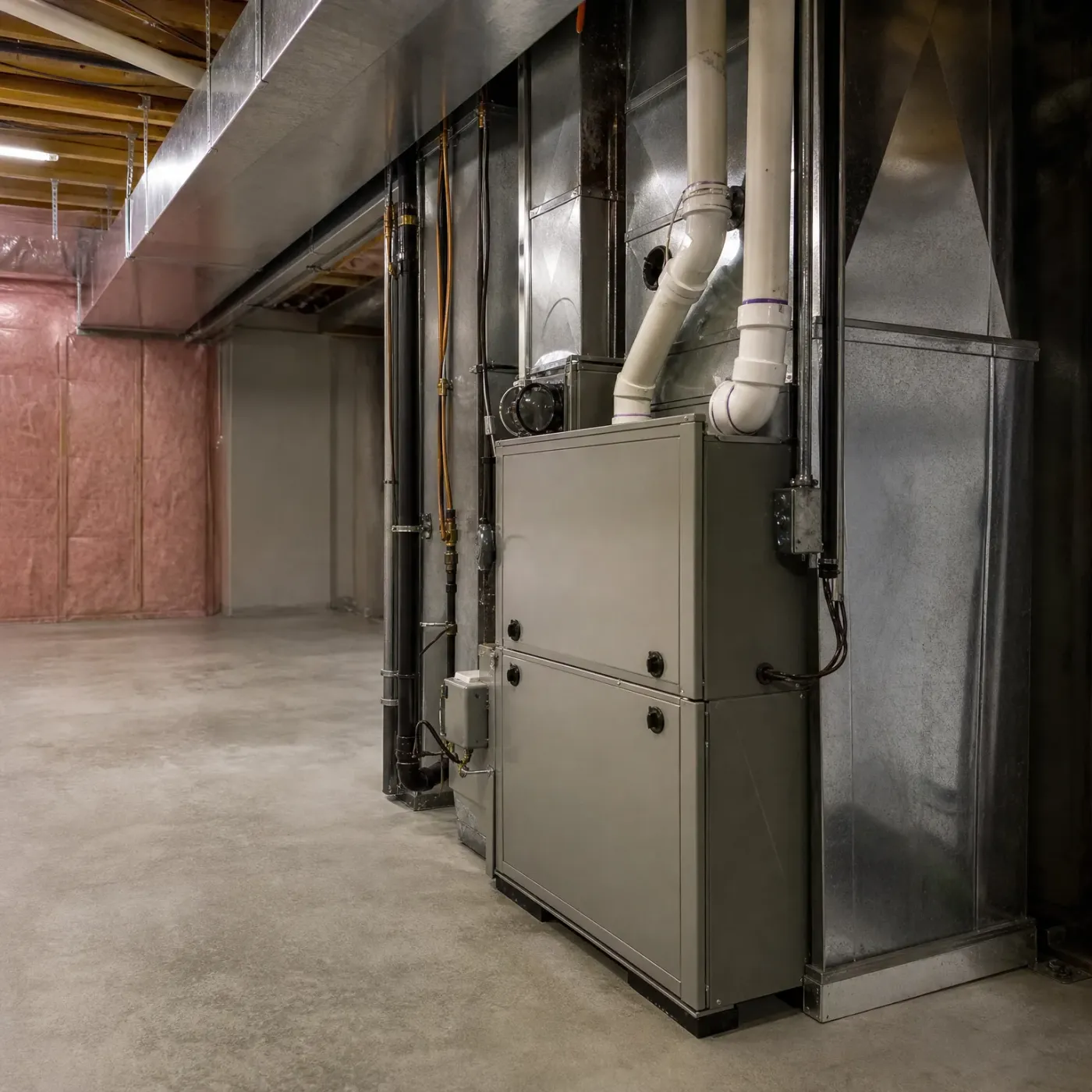
Furnace running clean
This furnace sits in an unfinished basement with the ductwork and flue pipe tight and clear. A furnace like this fires, holds a steady flame, and shuts off once the house reaches temperature. The blower isn't working any harder than it has to, and the gas bill reflects that.
Furnace working overtime
This older furnace has the same job to do, but age and buildup make it slower to fire and quicker to shut off early. It cycles more often to reach the same temperature, pulling more gas each time. From the utility room it looks fine. The bill is where it shows.
October through March
That's how long a Colorado furnace runs steady most winters. Every one of those months, a dirty filter or a fouled flame sensor adds cost to the bill.
Why does my furnace short cycle when it's cold out?
You notice it most on the coldest nights, the furnace kicking on, running for a few minutes, then shutting off and starting right back up again before the house even feels warm. It sounds like it's working overtime, but the house still feels cold, and you're left wondering if something's actually wrong or if this is just what a furnace does when it's below freezing outside.
A dirty flame sensor or a clogged filter is usually behind it, not the cold
Short cycling isn't the furnace responding to outdoor temperature. It's the flame sensor failing to confirm the burn fast enough, so the furnace shuts down as a safety measure and tries again. Soot buildup on that sensor is the most common cause. A clogged filter can do something similar, starving the blower of airflow until the furnace overheats and cuts out early. Either way, the furnace ends up restarting several times to heat the house to the same temperature it would've reached in one steady run. That's more gas burned and more wear on the igniter and blower motor with each restart. Colorado winters run long, October through March, and a furnace short cycling through those months adds up fast on the bill.
Statewide, winter nights average 16°F, according to NOAA climate data. A furnace built to heat a house to 68 or 70 degrees from a starting point that cold is working near the top of its capacity most nights, not just on the occasional cold snap. That's when a dirty filter or a sluggish flame sensor costs you the most, because the furnace has the least room to spare. You'll notice it as a furnace that runs longer stretches before the house feels warm, or one that seems to never fully shut off once the sun goes down.
NOAA nClimDiv 1991-2020 county normals weighted by homes
Winter nights average 16°F statewide
At 16 below the thermostat setting most nights, your furnace spends the winter closer to its limit than its middle. A furnace running that hard needs a clean flame sensor and a clear filter to keep up without burning extra gas to do it.
NOAA nClimDiv 1991-2020 county normals weighted by homes
A Furnace That Runs the Way It Should
A furnace running clean fires once, holds its flame, and shuts off on its own instead of fighting through the cycle.
Getting it serviced before the cold sets in for good is still the fastest way to bring a Colorado winter gas bill down.
A clear filter and a clean flame sensor are what let the furnace stop working near its limit on 16 degree nights.
A local contractor who works on furnaces all winter knows which part is likely behind a short cycle before even opening the panel.
One contractor gets the call, not a handful, so the furnace gets looked at instead of just quoted over the phone.
The furnace in your house either fires clean or it fights through every cycle, and by now you know which one costs more by February. A dirty filter or a sooted flame sensor doesn't announce itself. It just makes the furnace run longer, start more often, and burn more gas to hold the same 68 degrees on a 16 degree night. Servicing it before the cold settles in for good catches that early, while it's still a filter change or a sensor cleaning instead of a blower motor working past what it was built for.
A furnace that's been looked at by someone who knows it holds its flame through a cycle and shuts off when the house is warm. That's the whole difference between a bill that climbs through the winter and one that doesn't.
What makes the fix stick is who does it. A contractor who works on furnaces all winter in Colorado has seen this exact short cycle before, on a dozen furnaces in a dozen basements, and knows which part usually causes it before the panel's even off. That's not a guess made over the phone. It's someone who shows up knowing the likely culprit, checks it, and either clears it or tells you straight what else is going on.
You send one request and one local contractor takes it, not three or four competing for the job. That means the furnace gets looked at, not just quoted.