How often to clean a dryer vent in Lakewood, CO

A square stainless steel wall vent with four corner screw holes and a hinged flap cover, partly open to reveal a dark circular duct opening, shown against a plain light gray background.
Find a dryer vent pro

Once a year is the rule for most houses in Lakewood, and if your dryer runs most days for a household of four or more, closer to every nine months. Lint builds up inside the vent pipe itself, not just the trap, and a long or bent run to the outside wall catches more of it than a short straight one. Once that pipe is partly blocked, the dryer takes longer to dry a load and runs hotter doing it, since the moist air has nowhere to go but back toward the machine. In a dry climate like this one, that lint is also drier and catches easier, which is the real reason the yearly cleaning matters here more than the number itself suggests. If your dryer has started taking two cycles to finish what used to take one, or the top of it feels hot to the touch, the vent is already due.

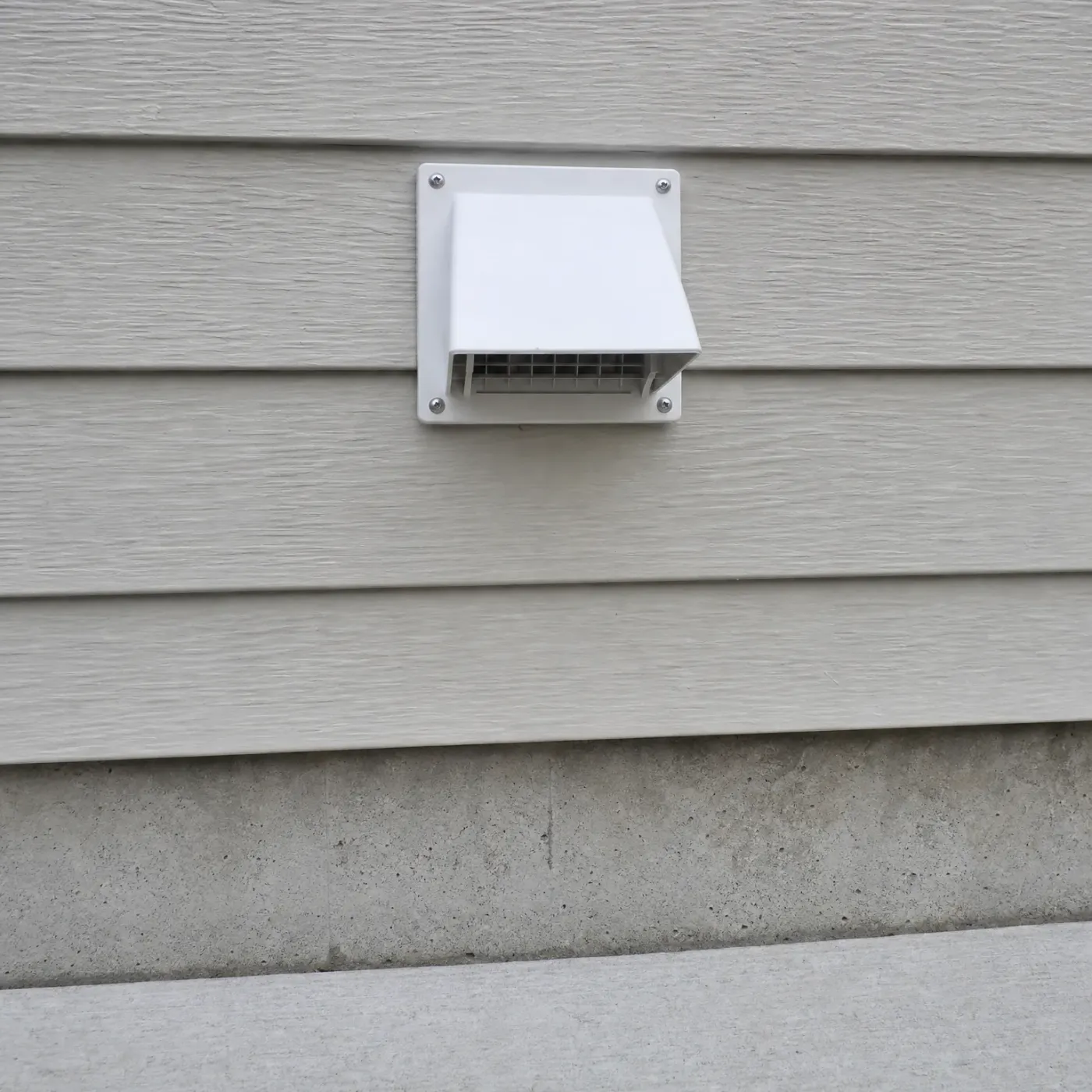
A white hooded dryer vent with a louvered opening mounted on light gray horizontal lap siding above a concrete foundation.
A clean vent sits flat against the siding, hood closed, air pushing the louvers open with every load.
A white plastic hood-style dryer vent mounted on beige horizontal siding, with its opening clogged by thick gray lint.
A clogged vent leaves lint packed into the grille, and the cap stays dusted gray no matter how it runs.

What does your household mean for your dryer vent?

  • 2.36 people per household on average

    Jefferson County homes average 2.36 people. More people usually means more loads a week, and more loads means lint reaching the vent pipe faster.

  • Half the homes here were built by 1980

    Half the homes in Jefferson County were built in 1980 or earlier. An older run to the outside wall has had more years for lint to pack into its bends.

  • Power here costs 15.88 cents per kilowatt-hour

    Power here runs 15.88 cents per kilowatt-hour. A dryer forcing air through a clogged vent pulls more of it to finish the same load.

ACS 2020-2024 · EIA-861 2025

A dryer vent moves hot, moist air outside fast. Once lint narrows that path, the air moves slower and stays hotter inside the duct longer, and the dryer has to run another cycle to finish the same load.

That extra cycle isn't just a longer wait. It's more heat sitting in a pipe already lined with lint, which is how a clogged vent turns into a fire risk instead of just a slow one.

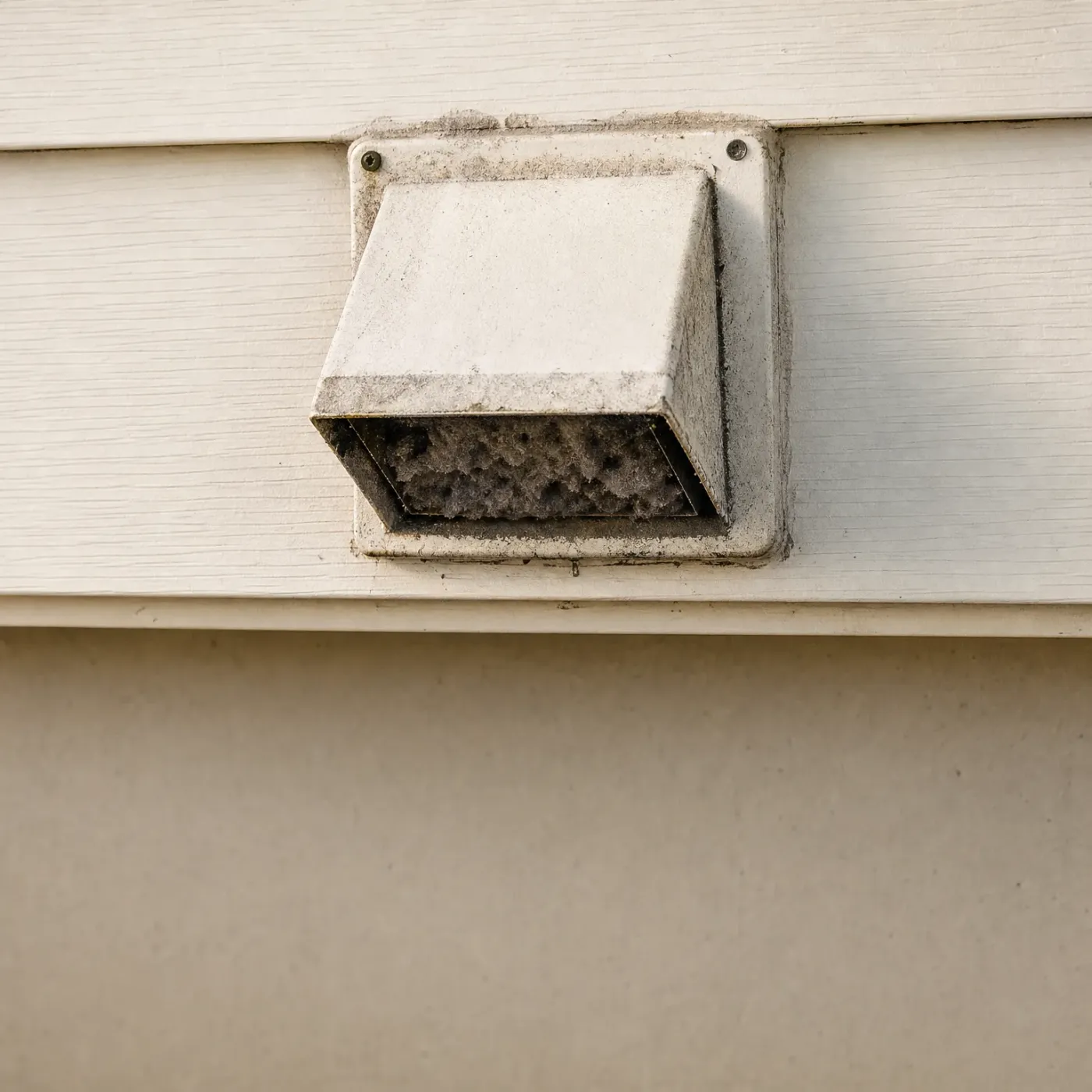
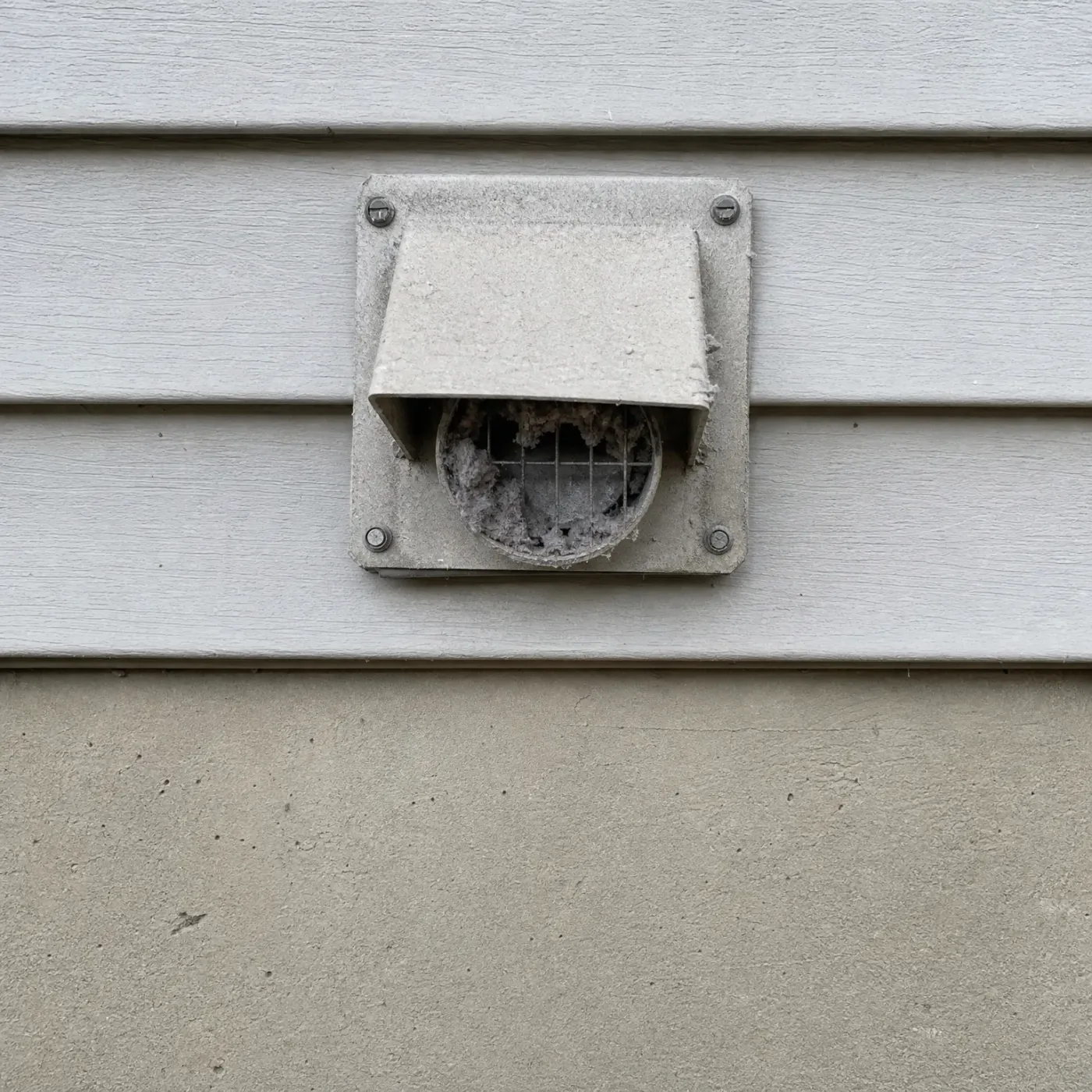
A metal dryer vent hood screwed to light gray lap siding, with lint clogging the round opening and a lower concrete wall below.
Before you get your dryer vent cleaning
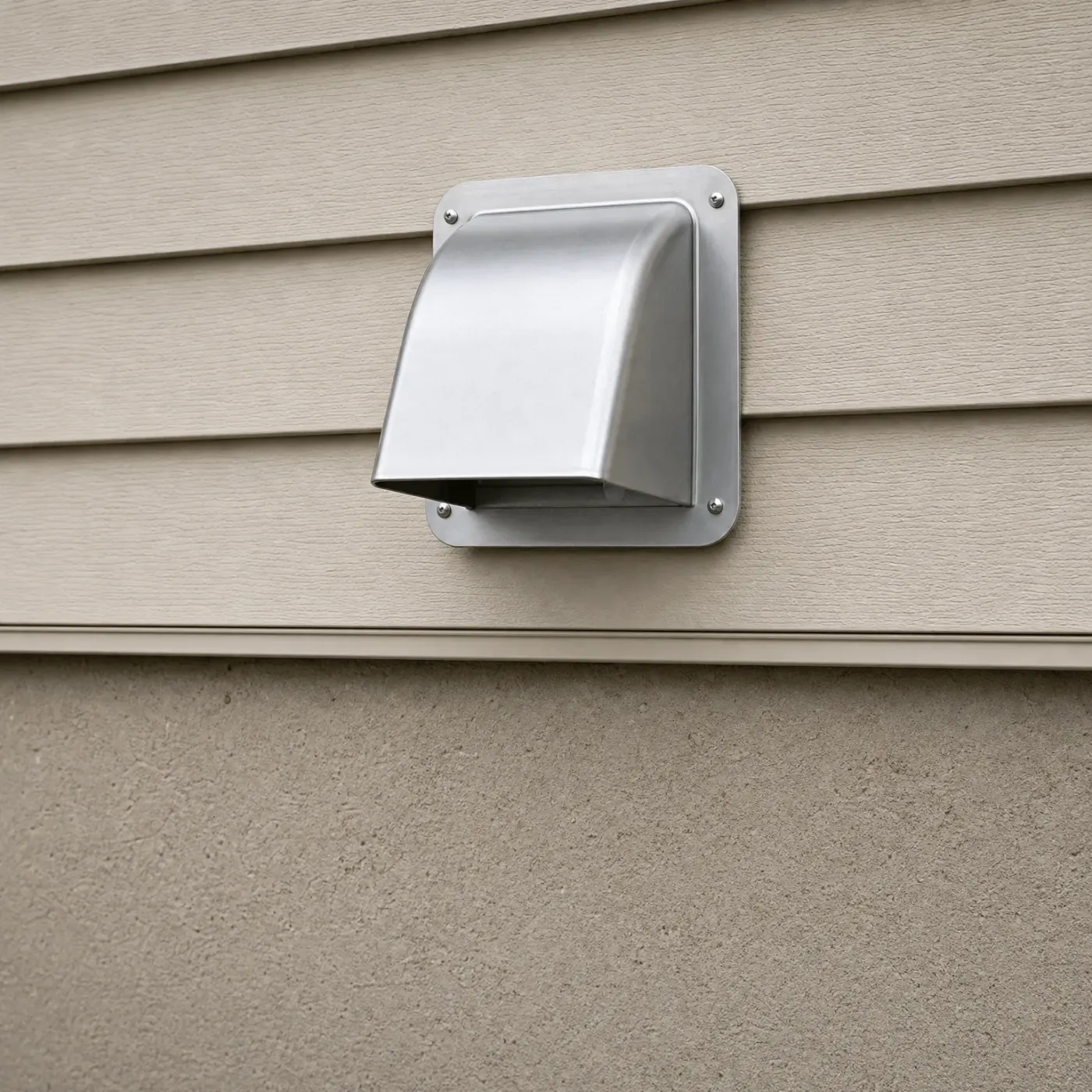
A metal hooded dryer vent cover mounted on beige horizontal lap siding above a textured concrete foundation wall.
After you get your dryer vent cleaning

Where the Lint Actually Builds Up

  • The lint trap you clean every load only catches part of what the dryer puts out, the rest rides the airstream into the vent pipe.
  • A straight, short run to the outside wall clears itself easier than one with elbows, and most houses have at least two bends before the cap.
  • Lint collects fastest at each turn in the pipe, where the airflow slows down and loses the speed it needs to carry particles through.
  • The exhaust hood on the outside wall has a flap or louvers that should swing open fully once the dryer starts pushing air.
  • Birds and rodents build nests inside that hood over the summer, and a blocked hood looks the same from indoors as a blocked pipe.
  • A crushed or sagging section of flexible duct behind the dryer traps lint low in the line where it never reaches the cap at all.

The trap by the door isn't the whole system. It catches the big stuff, but a layer of fine lint rides past it every load and travels down the pipe behind the dryer. That pipe runs to an outside wall, and in most houses it doesn't go there in a straight line. Two bends is common, sometimes more, and lint doesn't move evenly through a bend. The airflow slows at each turn, and whatever it's carrying starts to settle there first. Over months, those turns are where the pipe actually narrows, long before the straight sections show much buildup at all.

The flexible duct right behind the dryer deserves its own look. If it's crushed against the wall or sagging where it shouldn't, lint settles into that low spot and sits there, never reaching the vent pipe or the cap at all. A contractor checks that section by hand, not just by looking.

Outside, the hood at the wall has a flap or a set of louvers that should open fully once the dryer kicks on. Over a Lakewood summer, birds and small animals find that hood a decent place to nest, and a nest blocks airflow the same way packed lint does. From inside the house, both look identical: the dryer runs long, and the clothes still come out damp. The only way to tell is to check the pipe and the hood themselves, not guess from the symptoms.

2.36 people per household on average

At 2.36 people, most Jefferson County houses run a dryer for two or three people's clothes, not a big family's. That keeps loads closer to a handful a week, so lint reaches the vent pipe slower and the once-a-year schedule holds for most households here.

ACS 2020-2024

A white hooded dryer vent cover screwed into beige lap siding above a concrete foundation wall, with a bed of rounded gravel at the base.

Vent working the way it should

The hood sits flush against the siding and closes most of the way when the dryer isn't running. Push a load through and the louvers swing open, air moving out fast enough to clear the moisture with it. Nothing gray clings to the grille.

A metal dryer vent hood mounted on light gray horizontal lap siding, with its opening clogged by gray lint, above a concrete foundation wall.

Vent that needs attention now

Lint has packed into the flap until it can't close or open right. Air that should push straight out is working around a plug of lint instead, and the dryer behind it is running longer to dry the same load. This is what a vent looks like well past its cleaning.

How do you know when the dryer vent actually needs cleaning?

A once-a-year schedule is a starting point, not a guarantee. Your dryer tells you things in between cleanings, and most homeowners never learn to read them. You don't want to wait for a full year to pass if the vent is already struggling, and you don't want to pay for a cleaning it doesn't need yet either.

A longer dry time and a hot touch on the vent hood outside

If a load that used to take forty minutes now takes an hour or more, that's the first sign. The dryer is working harder to push air through a narrowing pipe. Step outside while it runs and put your hand near the vent hood. It should feel warm, not hot, and you should feel real airflow pushing the louvers open. Weak airflow or a hood that barely moves means lint is sitting in the duct somewhere between the wall and the outside cap. A burning smell during a cycle is a third sign, and it means the vent needs attention sooner than a yearly schedule would call for it.

A woman with dark shoulder-length hair sits wrapped in a gray fleece blanket on a sofa with an open book on her lap, beside a lit lamp and a dark window.
A woman in a cream knit sweater sits in an armchair indoors, eyes closed and smiling, beside a window showing yellow and orange autumn foliage, with a mug on a wooden side table and shelves holding vases behind her.

Get matched with a dryer vent pro in Jefferson County

Send the request and finding a pro stops being your problem.

You're not committing to anything by asking.

A pile of beige, navy, and teal towels sits on top of a washer or dryer in a dim laundry room with a window and an upper cabinet.

It's a Tuesday evening, almost seven, and the dryer buzzer has gone off twice already. You open the door and the towels on top are still damp at the folds, the way they get when the drum's been tumbling warm air that isn't actually leaving the house. Outside, the Jefferson County wind is picking up the way it does most evenings, but the vent hood on the siding hasn't so much as fluttered. You push the pile to the side of the machine and start the dryer again. Through the wall you can hear it straining a little, running longer than it used to for the same load. The towels will dry eventually. They just take another hour.

Clean on Schedule or Skip It

Clean on schedule

  • A once-a-year cleaning keeps the vent pipe clear before lint builds up enough to slow the airflow down.
  • Air moves out fast, so clothes come out dry on the first cycle instead of needing a second run.
  • The dryer doesn't work as hard to push air through, which keeps the motor and heating element from straining.
  • A clear vent lowers the chance of lint catching heat inside the duct where you can't see it.
  • Scheduled cleaning catches the buildup inside the pipe itself, not just what collects in the trap you empty every load.

Skip the schedule

  • Lint keeps collecting past the one-year mark, narrowing the pipe a little more with every load that runs.
  • Drying times stretch out first, then the dryer starts shutting off mid-cycle as the airflow drops further.
  • The hood outside stays packed with lint and dust instead of swinging open and closing clean with each load.
  • A long or bent run to the outside wall clogs faster than a short straight one, so the wait before trouble shows up is shorter.
  • Once the vent is that blocked, a cleaning that would have taken one visit on schedule may take more work to clear.
A metal hooded dryer vent with a louvered opening mounted on gray horizontal lap siding, next to a plain off-white wall.

The vent that's never been cleaned

Some houses in Lakewood still run on the vent that came with the dryer hookup, never once cleared. Airflow has been dropping a little at a time for years, slow enough that nobody noticed the dryer taking longer than it used to. Lint sits packed in the elbows and along the last few feet before the wall cap. The dryer still runs. It just works harder than it has to, and has for a long time.

A stainless steel hooded dryer vent screwed to light gray horizontal lap siding, with a blank white wall occupying the left side of the frame.

The vent on a yearly schedule

Other houses get the vent cleared out once a year, same time each time, before lint has a chance to build past what the airflow can push through. A load goes in and the drum empties it in one cycle, because the air moving out is doing its job. The difference doesn't show up as something dramatic. It shows up as towels that are actually dry and a dryer that isn't straining to get there.

A man in a dark jacket and khaki pants walks through an open gate in a stone wall toward a woman standing in the open front doorway of a single-story white house with a dark shingled roof and river-rock accents.

Once a year, and you'll know if that changes

Most houses in Lakewood need the dryer vent cleared once a year. Run the dryer most days for a household of four or more, and nine months is closer to right. That's the whole answer. What changes it is what you notice in between: a longer dry time, a hot laundry room, a cap outside that stays gray instead of clean. Those are the vent telling you before the year's up.

Jefferson County's houses vary in age and so does the ductwork behind the wall, so nobody can tell you exactly what your run looks like without seeing it. A contractor who comes out to clean it can also tell you how your specific setup holds up, whether the run is short and straight or long with a couple of bends, and what that means for how often you'll need this done again. Once you send the request, that's the part that's no longer on you to figure out.

A mug and a small round vase sit on a wooden windowsill beside sheer and heavier curtains, with blurred autumn trees seen through the rain-speckled window and a sofa with cushions and a throw in the foreground.
An older man with gray hair and a beard stands in a dimly lit entryway wearing a dark hooded coat dusted with snow, with a lit table lamp, framed picture, and front door with glass panels behind him.
An older man with gray hair and a beard, wearing a dark snow-dusted jacket and scarf, stands smiling in a dimly lit entry hall with a lamp, wooden front door and staircase behind him.
A gray-haired bearded man in a dark coat with snow flecks on the shoulders stands just inside a dimly lit home entryway, with a lamp, framed pictures, sofa and candle-style lights in the background.
An older man with gray hair and a beard, wearing a dark coat and scarf dusted with snow, stands in a warmly lit home entryway with an arched doorway, lamps, and a living room visible behind him.

Dryer Vent Cleaning

Find a dryer vent cleaning pro in Jefferson County

After this form, you can stop searching for a dryer vent pro.

A smartphone with a blank green screen stands upright against a plain light gray background.
Duct and vent cleaningJefferson County, CO
Step 1 of 3

What kind of equipment?