
AC Installation in Denver, CO
A new air conditioner in Denver will run from June through August every year. Tell us about the house, and a licensed contractor who covers Denver County will get in touch.
Tell us about the job
It takes about a minute.

Three months of heat, and hail most years
Denver's cooling season runs June through August, three months a year, with summer afternoons averaging 87°F. A new system sized for that stretch is what carries the house through those months.
What sits outside has more to deal with. Denver County has logged 142 hail events over the past ten years, with hailstones as large as 2.75 inches, and 64 damaging wind events in that same span. The outdoor unit takes that weather directly, so how it's installed and protected matters. Any new central air conditioner installed today also has to meet the federal efficiency minimum of 13.4 SEER2.
- 3 months
- June through August, your air conditioner is on duty
- 87°F
- the average summer afternoon it cools against
- 142 hail events
- in ten years, and hail bends the fins on outdoor coils
- 13.4 SEER2
- the federal minimum any new unit must meet
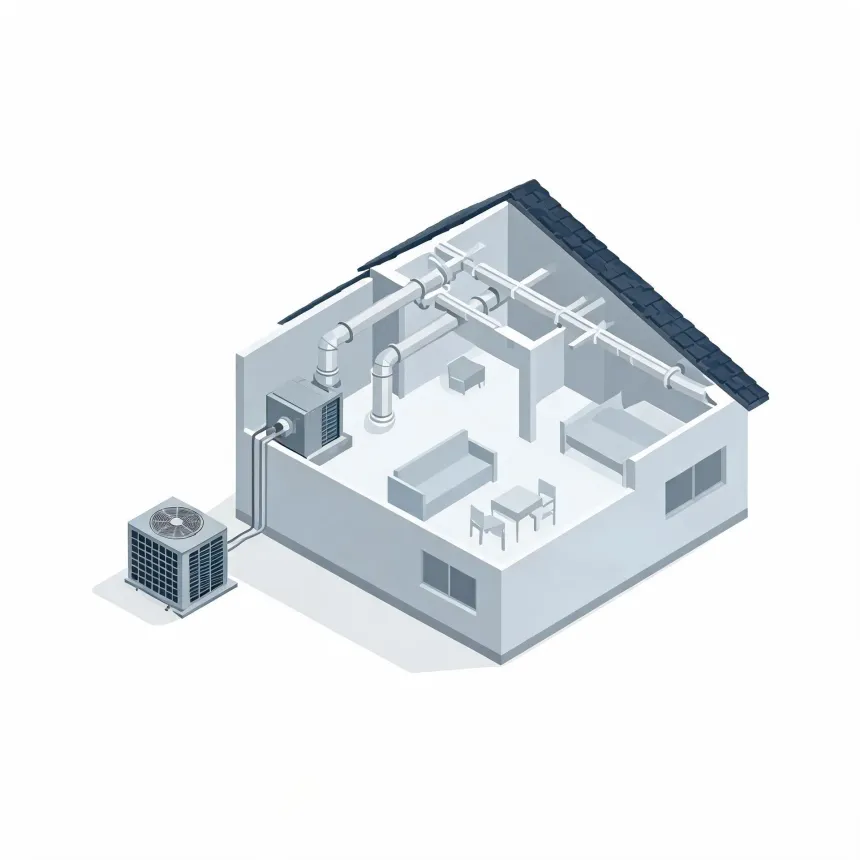
NOAA nClimDiv, 1991–2020 normals

A higher-efficiency unit would save about $30 a year to run in Denver County compared with a new unit at the federal minimum.
Estimates for a typical Denver County home, from EIA household energy data, Colorado fuel prices and NOAA climate normals. Your home will differ.
- What size air conditioner does my house need?
- There is no single number that fits every house. The right size depends on your square footage, how much sun your walls and windows take on, your insulation, and your duct layout. A contractor works this out with a load calculation, not a chart based on square footage alone. Going bigger than what the calculation calls for does not cool your home faster. It just cycles on and off more, which leaves rooms feeling uneven and wears the unit out sooner.
- Should I replace the whole system or just the outdoor unit?
- If your indoor coil and outdoor unit were installed together and are close in age, replace both at the same time. Mismatched coils and condensers do not perform the way the manufacturer rated them to, and some manufacturers will not warranty a new outdoor unit paired with an old coil. If your indoor coil is already in good shape and was sized for a similar system, a contractor can check the match and tell you whether it will hold up.
- Do HVAC contractors in Denver need a state license to work on my home?
- Ask to see a contractor's license number before work starts, and check that it is current. A licensed contractor also carries insurance, which protects you if something goes wrong during the job. If a contractor cannot show you a license, that is reason enough to look elsewhere.