Mini Split Installation in Grand Junction, CO
A new system here will heat from September through May and cool from July through August every year. Tell us about the house, and a licensed contractor who covers Mesa County will get in touch.
Tell us about the job
It takes about a minute.
What Grand Junction winters and summers ask of a mini-split
Your mini-split needs to run most of the year here. Homes in Mesa County need heat from September through May and cooling in July and August, eleven months of the year combined. That is a long duty cycle for one system.
Winter nights average 18°F, cold enough that the heat pump has to work for its keep, and summer afternoons average 83°F on the cooling side. A unit installed here has to be sized and set up for both ends of that range, not just one. Any mini-split installed new has to meet the federal minimum for split-system heat pumps, 14.3 SEER2 for cooling and 7.5 HSPF2 for heating, but in a climate that asks for heat nine months of the year, how well it performs in cold is what you will notice most.
- 9 months
- September through May, your system heats
- 2 months
- July through August, it cools
- 18°F
- the average winter night it heats against
- 83°F
- the average summer afternoon it cools against
NOAA nClimDiv, 1991–2020 normals
- Is a mini split worth it?
- For most homes here, yes, especially if a room runs hot in July and August or stays cold no matter what the furnace does. Grand Junction needs heat nine months of the year and cooling for two, and a mini split handles both from the same unit. Where it pays off most is a room added on, a garage turned into living space, or a bonus room the ducts never reached well. A contractor can look at the room and tell you whether a mini split solves the actual problem or whether something else is going on.
- How many rooms can a mini split cover?
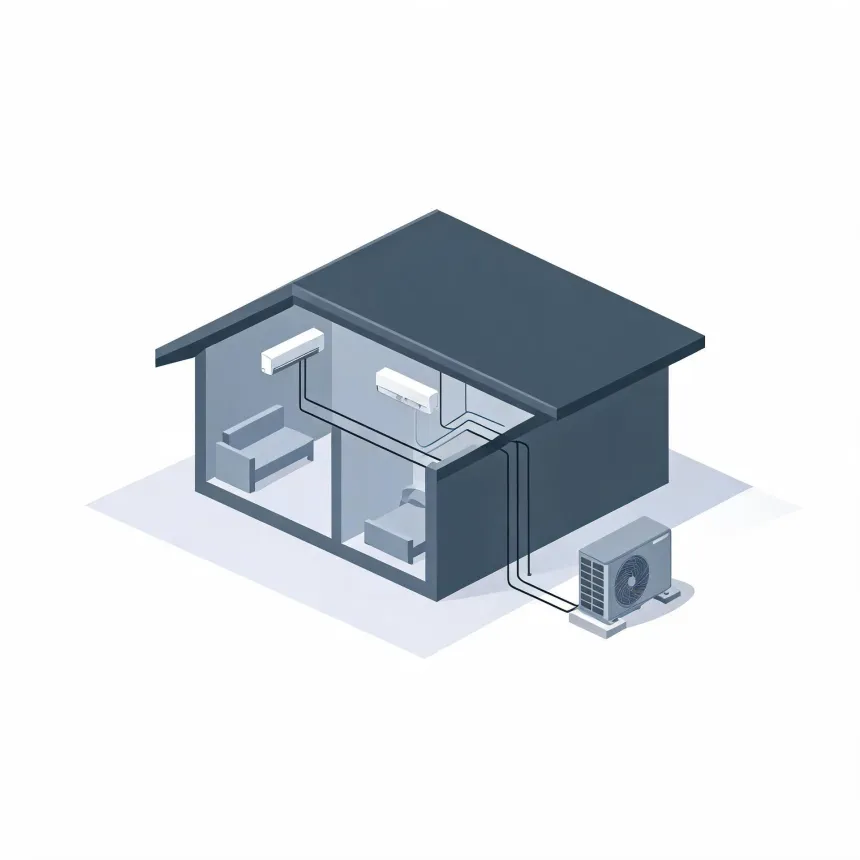
- A single indoor unit is sized for one room or one open space. If you need to cover several rooms, a multi-zone system connects multiple indoor units to one outdoor condenser, and each indoor unit runs on its own thermostat. So the answer depends on how many separate rooms need their own temperature control, not on square footage alone. A contractor will size the outdoor unit and pick the number of zones based on the rooms you want covered.
- Can a mini split heat a whole house?
- A multi-zone mini split can heat a whole house if it's sized and placed for every room, but that takes planning up front, not just adding units later. Winter nights here average 18°F, which is cold enough that the heat pump's capacity at that temperature matters as much as the number of zones. Most homes in Grand Junction heat with gas furnaces already, so a common approach is a mini split for specific rooms or additions while the furnace covers the rest. A contractor can run the numbers for your house and tell you whether whole-house coverage with a mini split makes sense or whether pairing it with existing heat is the better route.