
AC Repair in Silverthorne, CO
If your air conditioner quits, tell us what it's doing and a licensed contractor who covers Summit County will get in touch.
Tell us about the job
It takes about a minute.

Silverthorne barely asks its AC to run at all
Summer afternoons here average 68°F, which is not a temperature most homes need to fight against. An air conditioner that rarely gets called on can still run into trouble. Seals and moving parts that sit idle for weeks can dry out or stick, so the first real hot stretch is when problems show up.
The bigger risk comes from outside the unit. Summit County has logged 42 damaging wind events over the past ten years, along with hail up to 0.75 inches. Wind throws branches and debris into the outdoor unit's coil and fins, and hail can dent the cabinet or bend those fins enough to block airflow. If your air conditioner is struggling, a storm may be the reason, even if the unit itself has barely been used.
- 68°F
- the average summer afternoon it cools against
- 1 hail events
- in ten years, and hail bends the fins on outdoor coils
- 42 wind events
- in ten years, and wind drives debris into outdoor units
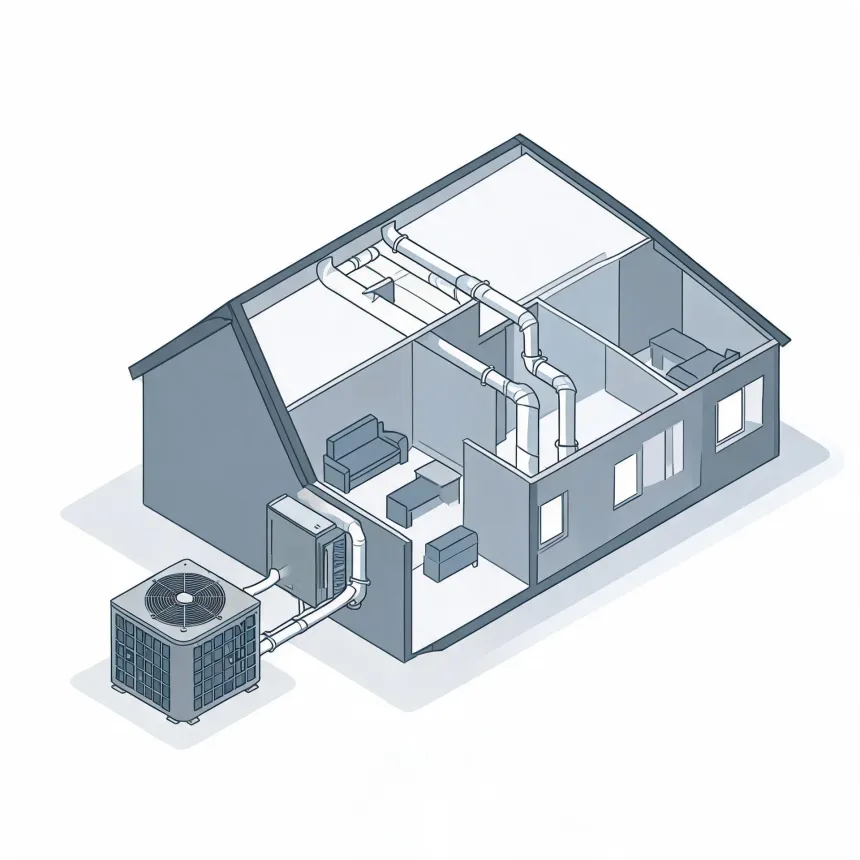

A new air conditioner would save little on running costs in Summit County, so the repair decision comes down to the unit's condition.
Estimates for a typical Summit County home, compared with an older unit built to the previous federal minimum, from EIA household energy data, Colorado fuel prices and NOAA climate normals. Your home will differ.
Repair makes sense when a part like a capacitor or contactor has failed.
Replacement makes sense when the compressor has failed or the system uses R-22 refrigerant, which is no longer made.
- Why is my AC not blowing cold air?
- The most common reason is low refrigerant from a leak somewhere in the line set or coil. Dirty coils and a clogged filter can also block heat transfer so the air coming out feels weak or warm. A failing compressor will do this too, though that usually comes with strange noise. A contractor can check refrigerant pressure and airflow to find out which one it is.
- Why is my AC leaking water?
- Most of the time this is a clogged condensate drain line. Algae and dust build up inside the line over a season of use and block the path, so water backs up and finds its way out somewhere it shouldn't. It can also mean the coil itself has frozen and is now melting and overflowing the drain pan. Either way, shut the system off so the water damage doesn't spread while you get it looked at.
- Why won't my AC turn on?
- Start with the thermostat. Check that it has power, the batteries are good if it uses them, and it's actually set to cool and below room temperature. If that's fine, check the breaker, since a tripped breaker will kill the whole system with no warning. If power is reaching the unit and it still won't start, the capacitor or the contactor inside the outdoor unit has likely failed, and that's a job for a contractor to test and replace.